Acrylic Roof Coating
Fast-draining shop roofs take acrylic on warm, dry days with no rain due before it cures.
Acrylic cure windows
Utica metal roof coating for rural shops and farm buildings, with each coating day picked from the dew point, wind, and rain forecast.
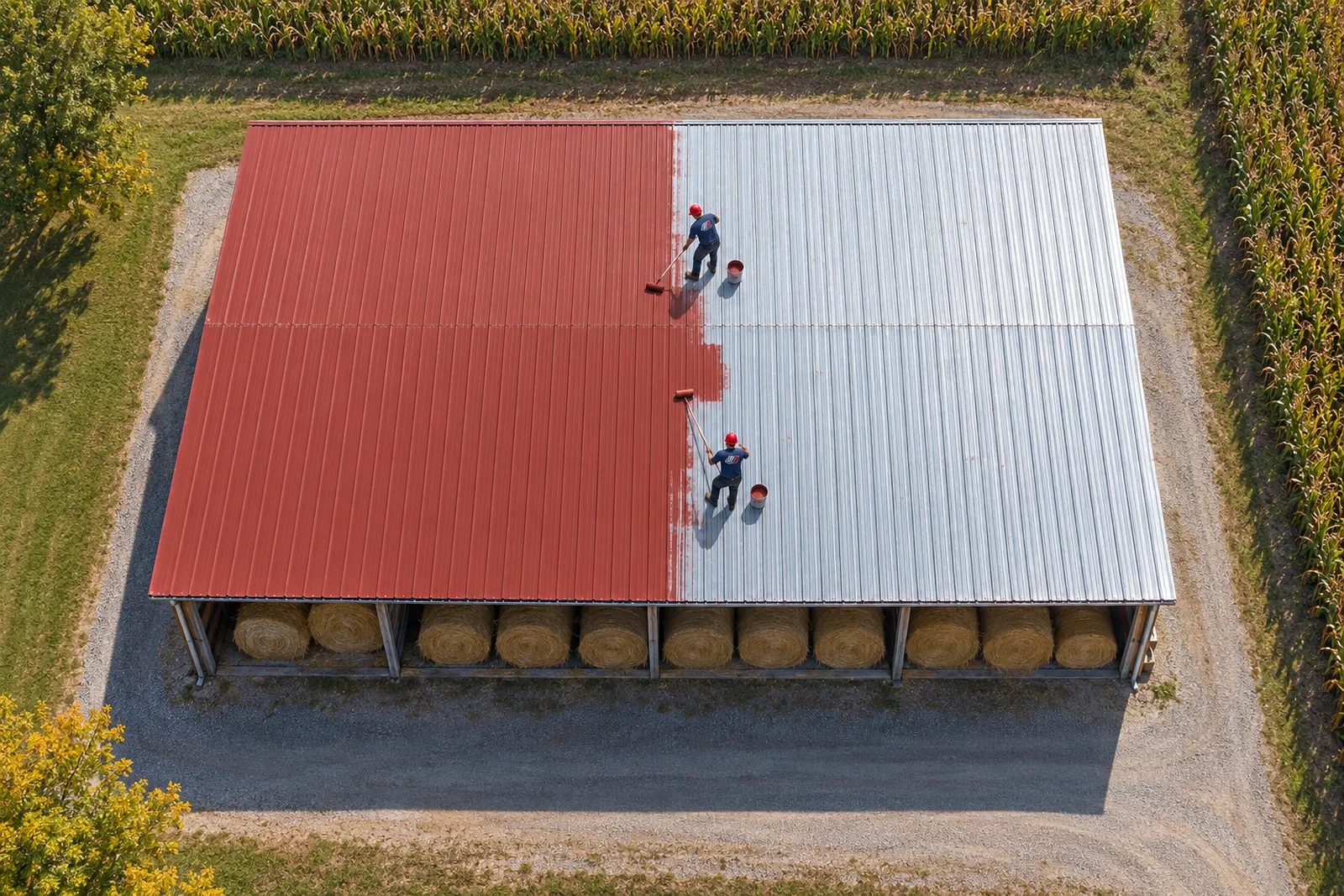
Utica sits in the National Weather Service Paducah forecast area with the rest of Daviess County. That office posts hourly dew point, rain, and wind, and we compare those hours with the coating data sheet before washing a section of panels.
Open rural lots bring heavy dew at sunrise and gusts across the eave, so the work day starts when the steel is dry and ends early enough for the coat to skin over.
Rural buildings in south Daviess County take weather straight on. These five zones show it first.
North-facing end laps stay damp after dew, and rust blooms there before anywhere else on the panel.
Wind across open fields lifts rake trim and loosens its screws. Wind-driven rain then gets behind the edge.
Hail leaves round dents in the flats. Chipped coating at a dent edge exposes bare steel that rusts.
Field dust and leaves settle in long gutter runs, so water sits at the seams after each storm.
Daily heat swings work screws loose over the years, and dried washers stop sealing the holes.
On a Utica shop with firm panels and solid framing, coating keeps the existing steel working.
| Roof Detail | Coating The Roof | Replacing The Roof |
|---|---|---|
| Laps Sealed | Fabric and coating close the damp end laps on shaded slopes | New laps that age the same way |
| Rust Held Back | Primer and coating cover bare steel at dents and screw heads | Old panels hauled away |
| Work Around Harvest | Sections are scheduled into dry stretches outside your busiest weeks | Roof open for the length of the swap |
Weather windows shape which system goes on, since each product cures under different conditions.
Fast-draining shop roofs take acrylic on warm, dry days with no rain due before it cures.
Acrylic cure windows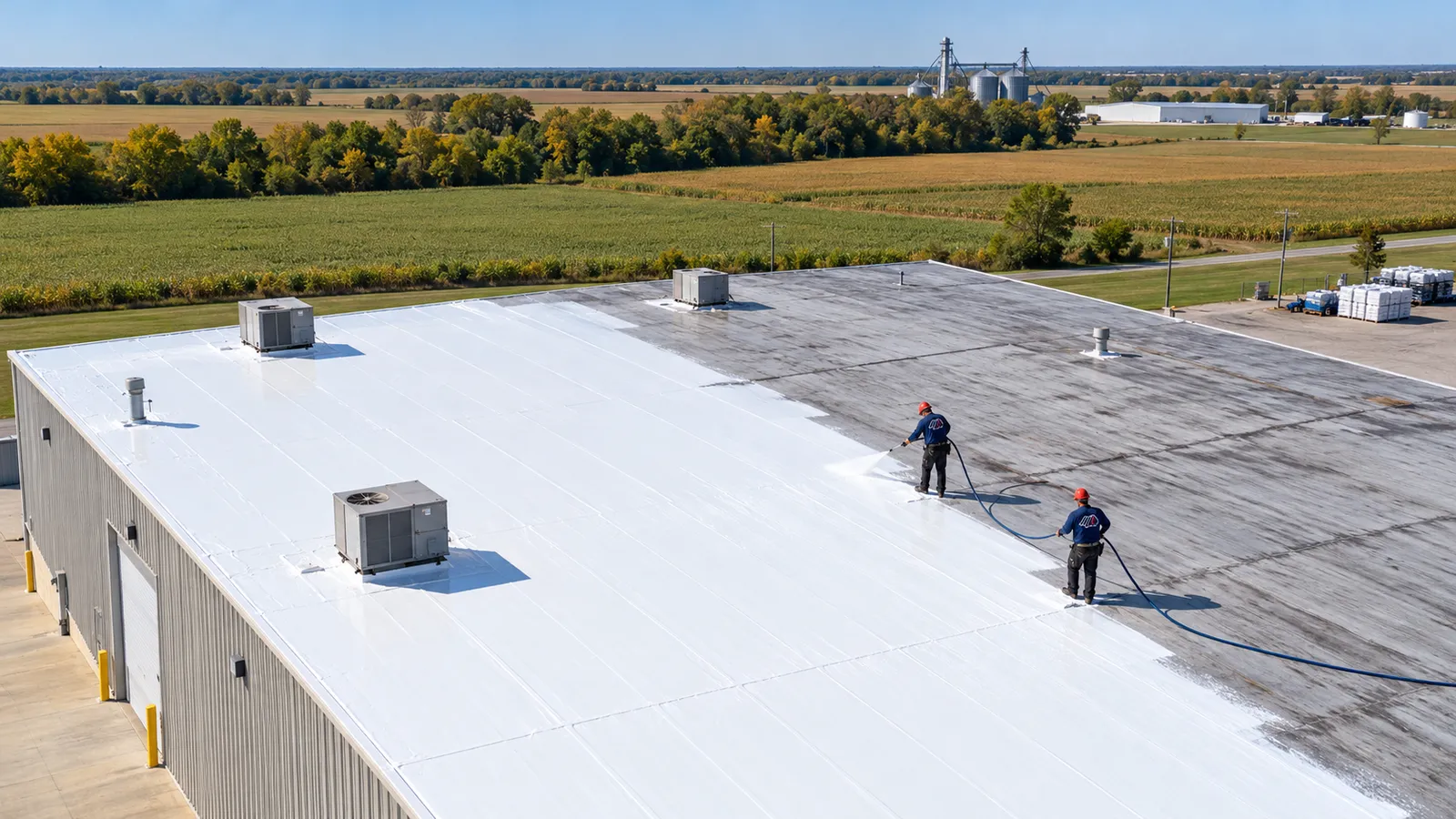
Cooler spring and fall days suit silicone, which tolerates damper starts than acrylic does.
Silicone on cool days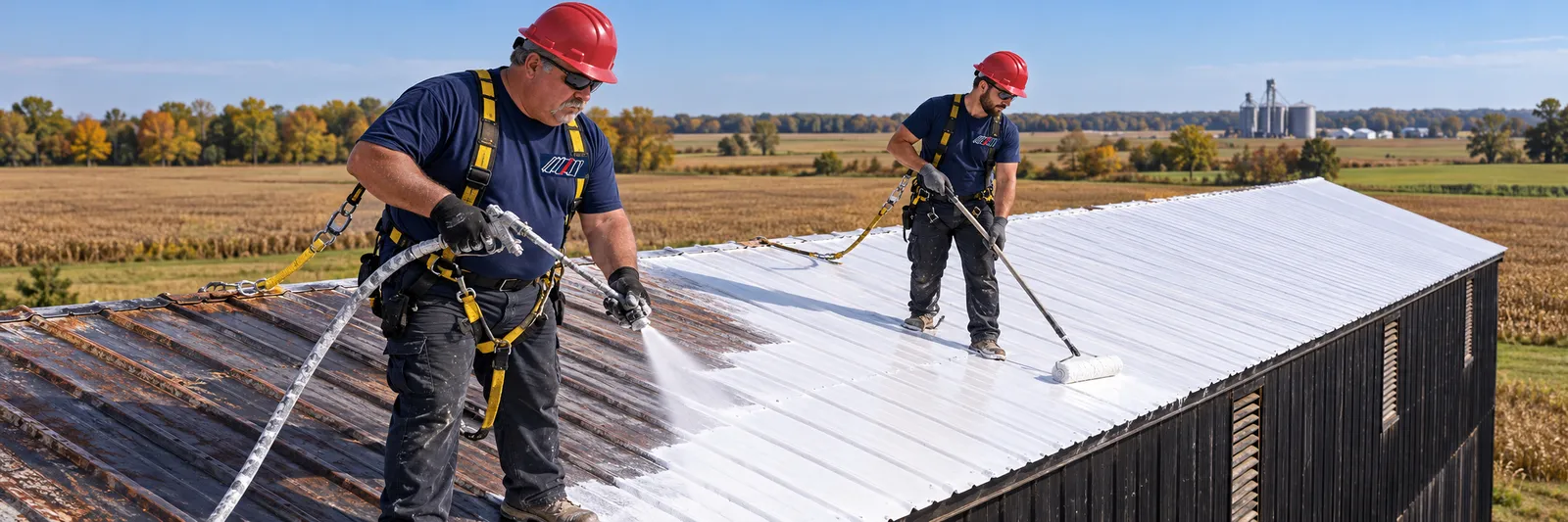
Screws, laps, and rust are handled first on every steel roof, whichever topcoat follows.
Metal roof prep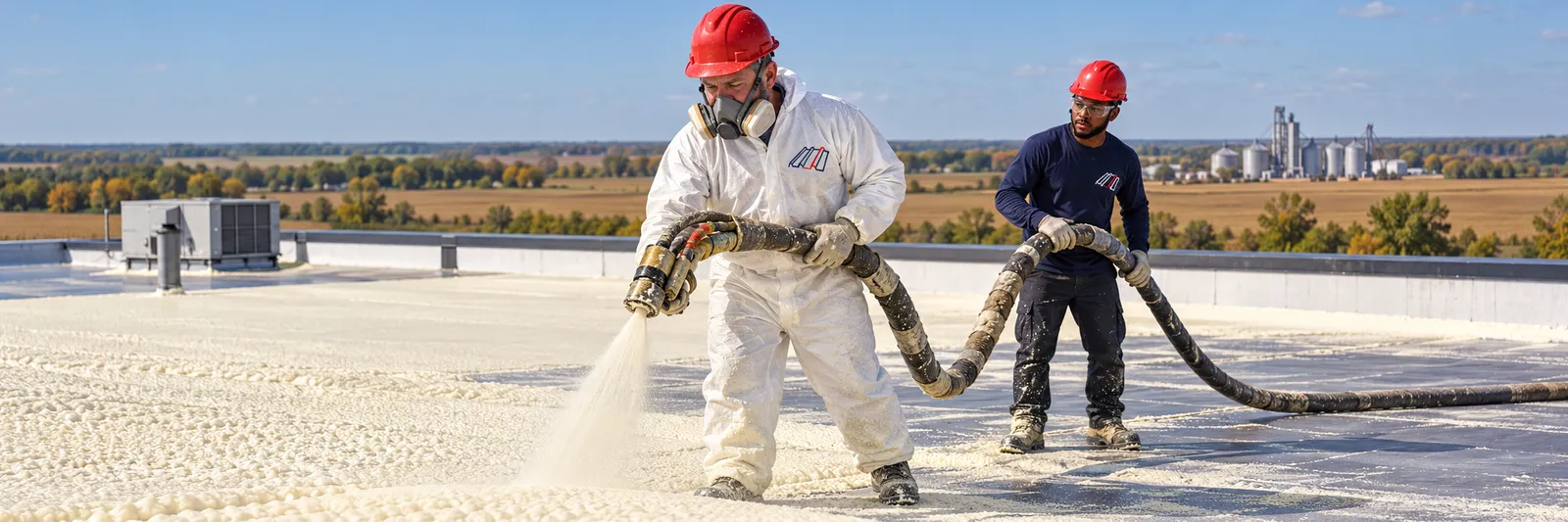
Foam needs calm air and dry steel, so gusty rural days push foam work to another date.
Foam roofing details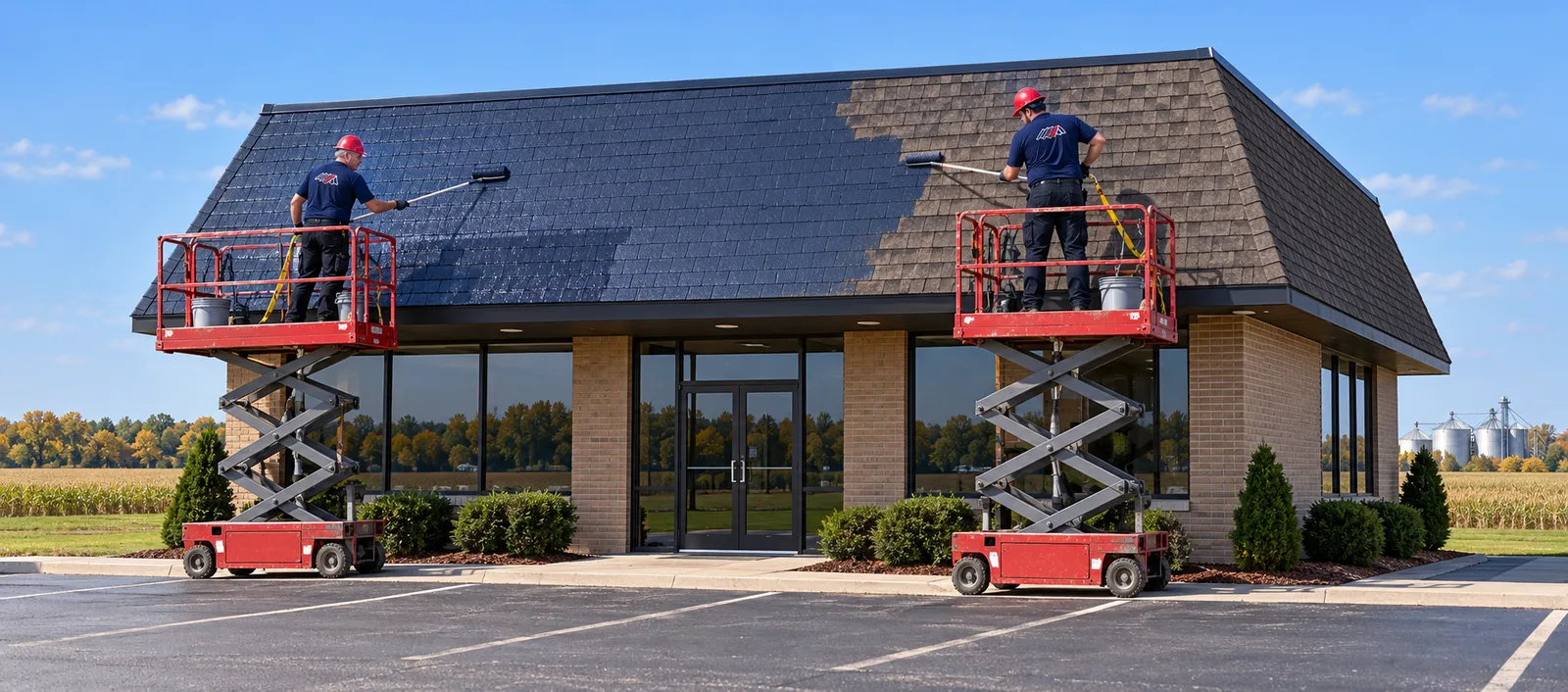
Office or church shingles that lie flat and hold granules can take an approved coating.
Shingle coatingTell us how the building sits on its lot, and we plan the inspection and coating days around it.
The steps stay in order, and each one starts only when the forecast and panel temperature allow.
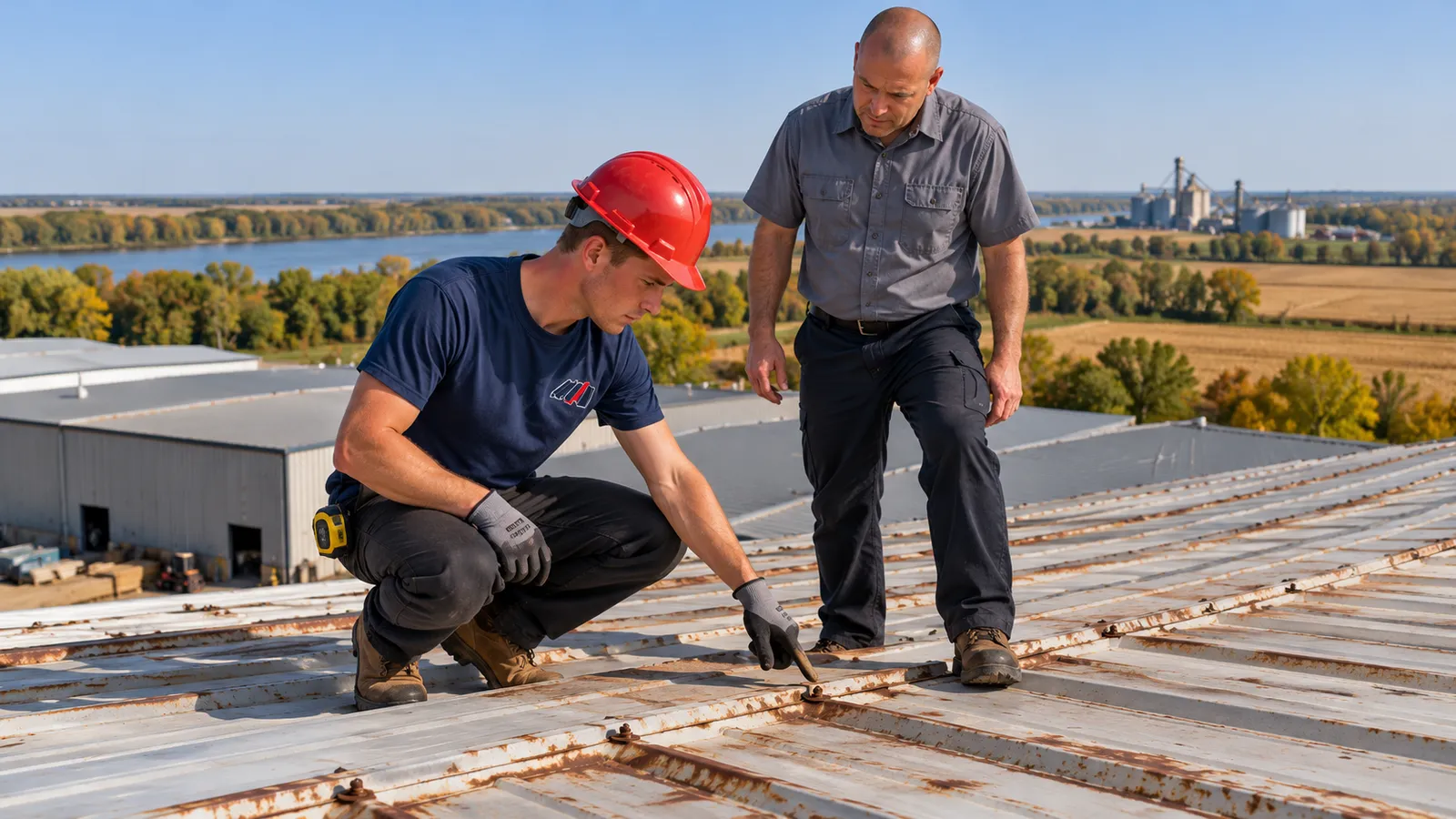
Checking every slope, we mark damp laps, loose rake trim, hail dents, and backed-out screws on a sketch.
Hourly dew point, wind, and rain from the Paducah office are matched to the coating product sheet before any panel is washed.
Panels are washed one section at a time, then left to dry fully before any primer touches them.
Rust at dents and laps gets primer, screws are tightened or replaced, and fabric goes over end laps.
Coating starts after dew burns off and stops early enough for the surface to skin over before evening.
Not sure Utica is close enough? Call us or send us a message with your location. These neighboring towns are covered as well.
Foam or coating questions for farm and equipment shops.
East Daviess metal shops with screw-row rust.
Storefront parapets, box gutters, and City Hall permits.
Industrial panels tested for adhesion near plant exhaust.
Damp riverside panels and shaded north slopes.
White rust on older galvanized shop roofs.
Large plant roofs coated one section at a time.
Parapet walls, scuppers, and mixed roof sections.
Canopies and awnings coated along with the main roof.
Shingle and metal sections on churches and offices.
Answers for owners of rural shops and farm buildings near Utica.
Rarely by themselves. Washed sections are primed or covered before the crew leaves, so a rain day pauses work without redoing it. Long gaps can mean rewashing dusty panels, which adds a little labor. Breaking a big roof into sections keeps that risk small, since only one area is open at a time.
Rust on shaded laps, hail dents with bare steel, and loose rake trim drive the prep. Gutter length and lift access on an open lot matter too, while the coating itself is a smaller share. A barn with a hundred dented panels and one with a few scattered dents can differ a lot in prep time.
Utica falls in the NWS Paducah forecast area, so its hourly dew point, rain, and wind forecasts set the days. We look for dew point well below panel temperature at sunrise, light wind at the eave, low afternoon storm chances on acrylic days, and overnight lows above the product minimum. Permit questions go to OMPC.
Coating needs dry steel above the dew point. On open lots, dew sits on the panels after sunrise, so the crew waits until a surface thermometer shows the steel is dry and warm enough.
Silicone handles cooler, damper spring and fall days better, while acrylic needs warm, dry hours to cure before rain or dew. Acrylic suits a fast-draining roof done in summer. Where gutters or end laps hold water, silicone is the better pick in any season.
Look for bright metal in the center of dents, coating flakes in gutters, cracked skylight panels, and bent panel edges at laps. Spot priming and recoating soon after keeps rust from starting. Insurance claims stay between you and your carrier, and dated photos of the dents help that conversation.
Tell us about the shop and its roof. We follow up to walk the slopes, laps, and trim in person.