If Your Roof
Drips fall from bare steel on cool mornings
Foam over the panels keeps the steel warmer, so less moisture condenses on its underside.
Start WithSpray Foam Roofing

We spray foam over commercial metal and low-slope roofs in Owensboro when a building needs insulation and a watertight surface, then topcoat the foam.
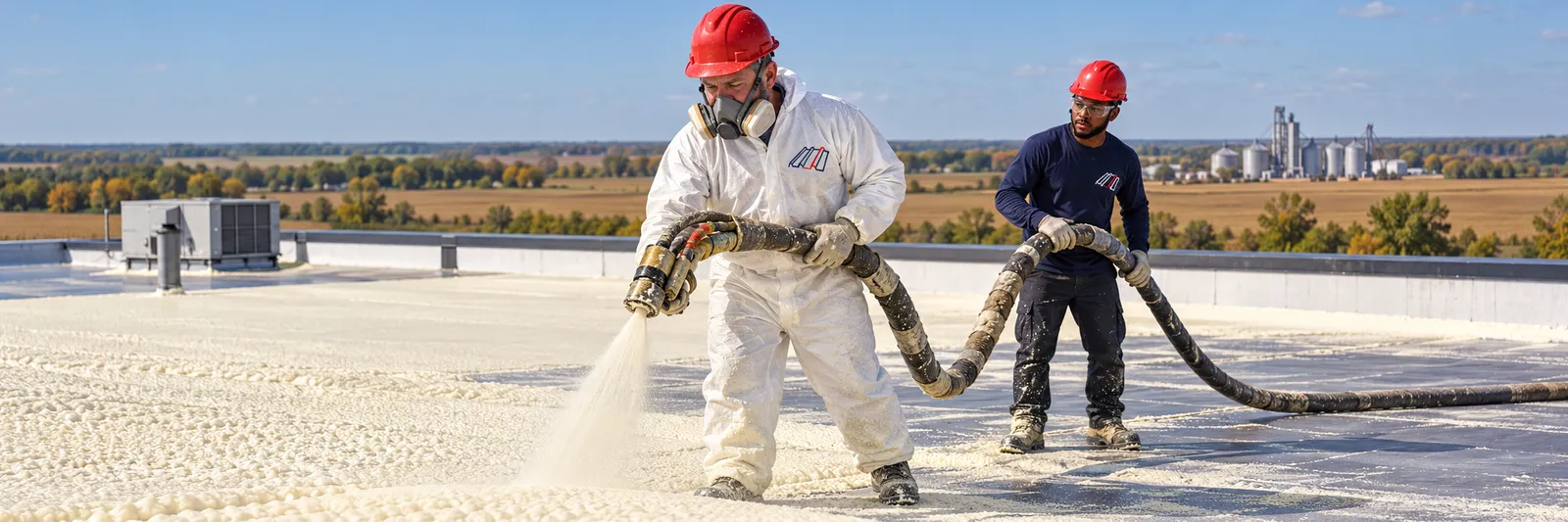
Foam makes the most sense on uninsulated shops where condensation drips from the panel undersides. Some roofs need only a coating.
Foam over the panels keeps the steel warmer, so less moisture condenses on its underside.
Sprayed foam fills the ribs and buries every fastener and lap under one continuous layer.
Sealing screws and laps and coating the field fixes the leaks with lighter rooftop work.
Sagging framing and rusted decking get repaired first, because foam needs a solid substrate to bond and carry foot traffic.
Foam raises the roof surface and covers every detail. These five zones get planned before the spray rig arrives.
Foam raises the roof edge, so gutters, drip edge, and trim get reset to the new height during the job.
Panel ribs fill with foam and laps disappear beneath it. Loose panels are fastened down first so they stop moving under the foam.
HVAC curbs often need raising so the foam and topcoat can turn up their sides with enough height above the new surface.
Air intakes are shut down and covered, and masking protects skylights, walls, and parked cars from drifting foam.
Wet panels or soaked insulation get dried or replaced before spraying, since foam bonds only to a dry, clean surface.
Foam always gets a topcoat. The coating choice and the foam thickness are set together.
Handles any low spots left after spraying and recoats later with more silicone.
Silicone topcoats explainedSuits foam built up to drain well, with a light reflective color and easy recoats.
Acrylic topcoats explainedBroadcast into the wet top layer along walkways to the units, where boots and tools wear foam fastest.
Extra thickness in low areas helps water reach gutters and drains.
A foam roof is a coating system with insulation built in. On a dry, solid roof, these are the gains over replacement.
| What Changes | Foam Over The Roof | Replacing The Roof |
|---|---|---|
| Added Insulation | Closed-cell foam lists near R-6 per inch over the panels | Separate insulation work |
| Fewer Condensation Drips | Steel stays warmer, so less moisture forms underneath | Bare steel still sweats unless insulated |
| Every Screw Buried | Foam covers fasteners, laps, and ridge caps in one layer | New fasteners with new washers |
| Building Stays Covered | The old roof stays in place under the foam | Roof opened in stages |
Tell us when the drips show up and whether the steel has any insulation under it.
Foam work moves in sections, each sprayed and topcoated before the next opens up.
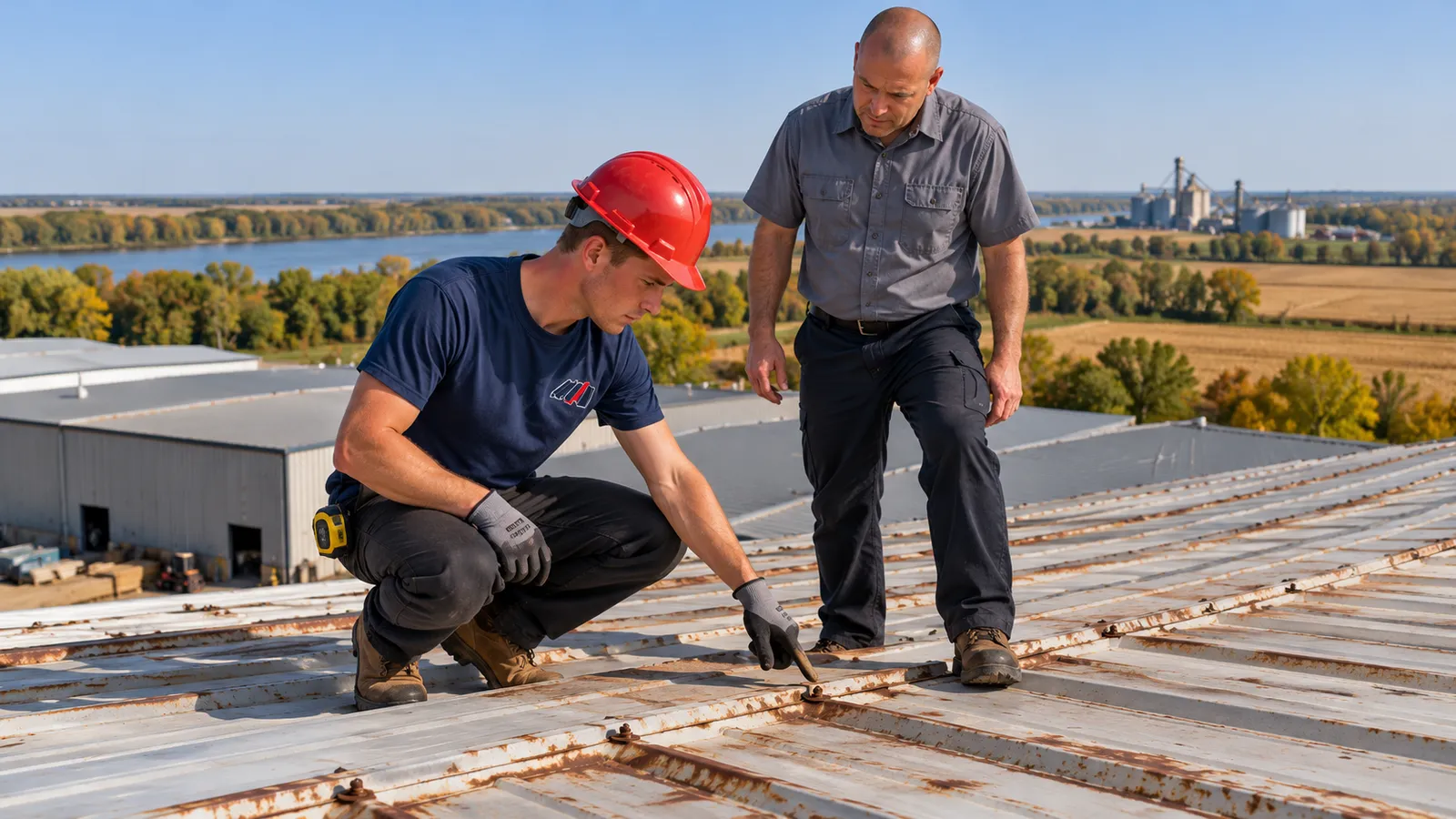
We check for wet insulation, loose panels, rust holes, and curb heights, and measure where the raised edge will meet gutters and trim.
Panels are cleaned and dried, loose sheets fastened, intakes shut down, and walls, skylights, and cars masked or moved.
Curbs, gutters, and edge metal are adjusted for the new height so the foam can turn up and finish cleanly.
Closed-cell foam goes on in passes to the planned thickness, built up in low spots, then probed to confirm depth.
Foam left bare degrades in sunlight, so silicone or acrylic topcoat follows on each sprayed section.
Owners comparing foam usually look at one of these too.
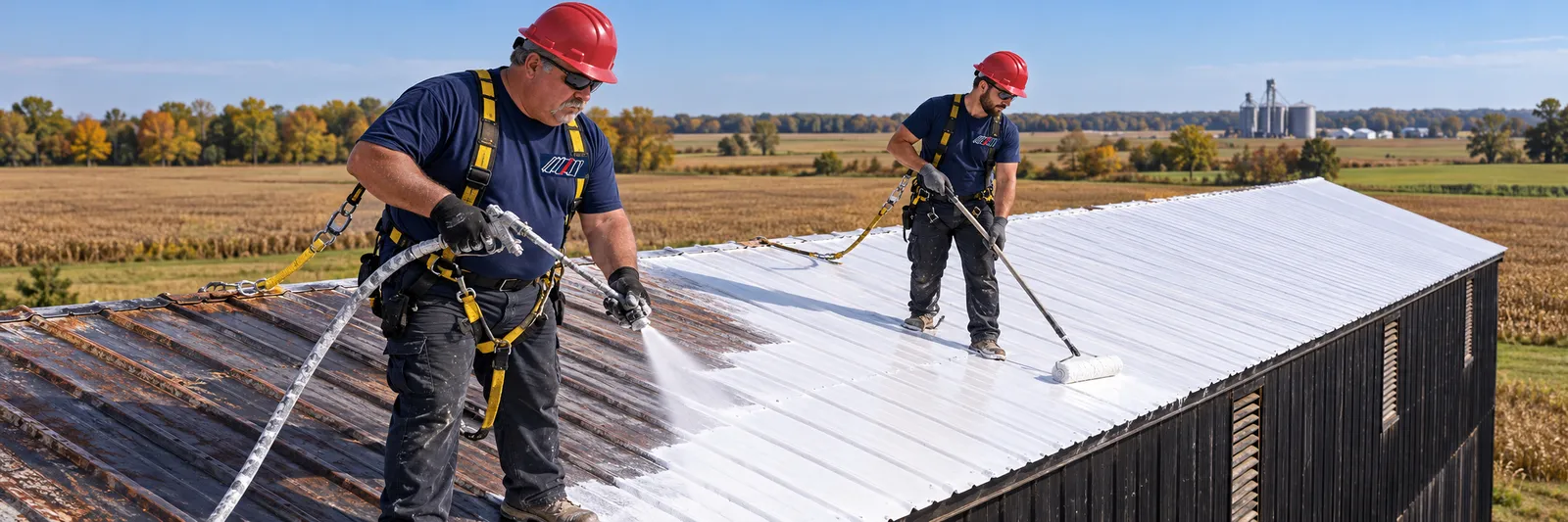
Coating alone keeps the roof height and suits steel that already has insulation under it.
Best For Insulated buildings with leaks
Metal roof coating in Owensboro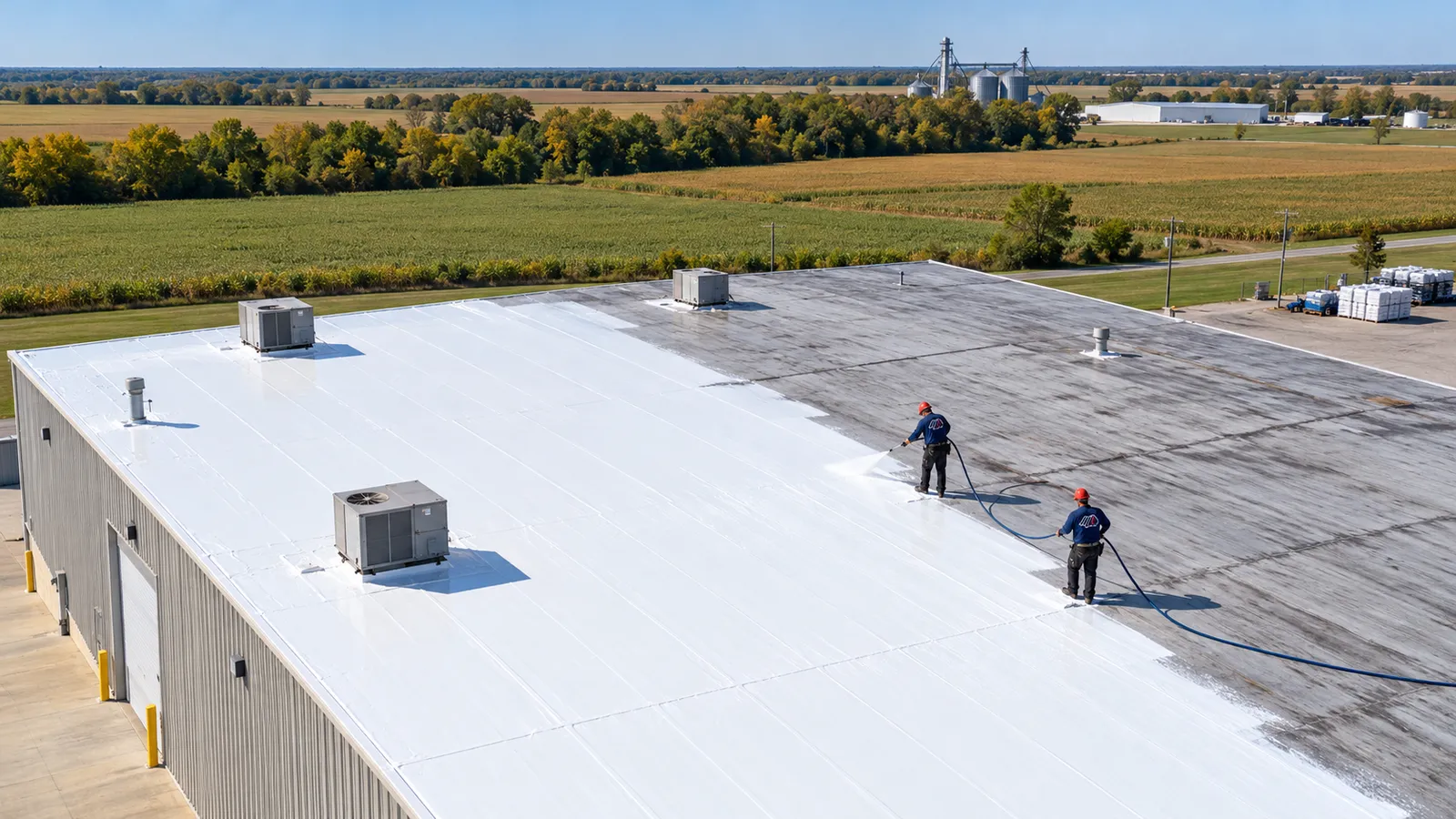
Silicone is a common topcoat over foam and the coating used for later recoats.
Best For Foam topcoats and ponding spots
Silicone roof coating in OwensboroQuestions Owensboro shop and warehouse owners ask before choosing foam.
Foam thickness and roof size come first, followed by the edge work. Raising curbs, resetting gutters and drip edge, and masking walls and cars add labor that a plain coating job skips. The topcoat type and any walkway granules add to the material.
It adds insulation over the steel, and closed-cell foam lists near R-6 per inch in a DOE guide. How that shows up on a bill depends on the building, its use, and the insulation already there, so we describe the R-value added and leave savings claims out.
Roof size, the amount of fastener and rust work, and the weather window decide it. A small shop can go from wash to final coat in a few working days, while a large warehouse runs longer. Big roofs are done in sections so each finished area is sealed by evening.
Usually not, but nearby air intakes are shut down and covered while each section is sprayed, and cars by the eaves get moved. Odor and overspray are controlled section by section, and your facility manager sets the hours rooftop units can be off.
Yes, when the building needs insulation as well as a watertight surface. Foam fills the ribs, buries every screw and lap, and gets its own topcoat. Compared with coating only, it adds insulation, reduces condensation, raises the roof edge, and brings heavier rooftop work with a spray rig and masking.
Silicone or acrylic, chosen by drainage. Silicone handles low spots and later recoats bond best to more silicone; acrylic suits foam built up to drain well. Granules can be broadcast into the topcoat along the walkways to rooftop units.
Tell us about the building, the drips, and the insulation under the steel. We follow up to inspect the roof in person.