Spray Foam Roofing
Foam fills the panel ribs, adds insulation, and gets its own protective topcoat over the new surface.
Spray foam over metal
Maceo metal roof coating for farm shops and equipment buildings, plus spray foam where bare panels drip or the shop needs insulation.
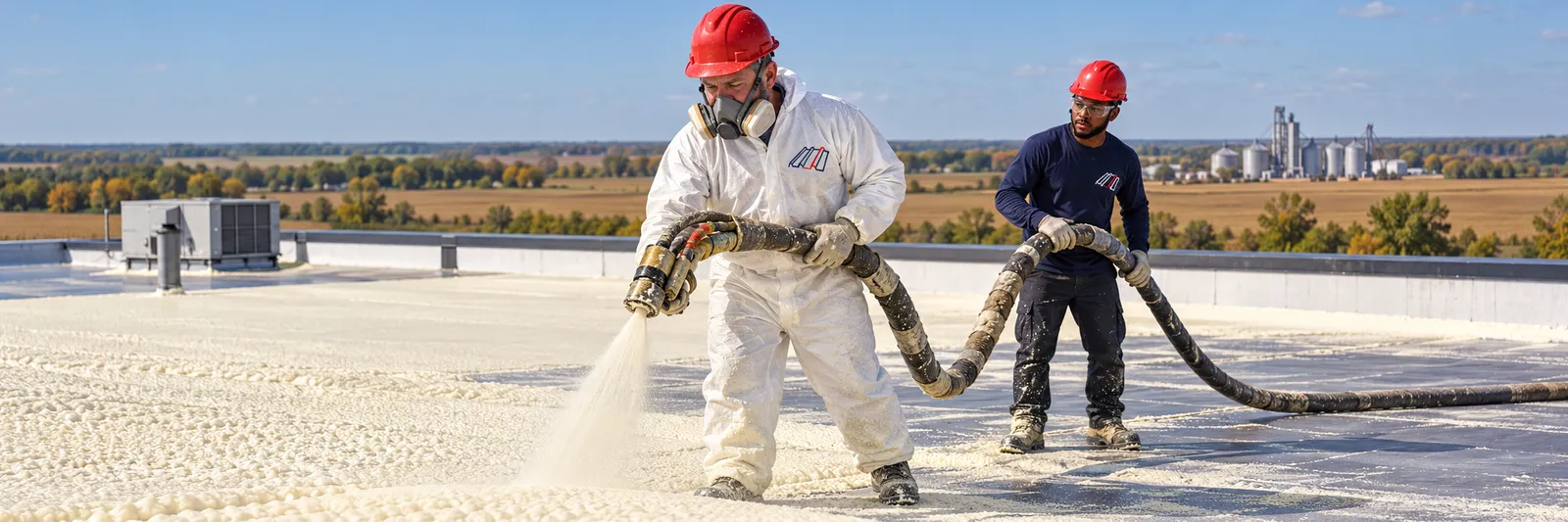
Many Maceo shops have bare steel panels with no insulation under them. A coating seals the screws and laps, while foam adds insulation and buries every fastener under a new surface.
Before choosing, ask your electric utility whether any commercial program counts added roof insulation. Kenergy is the likely provider in Daviess County, though the name on your bill settles it.
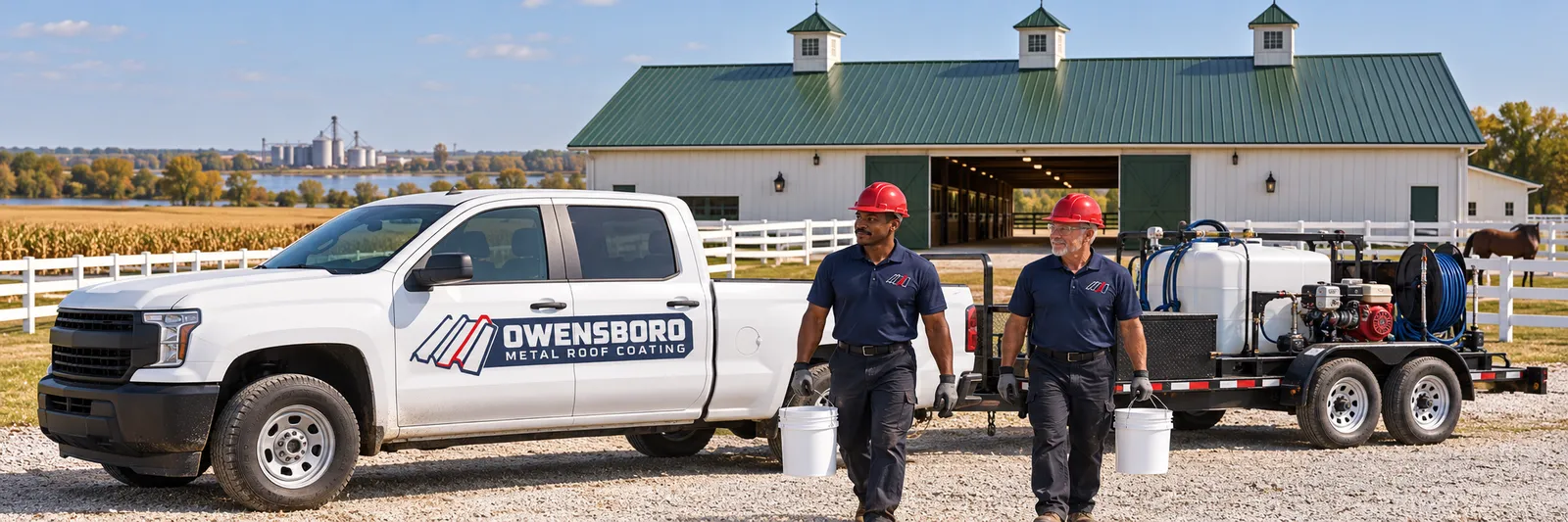
Equipment sheds and farm shops here face dust, birds, and big temperature swings. These zones get checked first.
Red rust starts along eave trim where dust and water collect. Bird nests in the closures hold damp chaff against the steel.
Condensation forms under bare steel on cool mornings and drips onto equipment. That points toward foam rather than coating alone.
Washers crack after years of heat cycling, and water runs down each screw shank into the purlin below.
Packed gutters overflow at the corners. With foam, these get moved out to the new, higher roof edge.
Gaps under ridge caps let blown rain and birds in. Closures get sealed before any coat or foam goes over them.
For a Maceo shop with firm panels, a coating or a foam system keeps the existing steel in place.
| Roof Detail | Coating Or Foam | New Panels |
|---|---|---|
| Screws Covered | Sealed heads sit under coating, or foam buries them completely | Hundreds of new screws and washers |
| Less Drip On Equipment | Foam keeps the steel warmer so less condensation forms underneath | Bare panels sweat unless insulation is added |
| Shop Keeps Working | Work stays on top of the roof while equipment stays inside | Roof open in sections during the swap |
| Lighter Summer Heat | A reflective topcoat sends sun off the roof surface | Depends on the panel finish chosen |
Each system answers a different question about a Maceo shop roof. Most owners compare the first two.
Foam fills the panel ribs, adds insulation, and gets its own protective topcoat over the new surface.
Spray foam over metal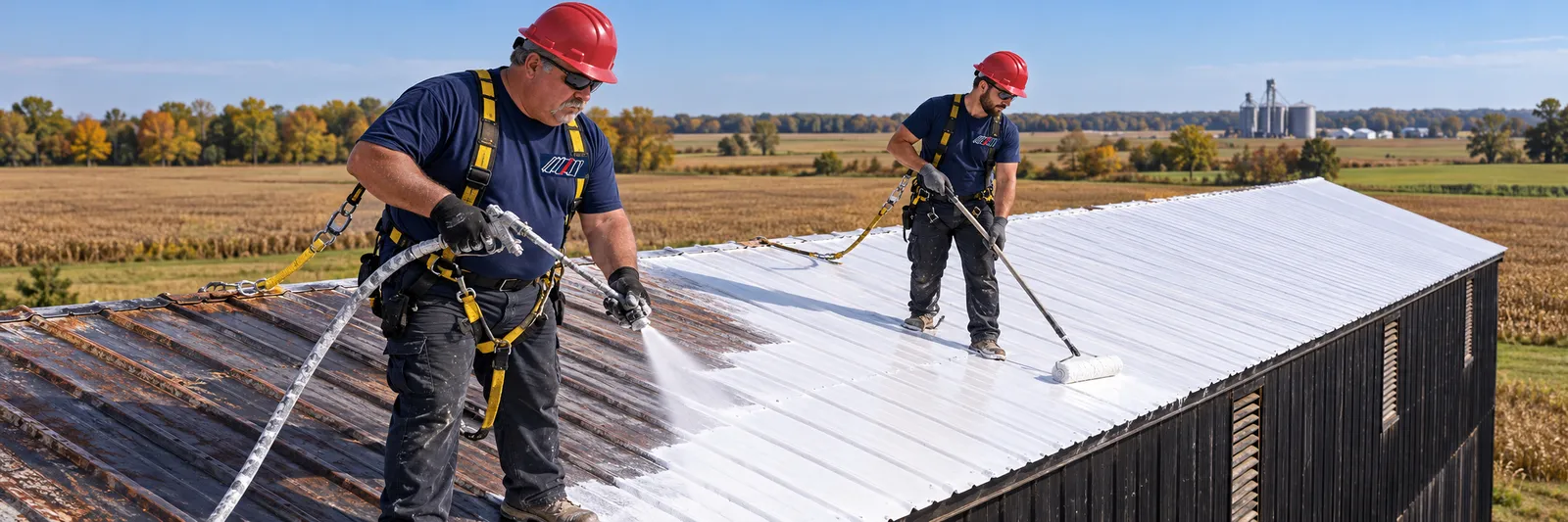
When insulation already exists, sealed screws, primed laps, and a full coat protect the steel.
Our metal coating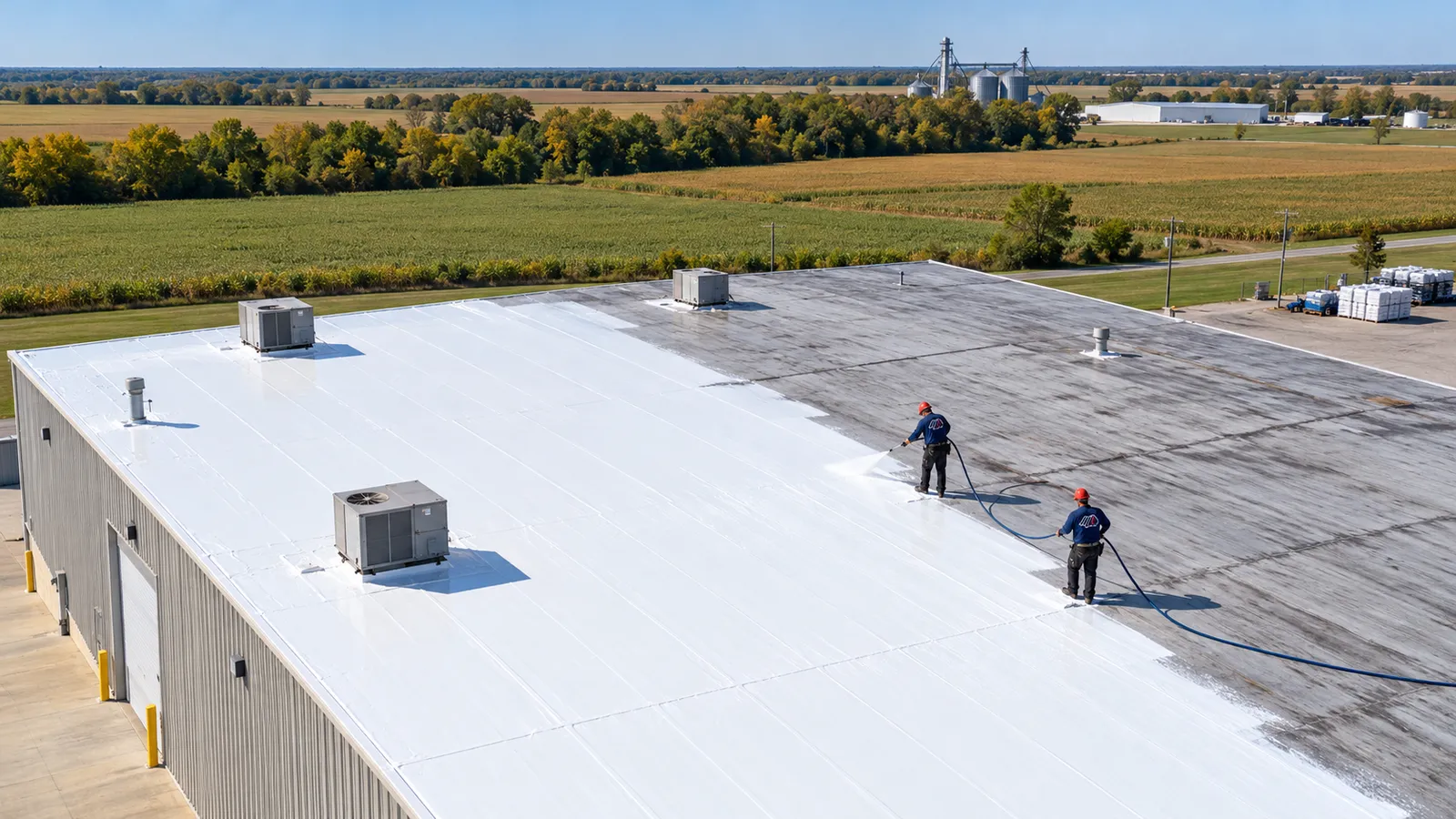
Low lean-to roofs off the main shop hold water at end laps, where silicone holds up best.
When silicone fits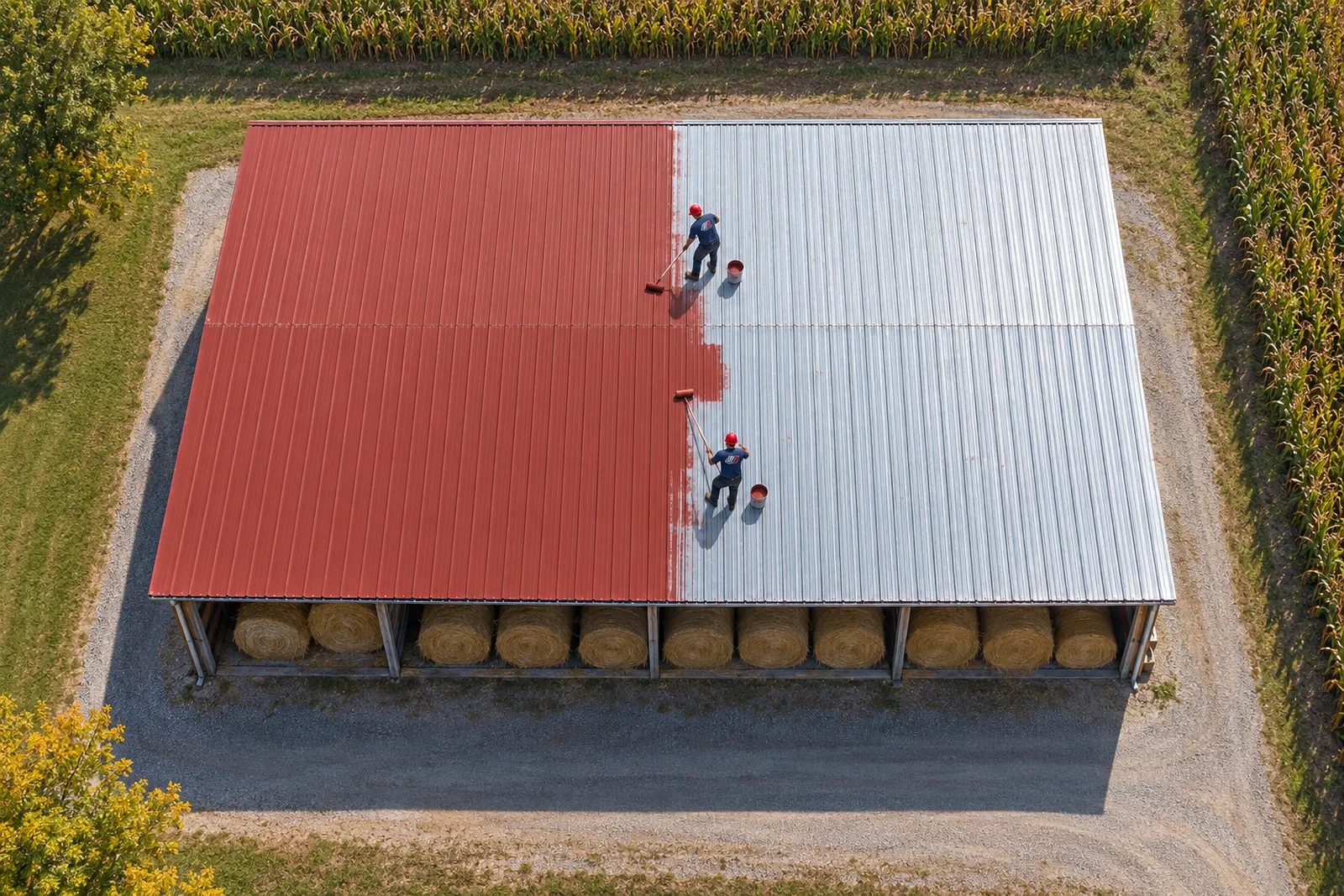
Steeper equipment shed panels that drain quickly take a bright acrylic topcoat after priming.
Acrylic topcoats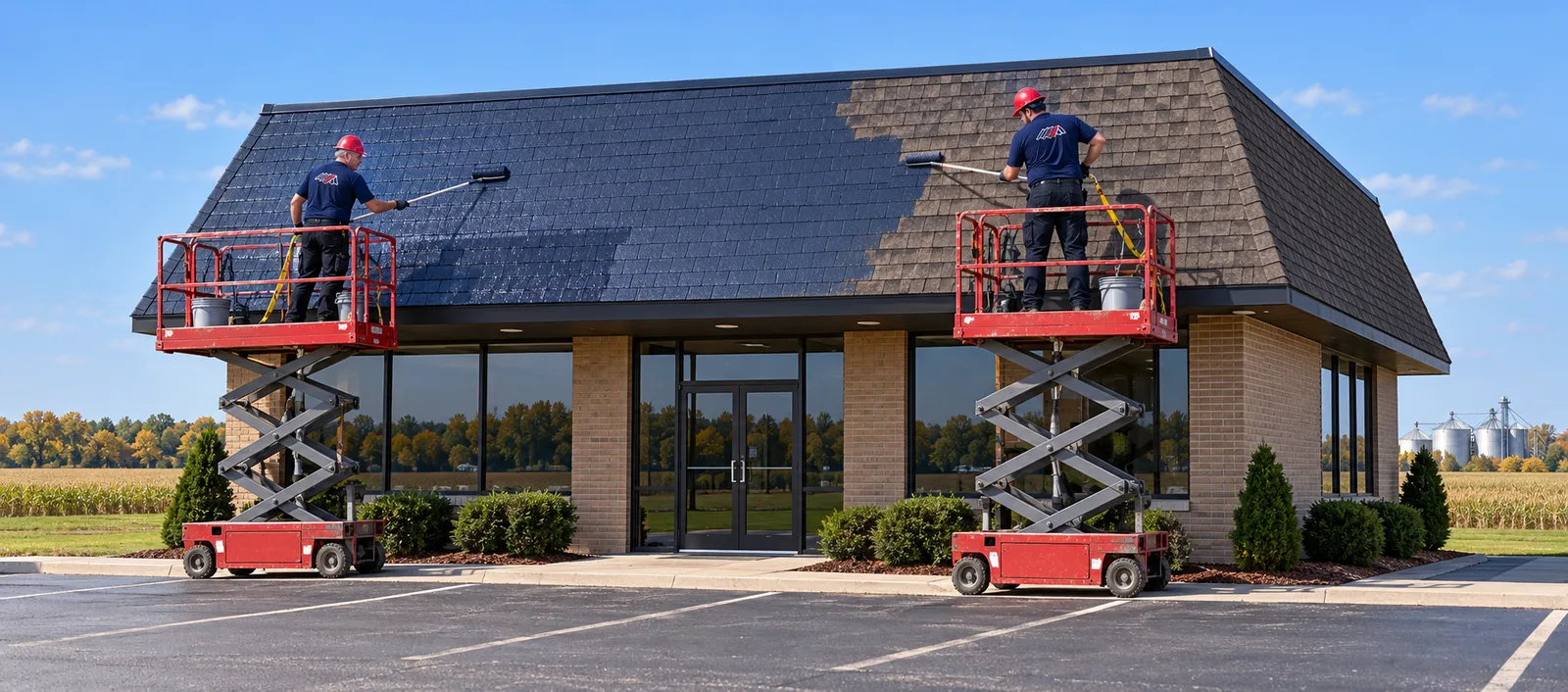
A farm office with flat shingles that keep their granules can be coated in the same visit.
Shingle coating basicsTell us whether drips come after rain or on dry mornings. That one detail points us toward coating or foam.
Both systems follow the same order. Foam jobs add masking and edge resets.
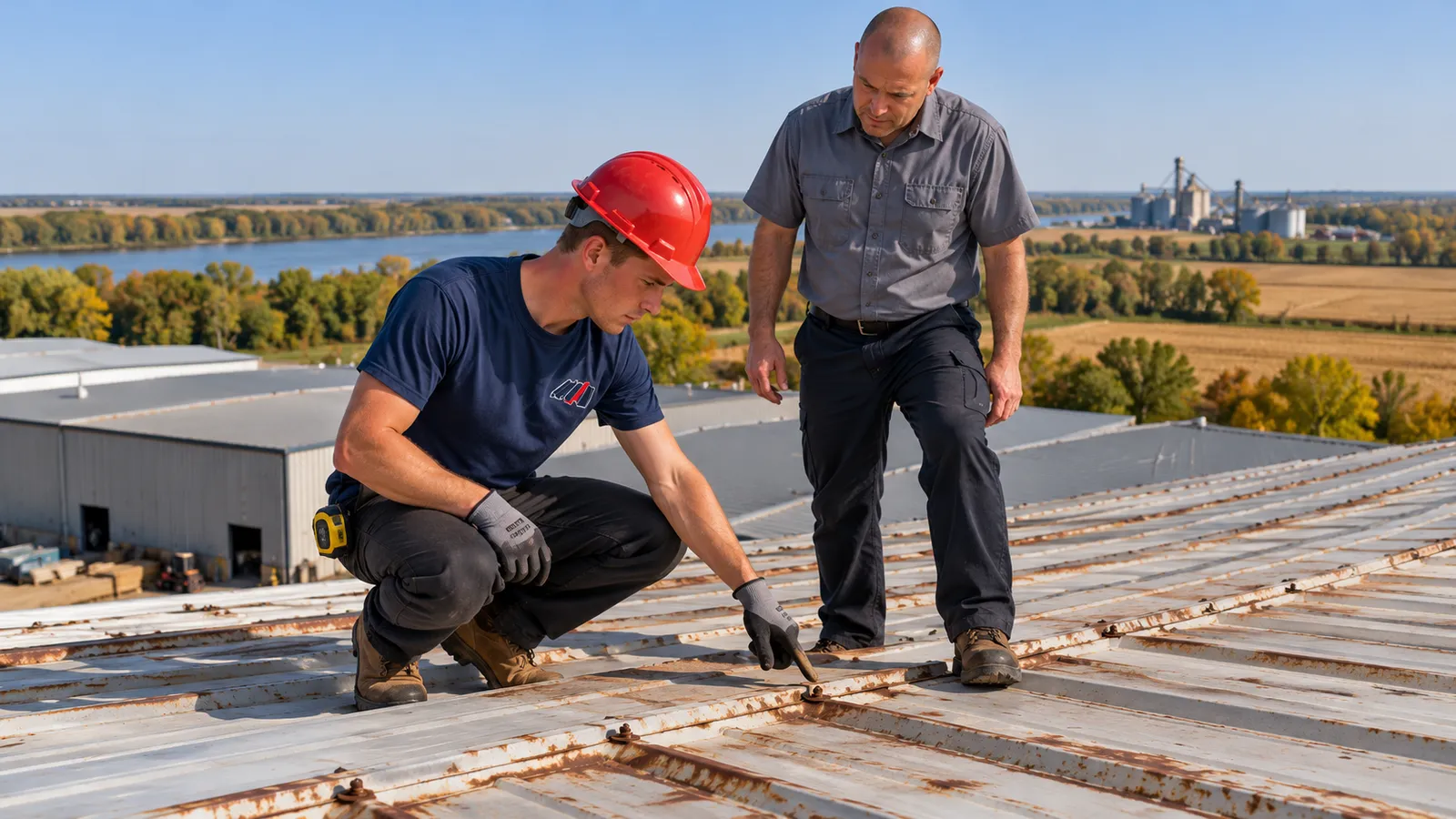
Our walk covers screw rows, eave rust, ridge caps, and the underside, where wet insulation or drips tell condensation from leaks.
Dust and chaff are washed out of the ribs, nests come out of the closures, and the panels dry fully.
Loose screws are tightened or upsized, and brushed rust at the eaves gets a rust-inhibiting primer.
For foam, vehicles and walls are masked against overspray, and gutters and drip edge are moved out to the new roof height.
Foam goes on to its planned thickness and gets a topcoat, or the coating goes straight over the sealed panels.
Farm or shop beyond Maceo? Call us or send us a message about it. We also coat commercial roofs in these towns.
East Daviess metal shops with screw-row rust.
Rural shops where dew and wind set coating days.
Storefront parapets, box gutters, and City Hall permits.
Industrial panels tested for adhesion near plant exhaust.
Damp riverside panels and shaded north slopes.
White rust on older galvanized shop roofs.
Large plant roofs coated one section at a time.
Parapet walls, scuppers, and mixed roof sections.
Canopies and awnings coated along with the main roof.
Shingle and metal sections on churches and offices.
Answers for owners of farm shops and equipment buildings around Maceo.
Yes, foam adds material, masking, and edge work. It also adds insulation, which coating alone barely changes. Owners with dripping, uninsulated shops often find the extra cost worth comparing, while insulated shops rarely need foam.
Rust at the eaves, packed gutters, and bird damage drive most of the prep. Heavy scale that needs grinding takes longer than flash rust, and every replaced washer adds labor before any coating is applied. Harvest timing matters too, since trucks and dust near the building can push the work to a quieter stretch.
Kenergy, the member cooperative serving Daviess County, is the likely provider, though your electric bill settles it. Ask whether any commercial program counts added roof insulation, what foam thickness and R-value records it wants, and whether it offers an energy assessment. Get any answer in writing.
OMPC, since Maceo is unincorporated Daviess County. A coating over firm panels changes little, but foam that raises the eave line, new roof openings, or framing repair are worth raising early with photos of each slope.
Timing tells you. Drips on cool, dry mornings come from moisture forming on cold steel, while drips during or after rain trace back to screws, laps, or ridge caps. Condensation calls for insulation, so foam fits better there. Some shops show both, and the inspection sorts which drips belong to which cause.
Yes. A foam roof gets a fresh topcoat when the old one wears thin, after cleaning and repairing any bird pecks or damaged spots in the foam surface. Keeping that topcoat intact is what protects the foam from sun, so worn areas near walkways and units get checked first.
Tell us about the shop and how the roof is acting. We follow up to check panels, screws, and the underside in person.