Metal Roof Coating
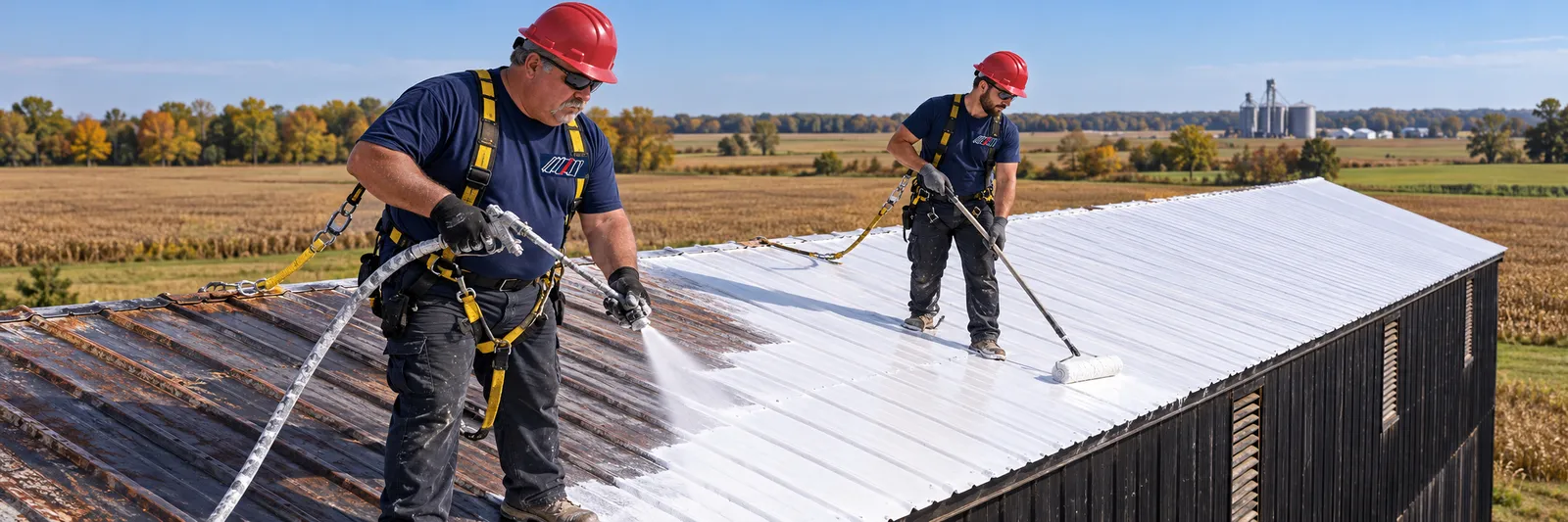
Degreased, primed, and sealed R-panel with a full coat once test patches hold.
Metal coating process
We coat industrial metal roofs in Lewisport, testing adhesion near fans and vents before the full coat so process residue never undercuts the work.
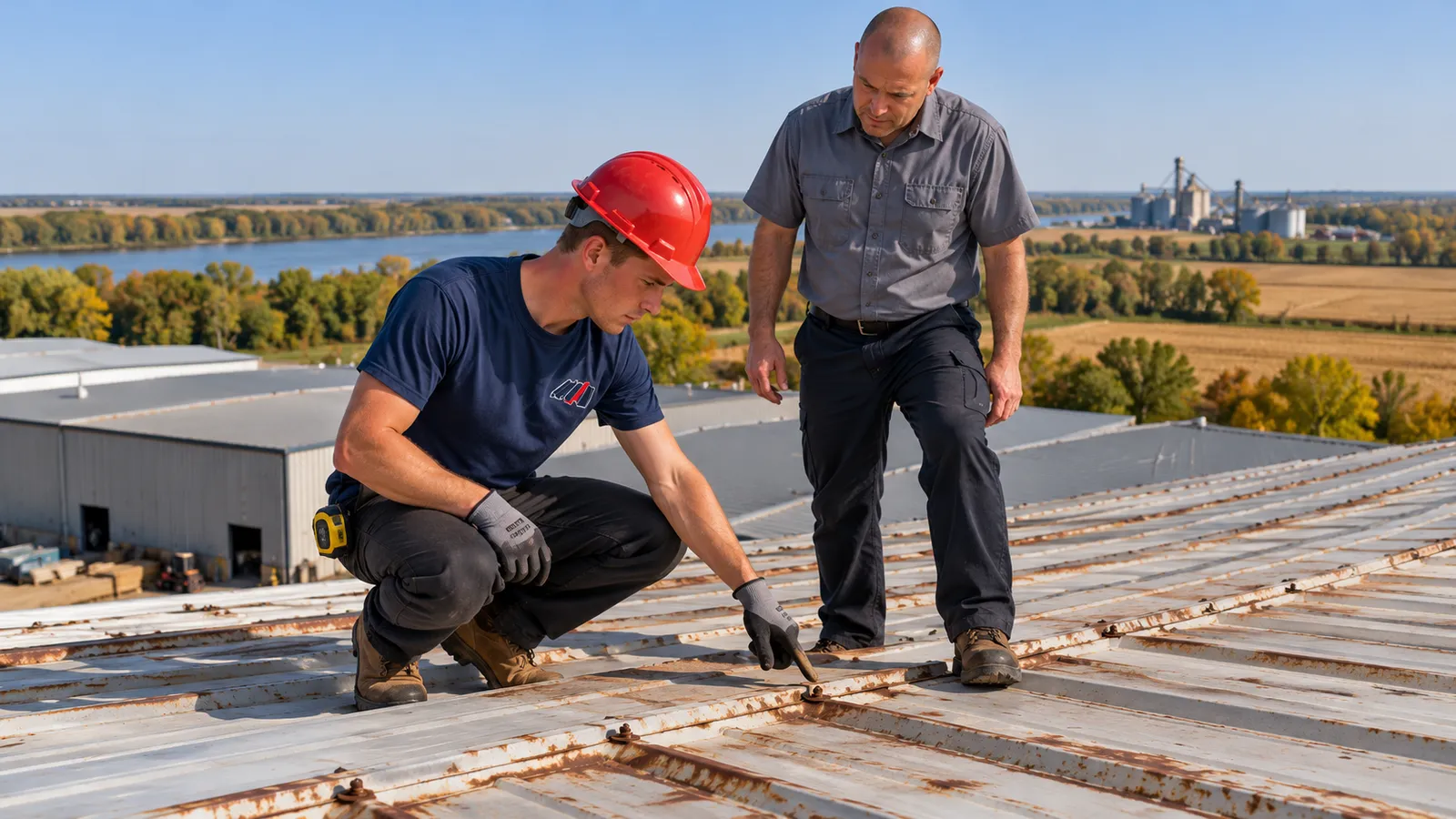
Lewisport metal roof coating on industrial buildings starts with proof that the coating will grip. A Kentucky state release describes the town's aluminum rolling mill, opened in 1966, which makes auto body sheet, and roofs near plant exhaust can carry a film of fallout and residue.
Small test patches go down near fans and vents, cure, and get pulled before we commit to a product.
Process buildings wear differently than storage shops. These zones decide prep and phasing.
Panels downwind of fans and stacks collect residue that films over the steel and blocks adhesion until it is degreased.
Fallout eats through the zinc layer in patches. Bare spots turn to red rust and need primer before any coating.
Wide plant roofs carry long end-lap lines that move with every heat cycle and open at the screws.
Air intakes have to shut down zone by zone during spraying, and their curb flashing often needs re-fastening first.
Translucent panels in a row of daylight openings crack and yellow. Cracked ones are replaced and the edges sealed.
Once test patches pass, coating keeps a plant roof running without opening it up. These benefits apply after inspection.
| Roof Detail | Coating The Roof | Replacing The Roof |
|---|---|---|
| Production Keeps Going | Work stays on top of the panels and intakes shut down one zone at a time | Roof opened over active floors |
| Rust Stopped At Etched Spots | Primer and coating cover steel where fallout ate the galvanizing | New panels with fresh zinc |
| Laps Sealed Across Long Runs | Fabric bridges every end lap on wide roofs | Hundreds of new laps and screws |
| Proven Adhesion First | Test patches show the product grips before the full coat | Not needed for new panels |
Test patch results and how each roof drains narrow the choice for industrial buildings.
Degreased, primed, and sealed R-panel with a full coat once test patches hold.
Metal coating process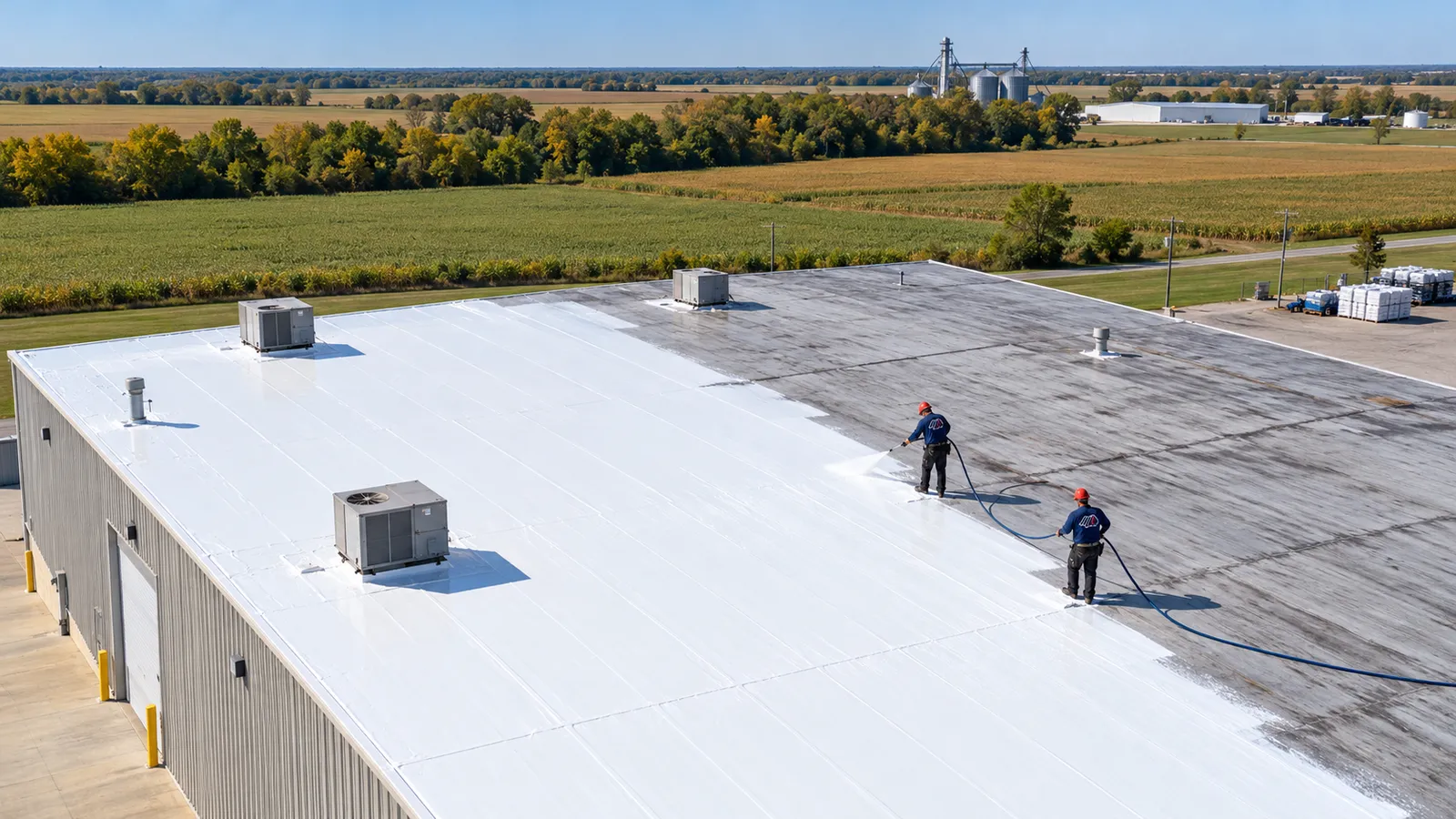
Covers low plant roofs and gutters where water sits after storms near the dock side.
Silicone on plant roofs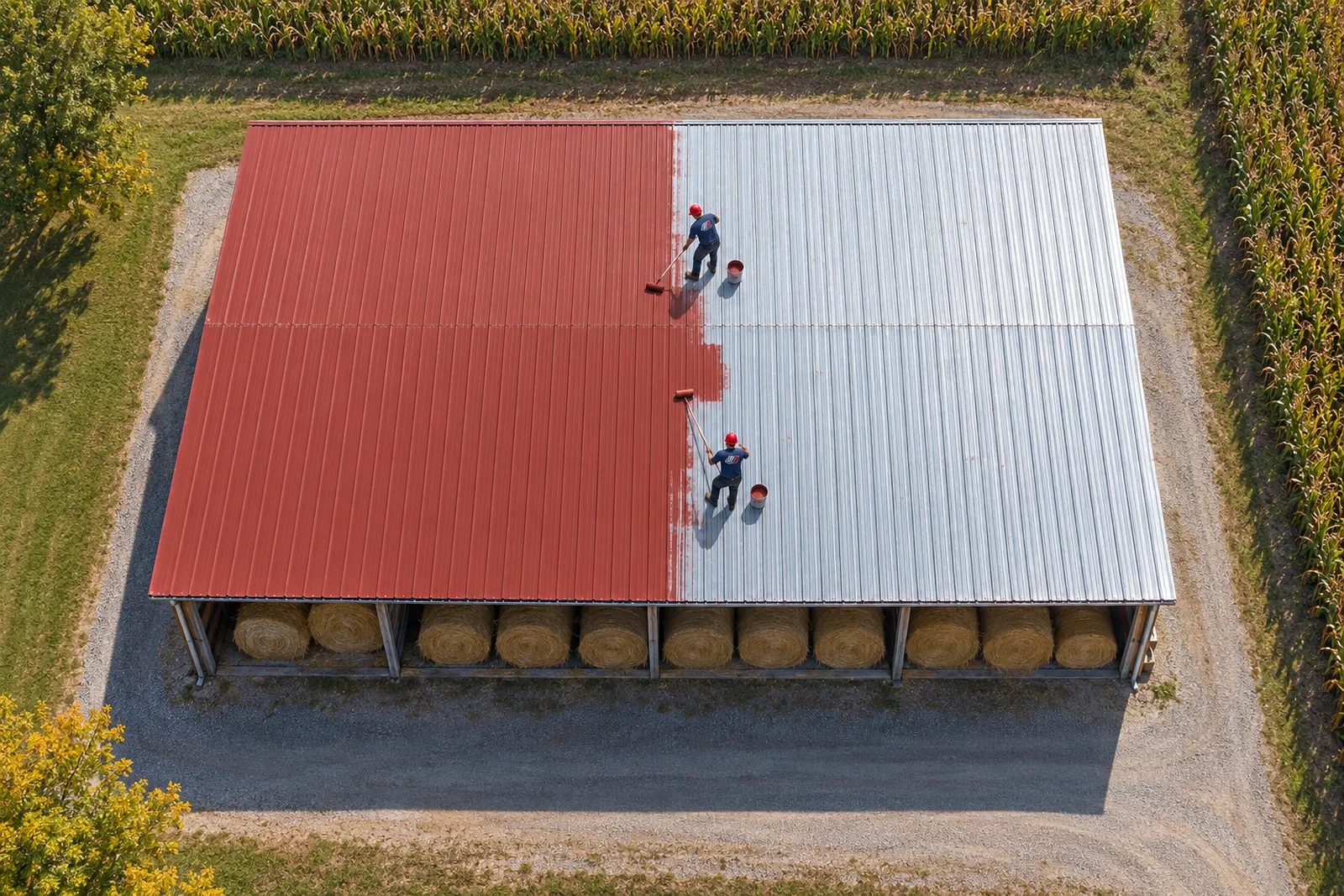
Pitched storage buildings that shed water fast and need a white reflective surface.
Acrylic coating facts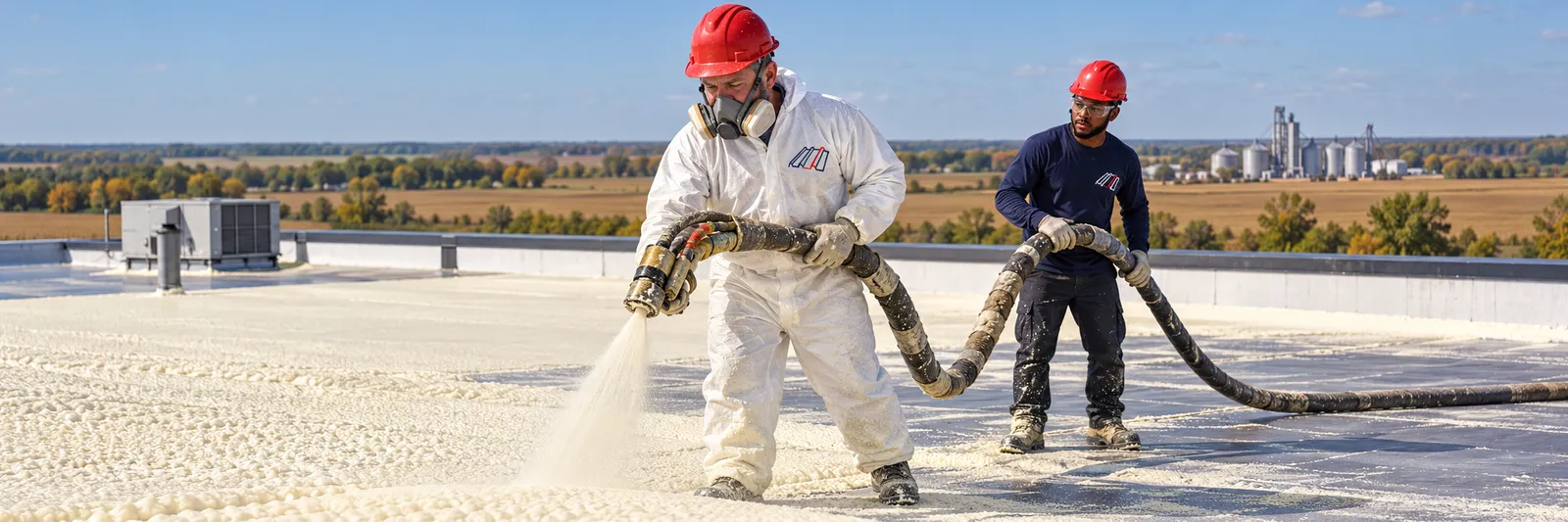
Insulates warehouse panels that drip condensation onto stock, with overspray kept off intakes.
Spray foam for warehouses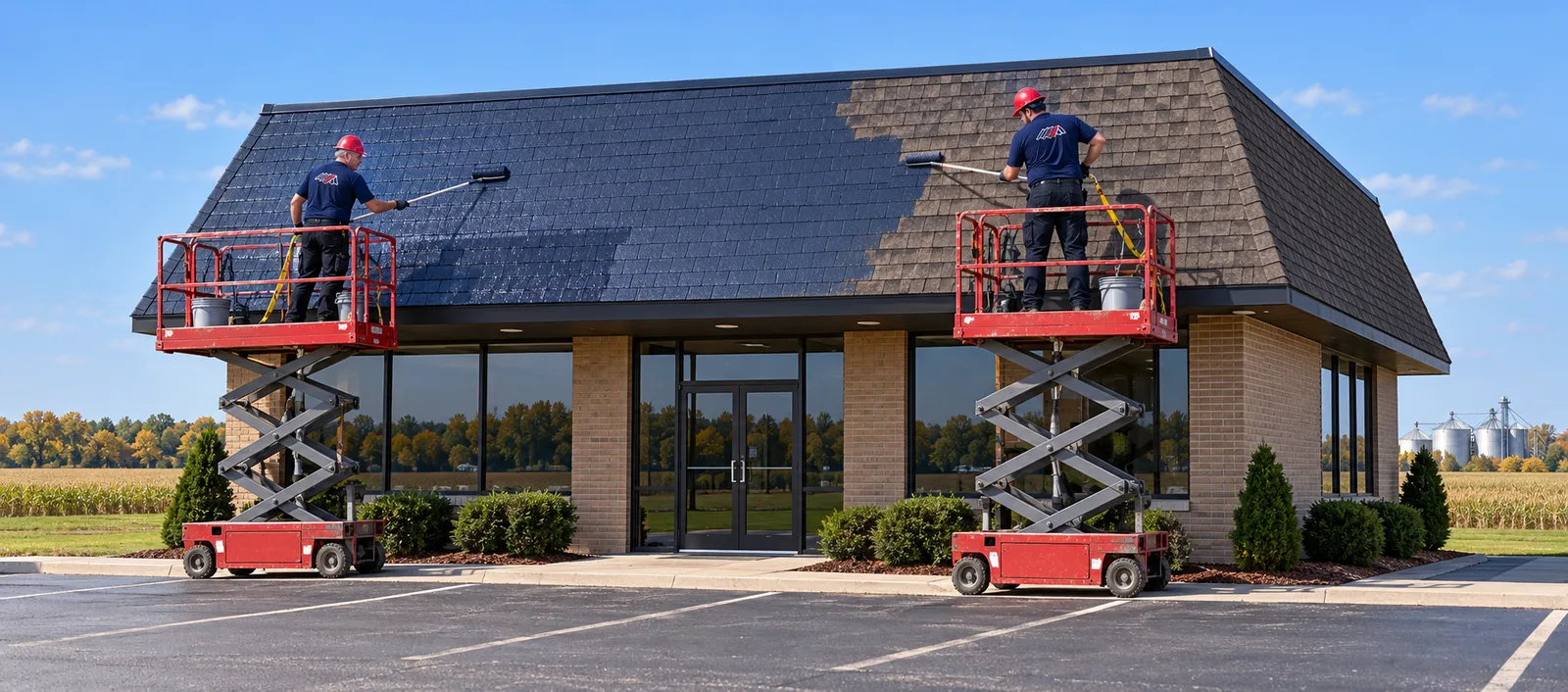
Office fronts with steep shingle sections, when the tabs still hold granules.
Shingle coating limitsTell us what runs inside and where the exhaust vents. That shapes the test patches and work zones.
Adhesion testing and zone planning sit between the inspection and the first coat.
We map exhaust zones, etched galvanizing, end laps, curbs, and skylight rows, and note plant rules on badging and hot work.
Small patches near fans and vents cure and are pulled. The results pick the cleaner, primer, and coating.
Stained panels are degreased and pressure washed, then rust primer covers every spot where the zinc is gone.
Intakes shut down one area at a time while laps, screws, and curbs in that zone get sealant and fabric.
Each zone gets base and top coats to the data-sheet thickness before the crew moves to the next.
Have a plant or shop beyond Lewisport? Call us or send us a message and ask. These are the other towns where we coat commercial roofs.
Foam or coating questions for farm and equipment shops.
East Daviess metal shops with screw-row rust.
Rural shops where dew and wind set coating days.
Storefront parapets, box gutters, and City Hall permits.
Damp riverside panels and shaded north slopes.
White rust on older galvanized shop roofs.
Large plant roofs coated one section at a time.
Parapet walls, scuppers, and mixed roof sections.
Canopies and awnings coated along with the main roof.
Shingle and metal sections on churches and offices.
Answers for owners of industrial and shop roofs in Lewisport.
A little, and they protect the rest of the spend. Patches use small amounts of material and a return trip to pull them after cure. Finding a bonding problem on a test square costs far less than a peeling coat across a whole plant roof.
More zones mean more setups. Each time intakes shut down for a section, the crew masks, sprays, and unmasks before moving on. Plants that allow larger shutdown areas need fewer setups, so the zone plan is priced with your operations schedule.
Adhesion testing comes first, since exhaust fallout and process residue can film over the panels. Expect test patches near fans and vents pulled after cure, degreasing and pressure washing of stained panels, rust primer where fallout has etched the galvanizing, and phased work so intakes shut down one zone at a time.
Yes. Hancock County lists the state building inspector and no local one with the Kentucky HBC, so building questions go to the state office, while Lewisport City Hall confirms any local rules. Washing, priming, and coating panels change little; new purlins, skylight openings, or spray foam are worth raising early.
Check the bill first. Both Kenergy and Meade County RECC list Hancock County, so the name on the electric bill tells you which co-op to ask about any program tied to a reflective roof coating. Keep the rated reflectance listing for the product chosen.
It holds when the product is rated for the temperature at that spot. Panels right around stacks and vent hoods are checked during inspection, and plant hot-work rules decide how close the crew can work. Those areas sometimes get a heat-rated product or stay as flashing.
Tell us about the building, its exhaust, and the roof. We follow up to inspect the panels and plan the test patches.