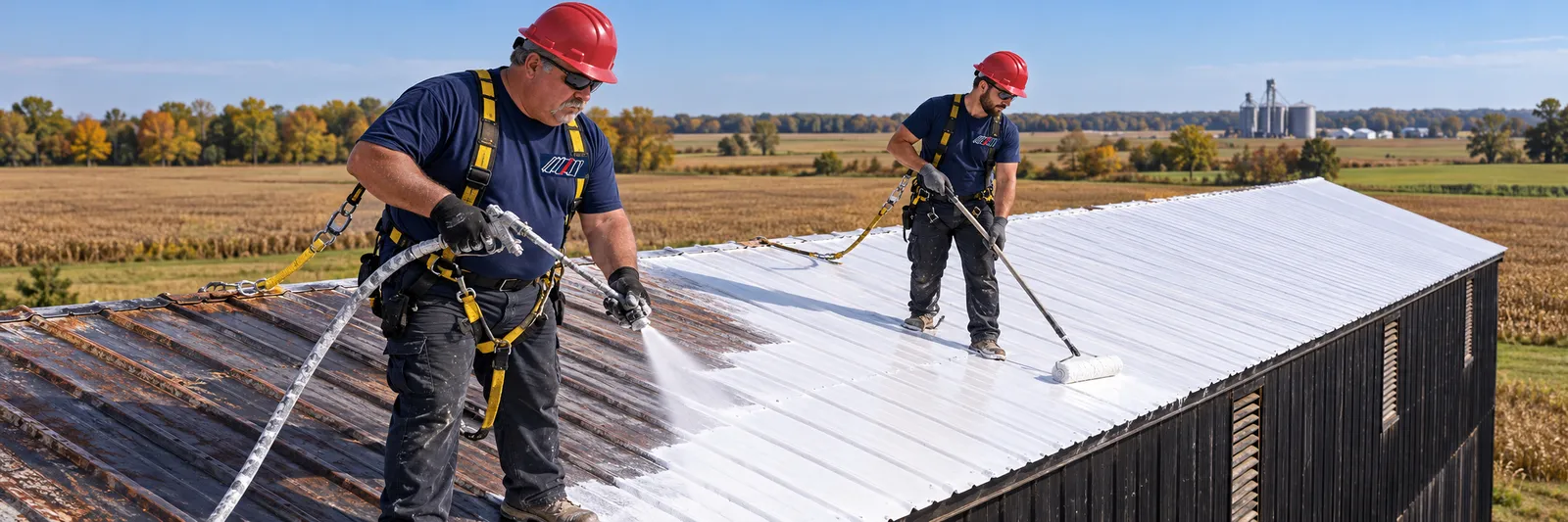
Metal Roof Coating
White rust cleanup, galvanized primer, sealed screws, and a full coat over the panels.
Metal coating details
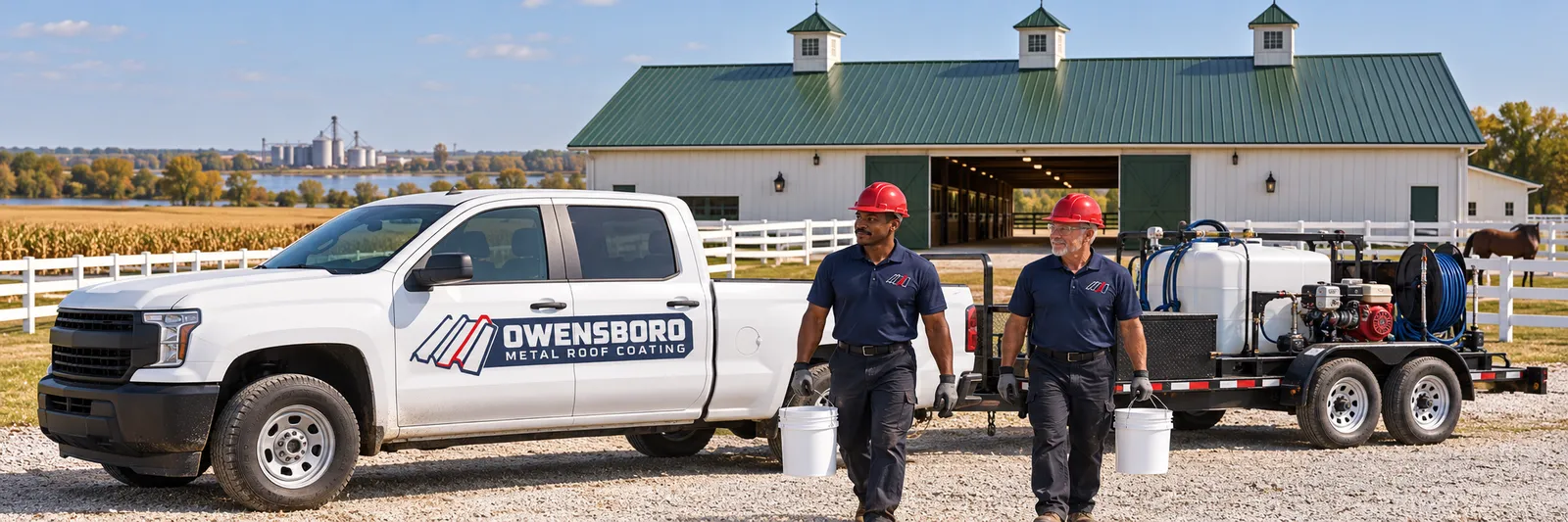
We coat older galvanized shop and equipment roofs in Livermore, scrubbing off white rust and priming bare zinc before any coating goes on.
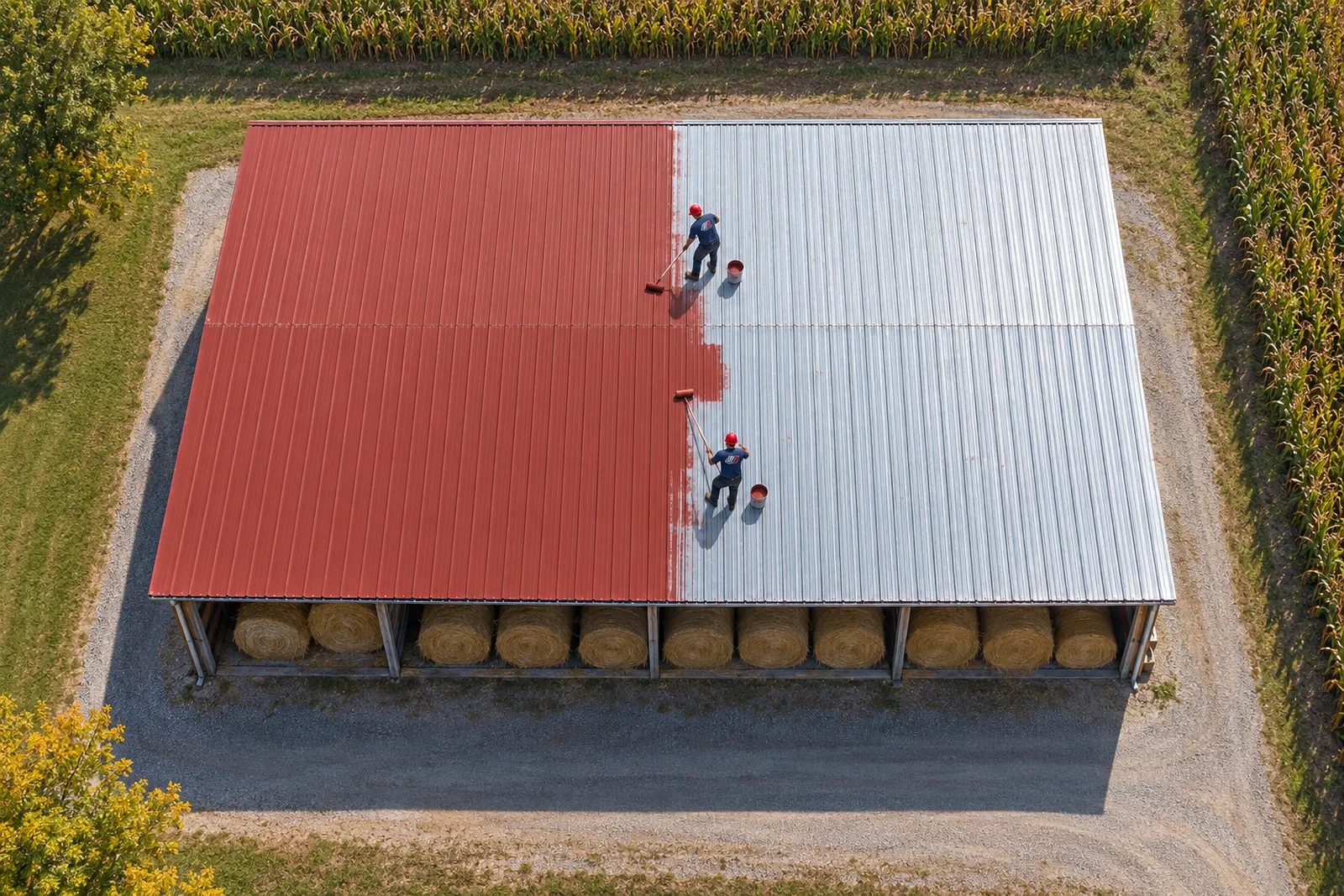
Livermore metal roof coating work on older shops often begins with a powdery white film. That zinc residue forms where water sits on galvanized steel: end laps, the bottoms of panel ribs, and under bird droppings.
Coatings grip poorly on chalky deposits, so the white rust is scrubbed off, rinsed, and primed with a product rated for galvanized steel.
Galvanized roofs age in a pattern. These five zones show how far the zinc has gone.
Water held at the overlap leaves white powder first, then red rust where the zinc layer has worn through.
Flat pans between the panel ribs stay damp longest. Streaks of white residue run down them toward the eave.
Washers harden and split on older shops, and rust rings form around each head in the screw rows.
Droppings and packed leaves hold moisture against the steel and leave stained, chalky patches under them.
Gutters on equipment buildings fill with chaff and silt, and their seams corrode faster than the panels above.
When the steel under the white rust is still firm, coating extends the roof you have. These benefits apply once it passes inspection.
| Roof Detail | Coating The Roof | Replacing The Roof |
|---|---|---|
| Zinc Loss Covered | Primer and coating protect steel where the galvanizing has worn away | Fresh galvanized panels |
| Screw Rows Sealed | Hardened washers are replaced or capped and coated over | New fasteners throughout |
| Shop Use Continues | Equipment and stock stay inside while the roof is coated from above | Panels removed over the bays |
| Light Reflective Surface | A white or light gray topcoat replaces dull, chalky zinc | Depends on new panel finish |
Most galvanized shops here take a metal system, and a few call for foam or silicone in spots.
White rust cleanup, galvanized primer, sealed screws, and a full coat over the panels.
Metal coating detailsPitched shop roofs that drain quickly and suit a recoatable water-based topcoat.
About acrylic coating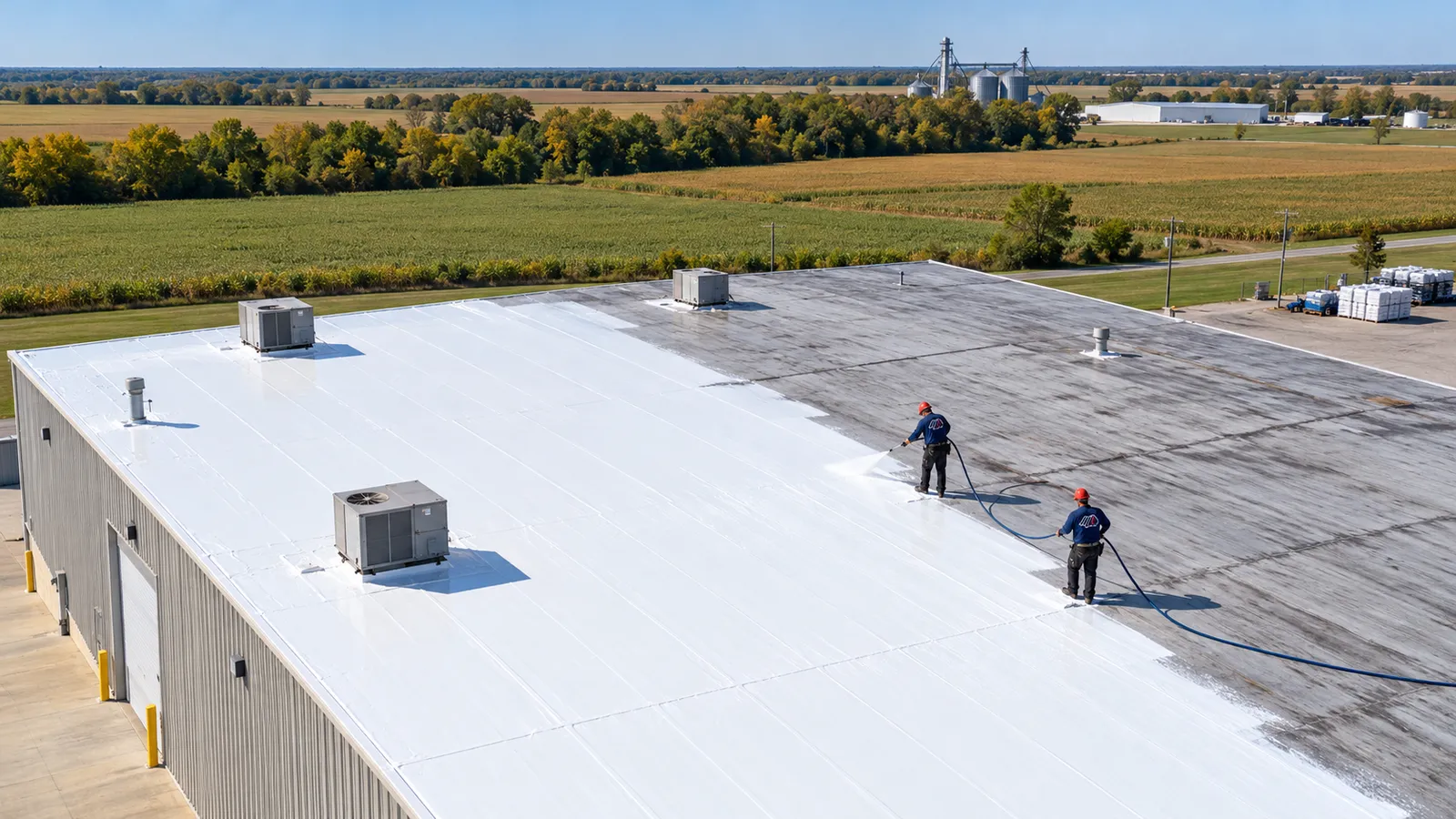
Low gutters and flat lean-to roofs where water collects at the eave.
Silicone for low spots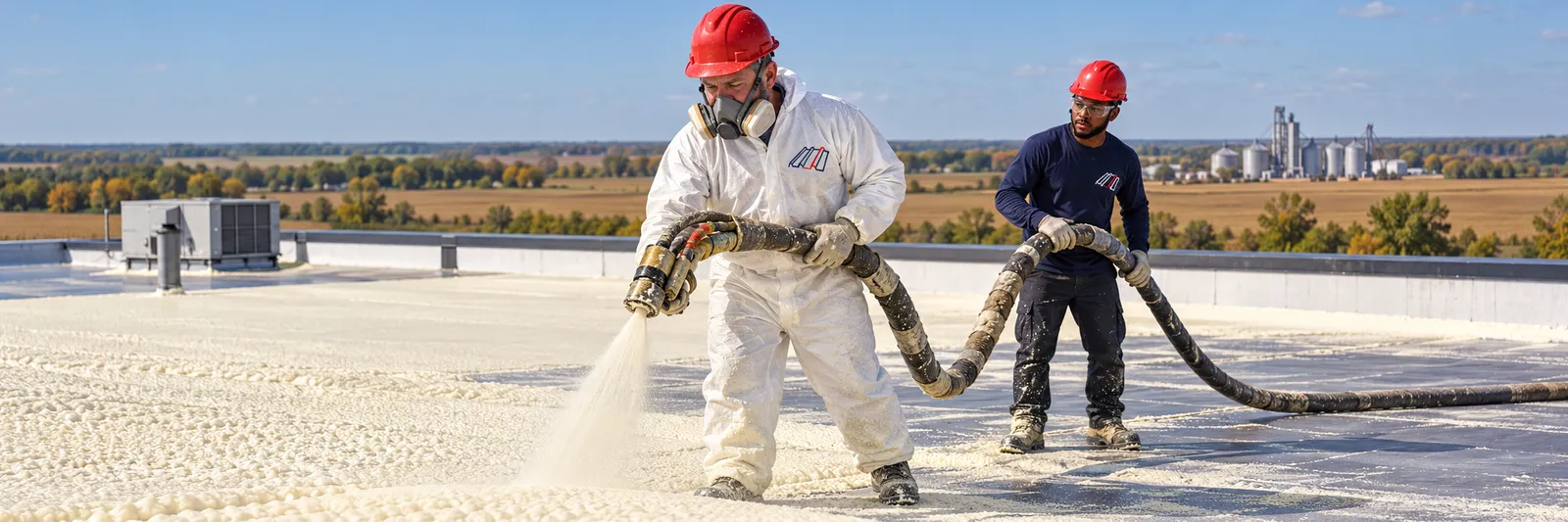
Equipment barns where condensation drips on machinery under bare steel.
Foam for equipment barns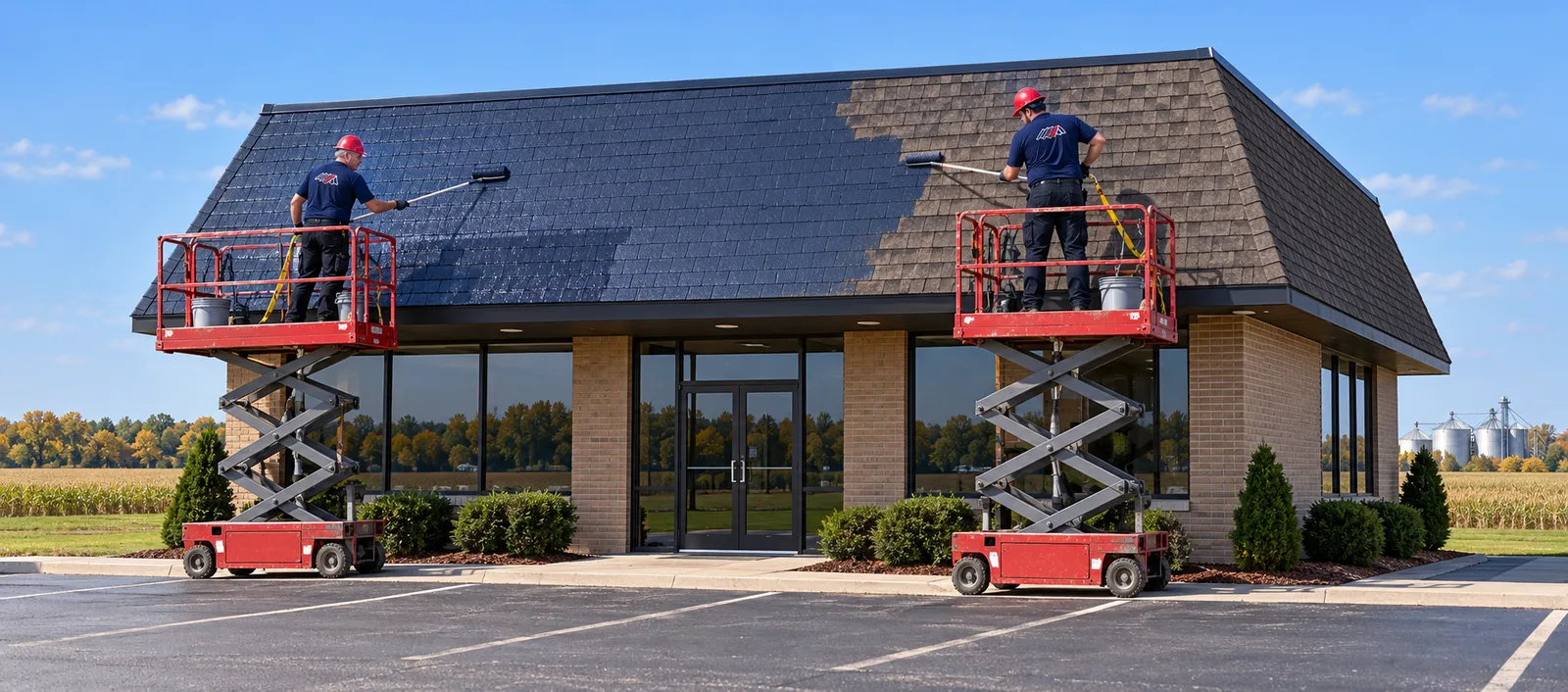
Office or church buildings with shingle slopes, after a granule and tab check.
Shingle coating rulesTell us about the shop and how old the roof is. White rust tells us a lot about the zinc left.
Cleanup and priming take more of the job on galvanized steel than on painted panels.
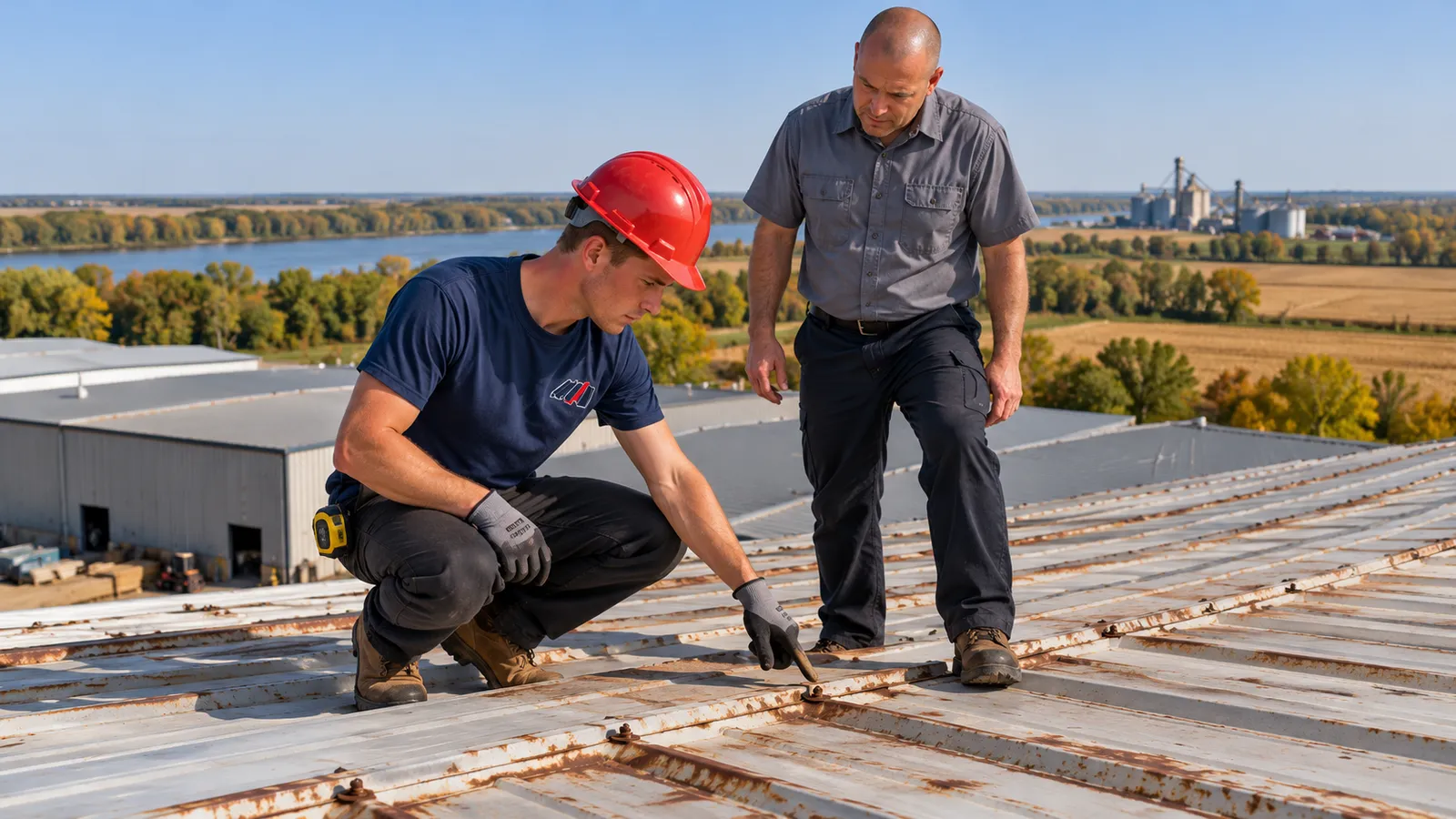
We check end laps, rib bottoms, screw rows, and gutters, and mark where white rust has turned to red.
Powdery zinc residue comes off with stiff brushes and an approved cleaner, then the panels are rinsed well.
Panels dry fully, and a small coated patch is checked for adhesion before the whole roof is primed.
Galvanized primer covers the field, rust primer goes on red spots, and screws and laps get sealant and fabric.
Field coats go on at the listed mil thickness, with extra build in gutters and at end laps.
Shop sits outside Livermore? Call us or send us a message with the location. We also take coating work in the towns below.
Foam or coating questions for farm and equipment shops.
East Daviess metal shops with screw-row rust.
Rural shops where dew and wind set coating days.
Storefront parapets, box gutters, and City Hall permits.
Industrial panels tested for adhesion near plant exhaust.
Damp riverside panels and shaded north slopes.
Large plant roofs coated one section at a time.
Parapet walls, scuppers, and mixed roof sections.
Canopies and awnings coated along with the main roof.
Shingle and metal sections on churches and offices.
Answers for owners of galvanized shops and equipment buildings in Livermore.
Yes, because cleanup and galvanized primer add labor. Light white film scrubs off quickly, while heavy deposits and red rust beneath them take more brushing and two primers. The amount of each across the roof sets that part of the estimate.
It is when the panels are firm and the shed protects equipment you want kept dry. Small roofs carry setup cost like big ones, so pairing a shed with a larger shop roof on the same visit spreads that cost.
Start with the McLean County building inspector, since the county lists a local inspector with the Kentucky HBC, then call Livermore City Hall for city rules. Bring questions about replaced panels or new purlins, taller curbs for rooftop units, and gutter or downspout changes near the street.
Until the steel is fully dry, laps included. Water trapped at end laps and rib bottoms would sit under the primer, so we check those spots before priming. On cool or damp days that means waiting until afternoon or the next dry day.
It is scrubbed off and primed before coating, because the powdery zinc residue keeps coating from gripping. We use a stiff brush and a cleaner the coating maker approves, rinse, let the panels dry, test a small patch, and prime with a product rated for galvanized steel. Red rust showing through gets rust primer too.
Kenergy serves McLean County, so its member services line is the place to ask about any energy program tied to a reflective roof coating. Keep the product's rated reflectance listing and before and after photos of the panels for that conversation.
Tell us about the shop and its roof. We follow up to check the white rust, screw rows, and gutters in person.