If Your Roof
Built-in gutters still hold water a day after rain
Gutter seams that stay wet rust through first, so they get primer, fabric, and a ponding-rated coat.
Start WithSilicone Roof Coating

We spray silicone roof coating on commercial metal and low-slope roofs in Owensboro, built heavier at gutters, low laps, and drains where water stands.
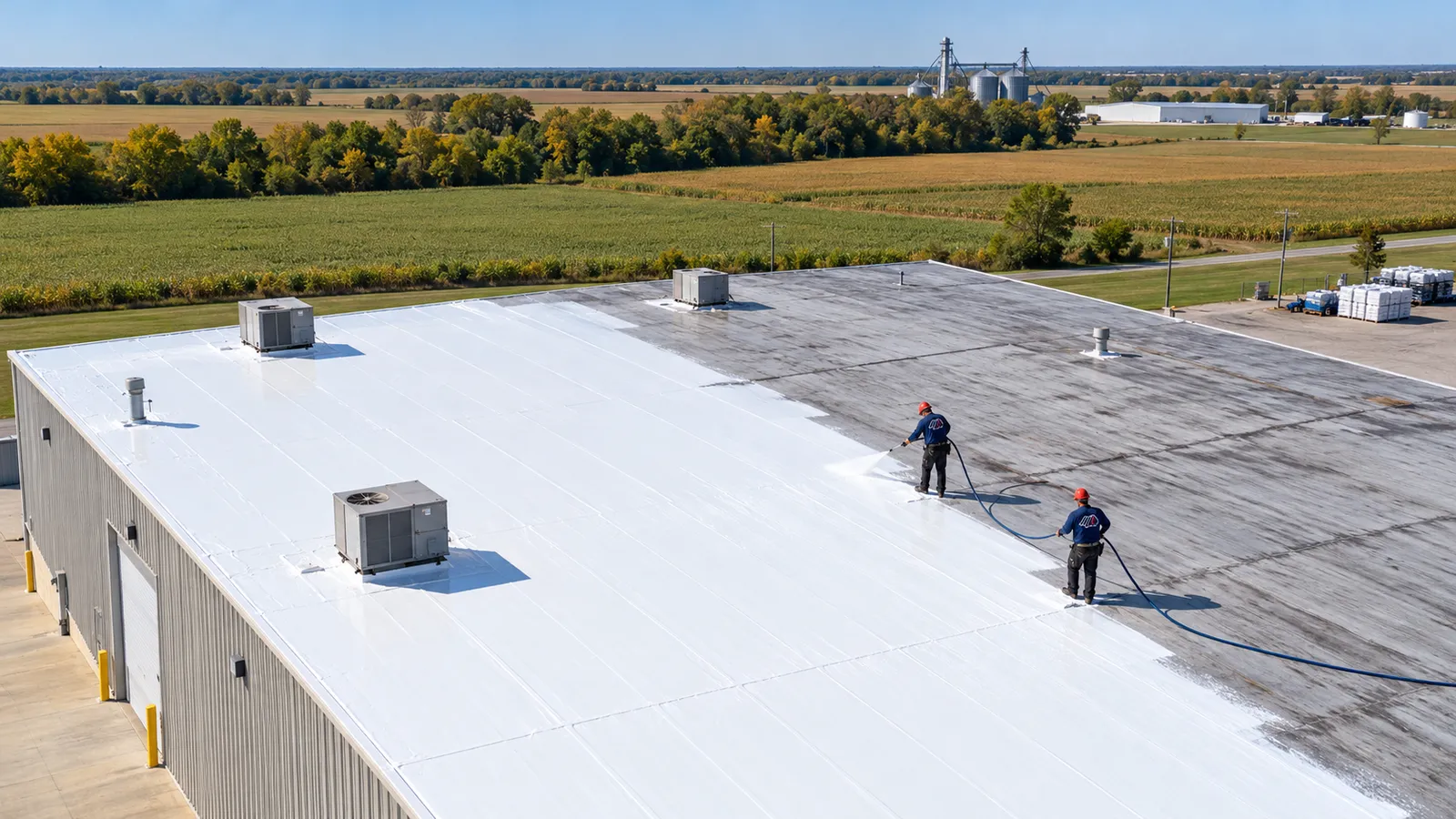
Silicone earns its place where water sits after rain. On a roof that sheds water fast, acrylic often does the same job.
Gutter seams that stay wet rust through first, so they get primer, fabric, and a ponding-rated coat.
Low-slope membranes and old built-up sections take silicone after a moisture check and the right primer.
Adhesion tests decide the primer. If that coat is silicone already, only more silicone bonds to it.
Wet insulation is cut out and replaced first, because coating over it traps the water in the roof.
Ponding shows up in the same few places on metal and low-slope buildings. Each one gets its own detail before the silicone goes down.
Water sits in box gutters after every rain, and leaves plug the outlets. Seams get cleaned to bare metal and reinforced with fabric.
At the bottom of a long run, end laps sit flatter and collect water and dirt. Rust and open gaps show here before anywhere else on the slope.
Additions with almost no slope hold a ponding ring around the drain. Silicone stays put under standing water that would soften acrylic.
HVAC curbs dam water on their uphill face. Flashing seams there get fabric, and loose curb flashing is re-fastened first.
Dents at seams and ridge caps can chip a coating and open joints. Bright metal in a dent gets primed and recoated soon after a storm.
Silicone goes over several roof types here. The prep and primer change with the surface under it.
Screws sealed, laps reinforced, rust primed, then silicone across the field and extra build in the gutters.
Metal roof prep explainedSeams and blisters repaired after a moisture check, then a primer the coating maker lists for that membrane.
Protects spray foam from sun and weather, and gets recoated with more silicone when it wears.
Foam roofing with a silicone topA worn silicone roof is cleaned and recoated with silicone, since other coatings bond poorly to it.
Where the rest of a roof drains well, silicone can go only in the gutters and low corners with acrylic elsewhere.
Pairing silicone with acrylicWith silicone over a dry, repaired roof, these are the gains compared with replacing the roof.
| Roof Detail | Coating The Roof | Replacing The Roof |
|---|---|---|
| Ponding Areas Sealed | Silicone holds up where water sits at gutters and low laps | New gutters and flashing at every low spot |
| Longer Work Season | Tolerates cooler, damper days in spring and fall | Tear-off needs dry days start to finish |
| Building Stays Closed In | The old roof stays in place under the new coat | Sections open to weather during the work |
| Simple Recoat Later | Cleaned and recoated with silicone when it wears | Next replacement starts from scratch |
Tell us where water sits and how long after rain. Those spots decide how much silicone goes where.
Silicone goes on last, after the roof is dry, repaired, and primed for its surface.
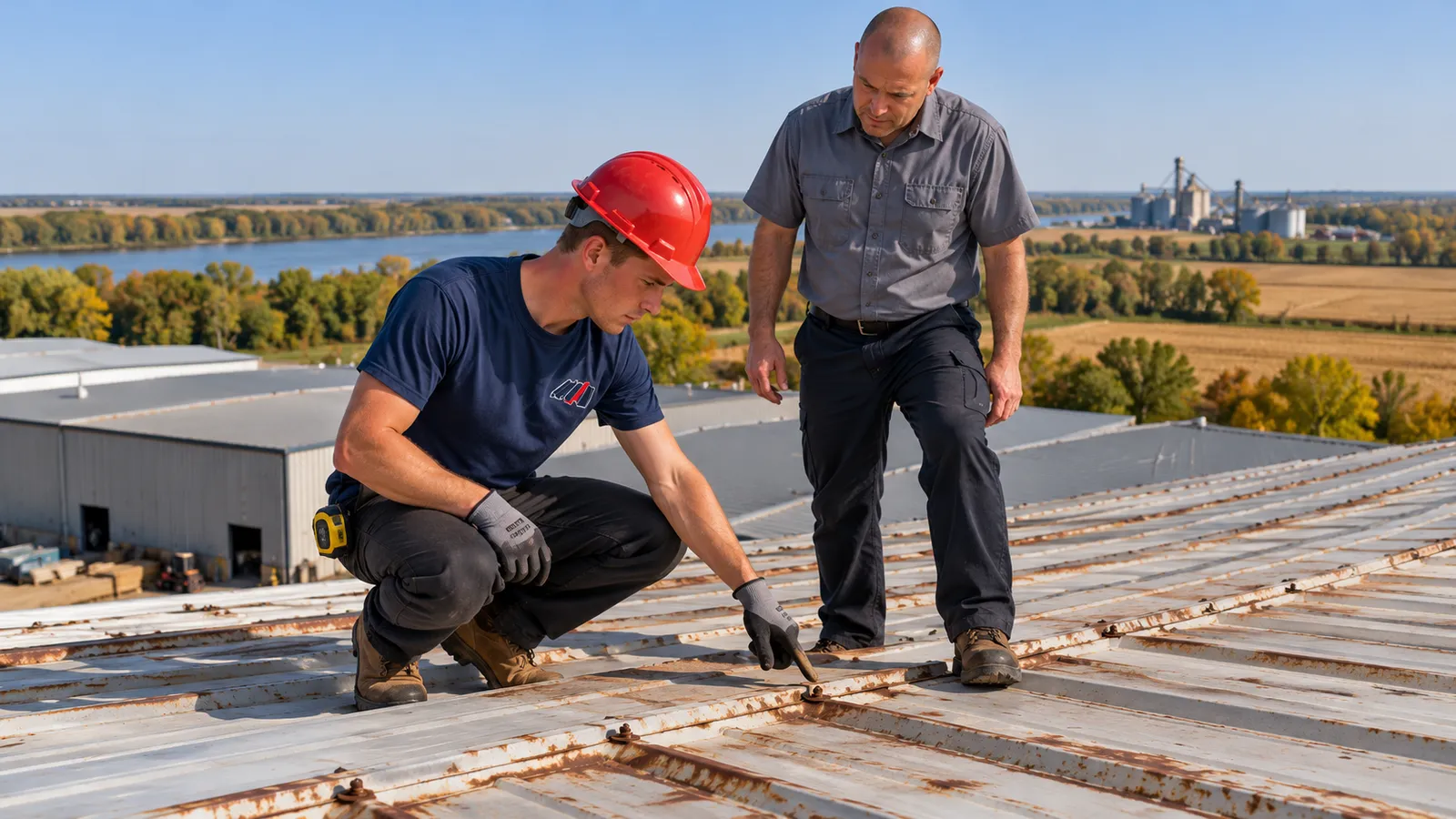
We map ponding areas, open laps, wet insulation, and any old coating, then run adhesion test patches where the surface is unknown.
Pressure washing removes dirt and chalk from the panels and membrane. Low spots get time to dry fully, since silicone bonds poorly to a wet surface.
Wet insulation is replaced, rust is primed, and membranes get the primer their coating maker lists to stop bleed-through.
Gutters, end laps, drains, and curb seams get fabric bedded in base coat before the field is sprayed.
Silicone goes on to the listed thickness, heavier in ponding areas, with wet-film readings taken across each section.
Most silicone jobs here sit on one of these two systems.
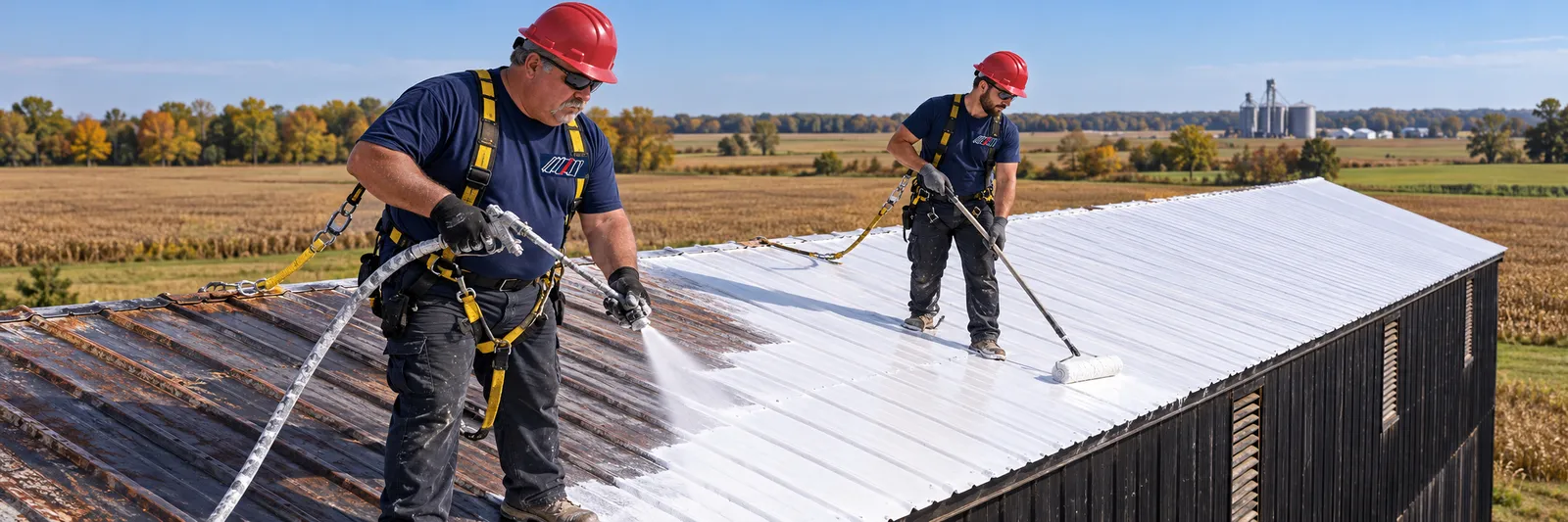
Silicone over steel starts with sealing every screw and priming rust at the laps.
Best For R-panel shops and warehouses
Metal roof coating in Owensboro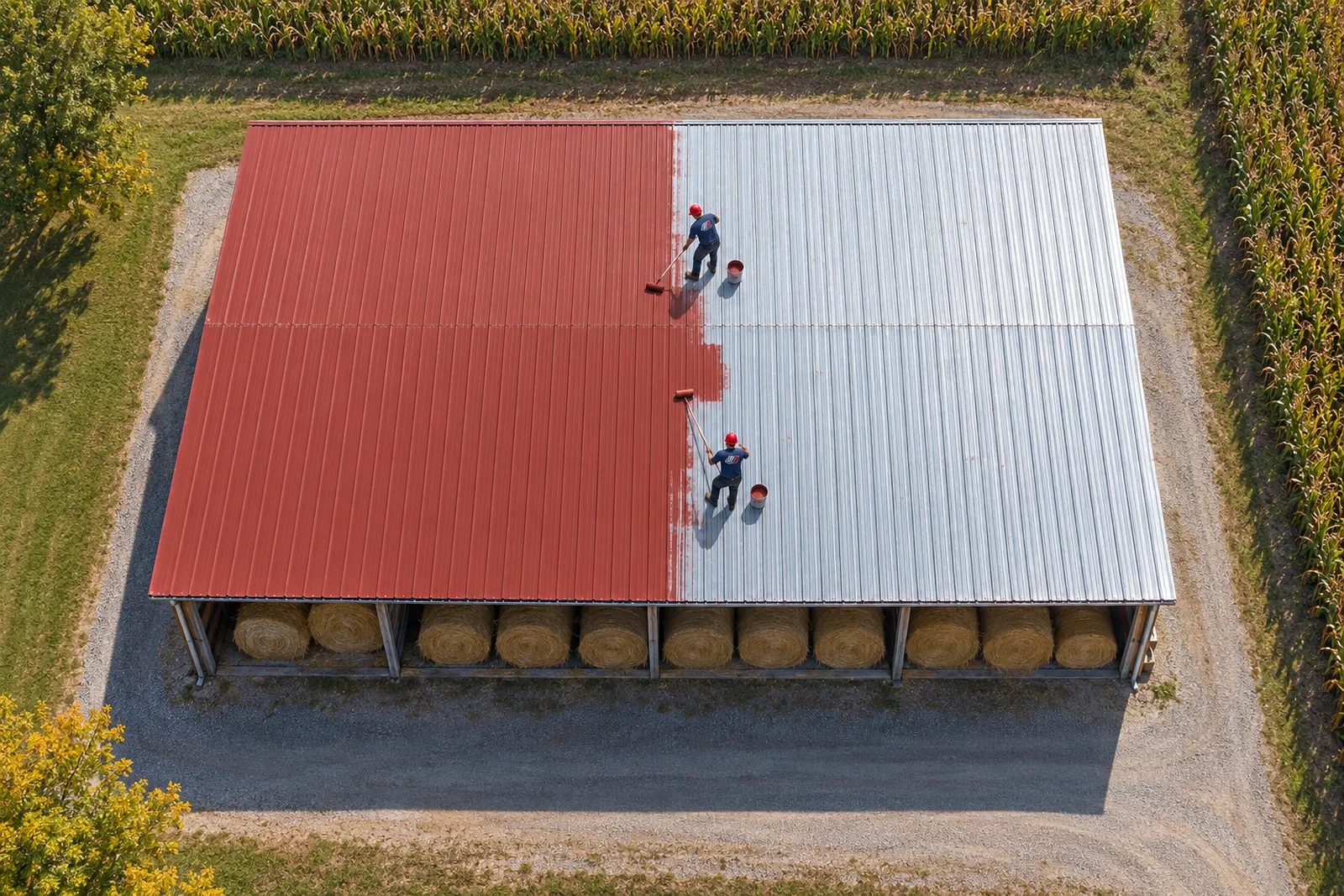
Acrylic is the lighter-duty choice for sloped roofs that drain fast and stay cleaner.
Best For Pitched steel with good drainage
Acrylic roof coating in OwensboroWhat Owensboro owners ask before choosing silicone.
Per gallon, usually yes, and gutters and low laps take extra build. Many roofs end up with silicone only where water sits and acrylic on the fast-draining field. Prep work like screw sealing, rust primer, and fabric at laps costs the same under either coating.
Wet insulation and old coatings. Soaked areas found during the moisture check are cut out and replaced, and an unknown coating needs adhesion tests and the right primer. Blisters, open seams, and failed drain clamps are repaired before the silicone goes on.
With brush-grade mastic or polyester fabric bedded in base coat before the field coat. These joints move as steel heats and cools, so they get a three-course detail: a coat, a fabric strip, and a second coat. Skylight panels, curbs, and pipe boots get the same treatment where they meet the steel.
Bright metal in the center of dents, coating flakes in gutters, cracked skylight panels, and laps opened where a panel edge bent. Spot priming and recoating exposed steel soon after the storm keeps rust from starting. Insurance claims stay between you and your carrier; dated photos help.
Silicone holds up better where water sits in gutters and low end laps, while acrylic suits sloped steel that drains fast. Silicone collects more dirt and is slick when wet, and later recoats bond best to more silicone. Acrylic stays cleaner and accepts many coatings at recoat time.
Often, once adhesion is proven. We clean the old acrylic, pull test patches, and use the primer the coating maker calls for. Loose or peeling acrylic is scraped off first, because silicone is only as well attached as the layer underneath it.
Tell us where water stands on your roof. We follow up to inspect the gutters, laps, and drains in person.