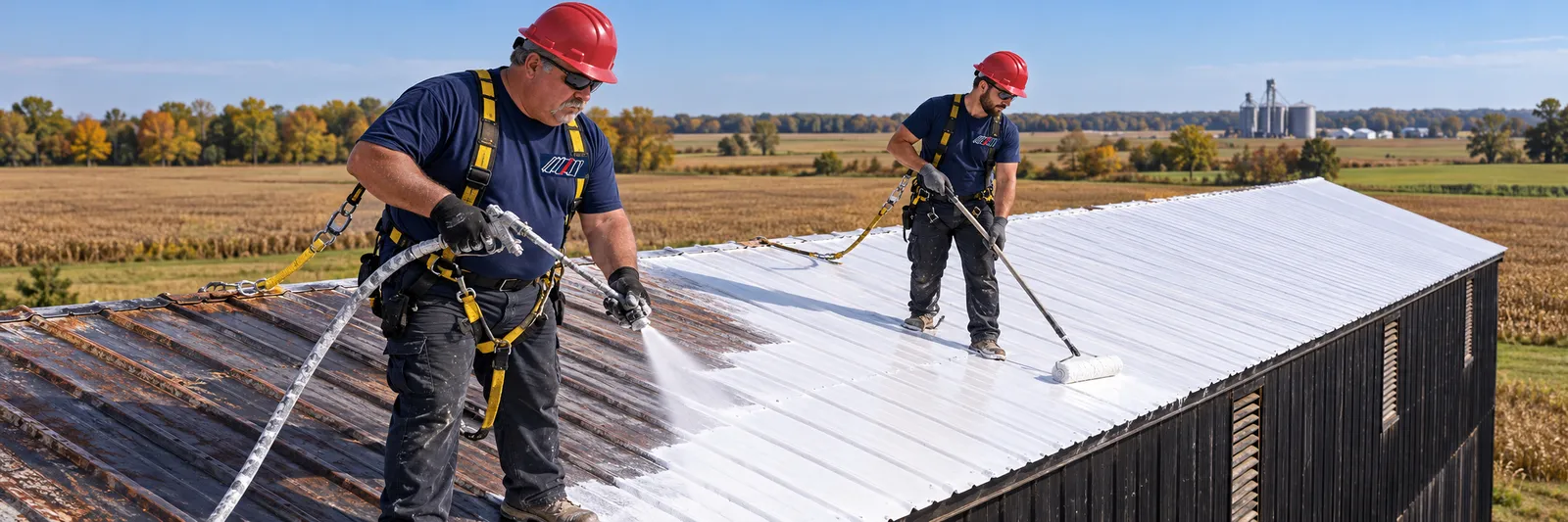
Metal Roof Coating
Sealed screws, primed rust, fabric at laps and caps, then a full coat over R-panel or standing seam.
Best For Warehouses, shops, farm buildings
Metal roof coating details
Our commercial roofing services in Owensboro cover five coating systems. The roof surface and how water leaves it decide which one we use.
Each card says what the system goes over and where it works best on a commercial building.
Sealed screws, primed rust, fabric at laps and caps, then a full coat over R-panel or standing seam.
Best For Warehouses, shops, farm buildings
Metal roof coating details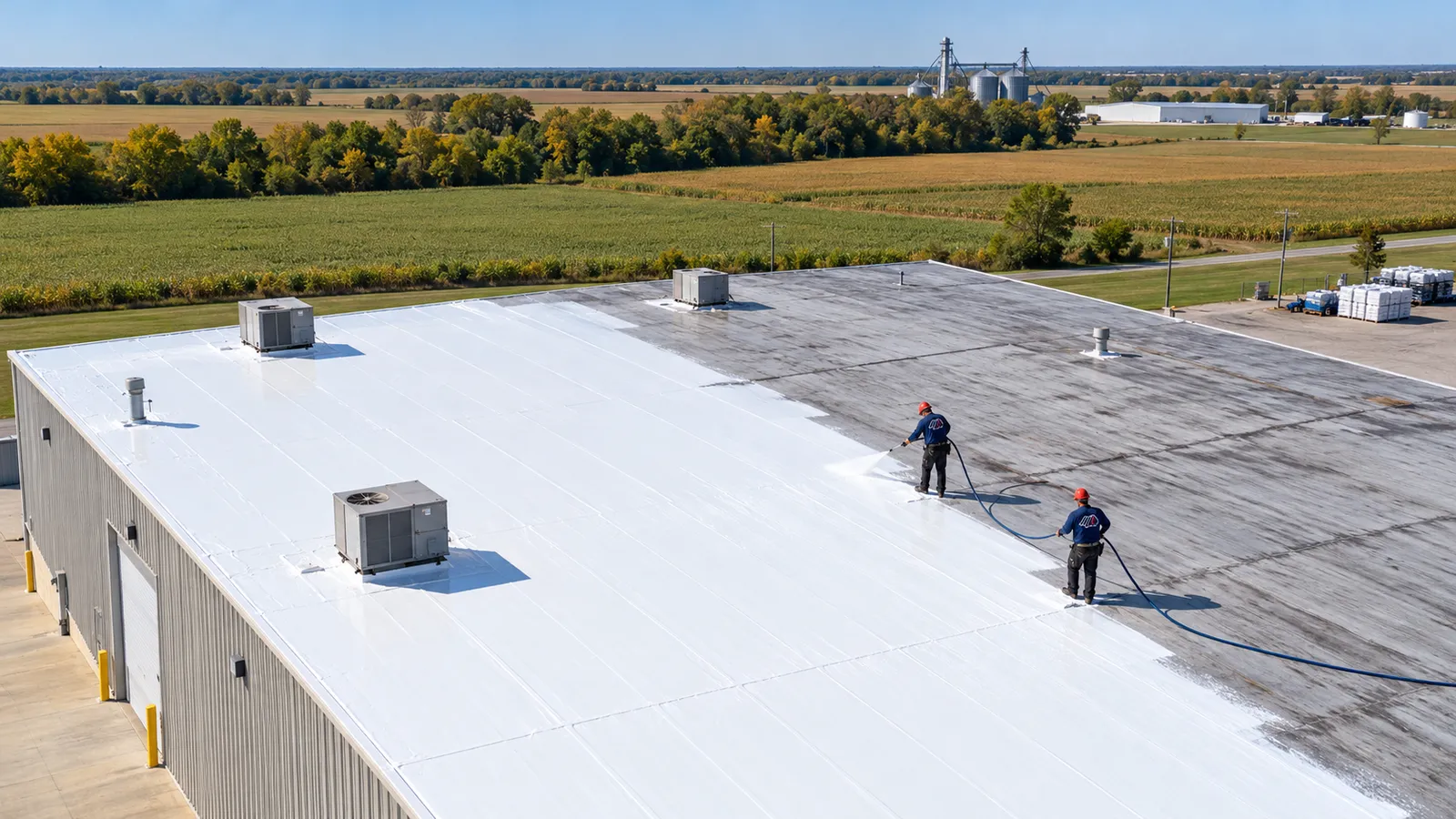
Built heavier where water stands, at box gutters, low end laps, and flat corners near drains.
Best For Roofs that hold water after rain
Silicone roof coating details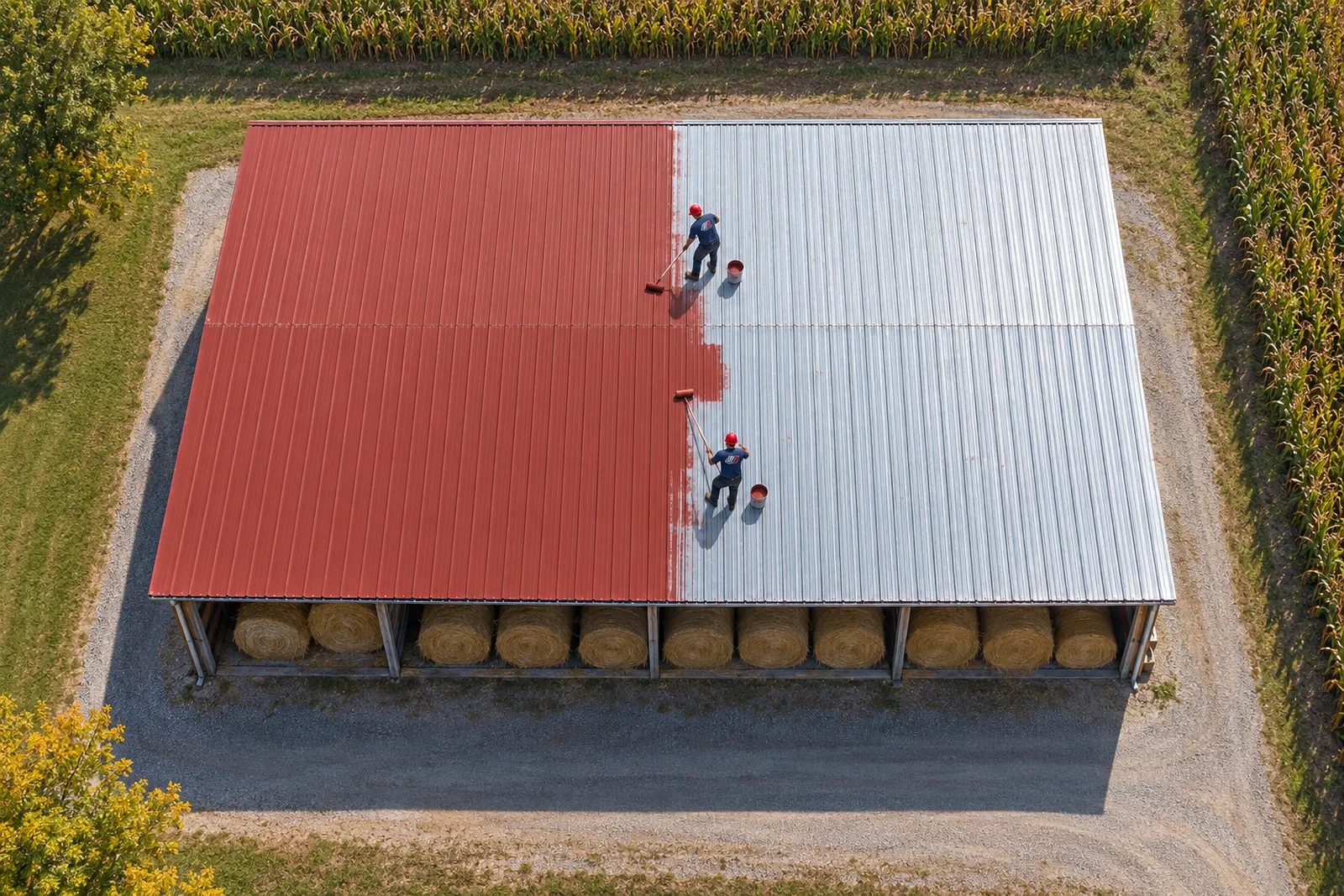
Water-based coating for sloped steel that sheds water fast, in white or light reflective colors.
Best For Pitched metal with good drainage
Acrylic roof coating details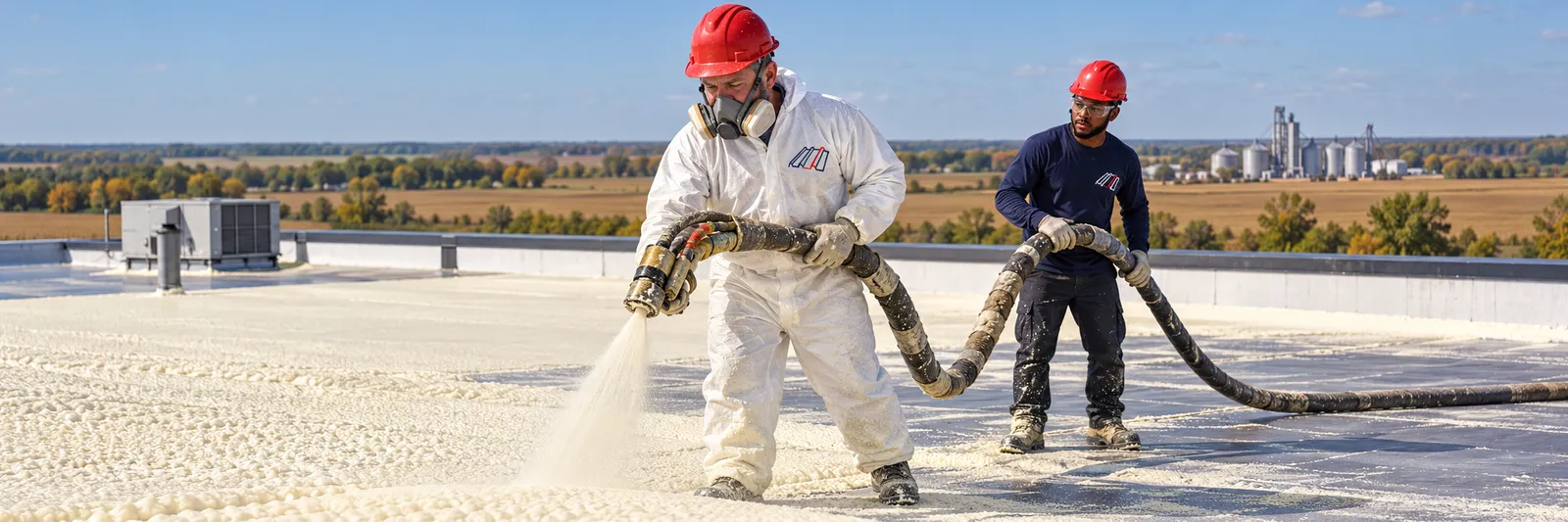
Closed-cell foam over the panels to add insulation and bury every screw, finished with a topcoat.
Best For Uninsulated shops with drips
Spray foam roofing details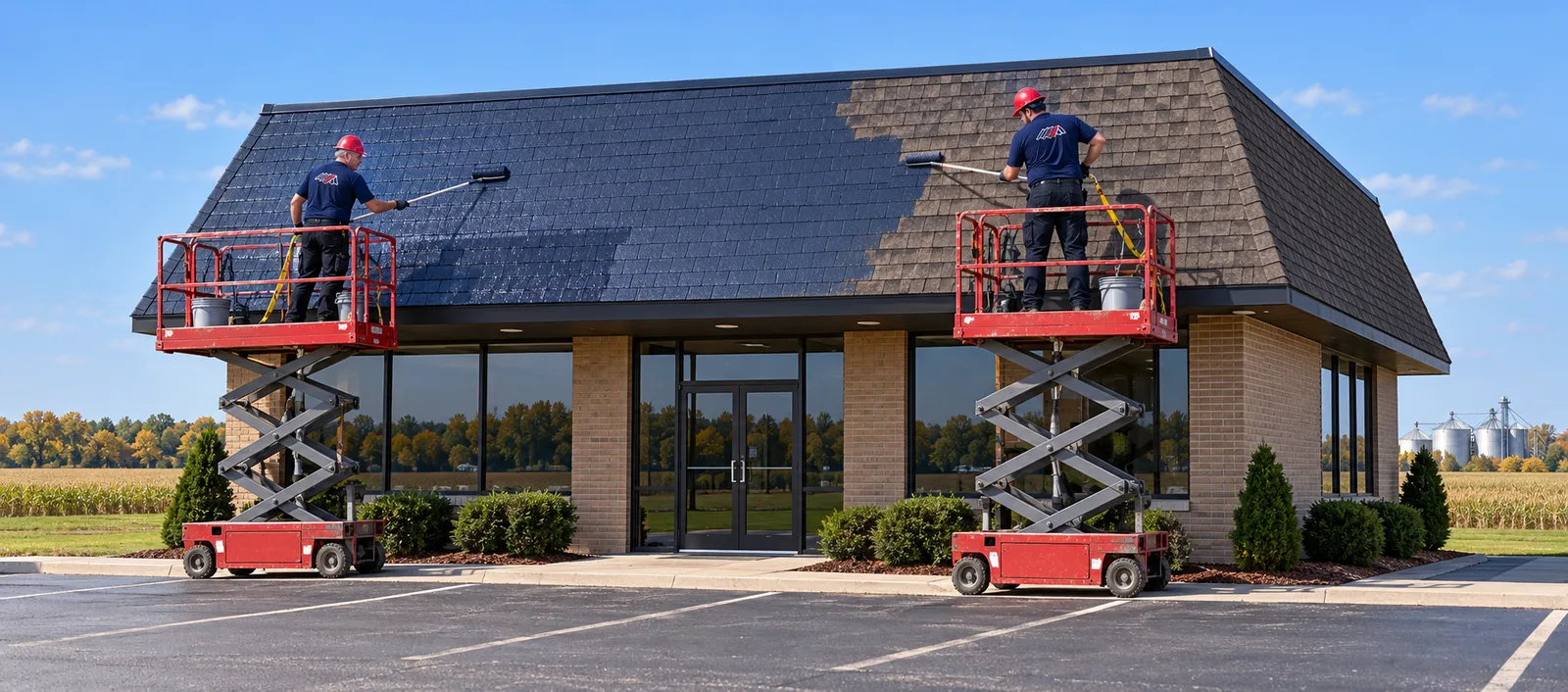
Shingle-rated coating for flat, well-granulated shingles on strip centers, offices, and churches.
Best For Shingles that pass inspection
Shingle roof coating detailsStart from what you see on the roof. These are the most common starting points we find on Owensboro buildings.
Each fastener is sealed and the laps reinforced, then the field is coated.
Gutters take a ponding-rated coat with fabric, even when the slope above gets acrylic.
A white topcoat reflects sunlight off panels that drain quickly.
Foam adds insulation, so the steel stays warmer and drips less.
Flashing is re-secured and a shingle-rated coating goes over the field.
New panels or framing come before any coating can help.
Tell us what the roof is made of and where water shows. We match the system to the roof on site.
The system changes, but the order of work stays the same on every roof we coat.
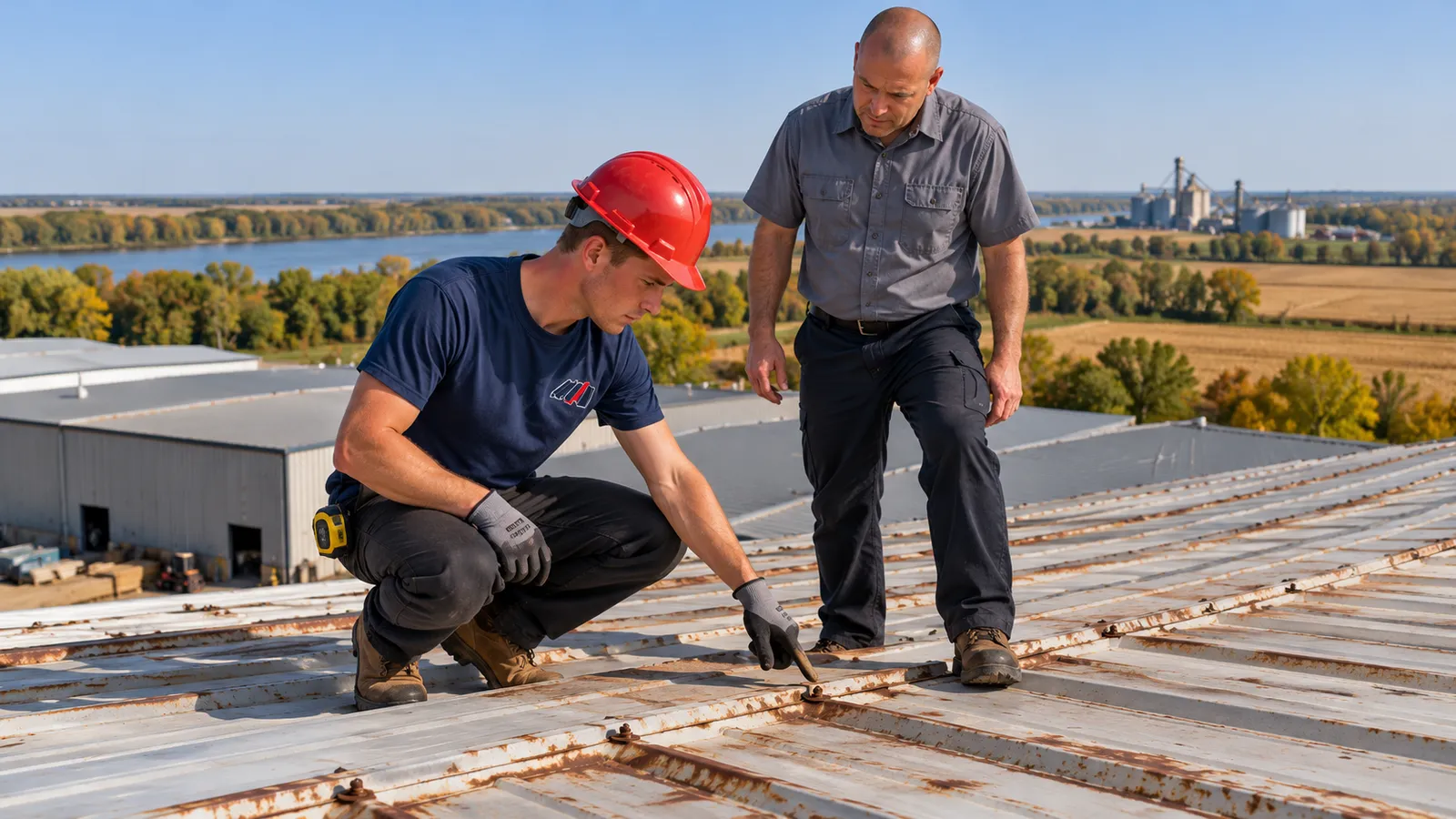
We walk the whole roof, mark leaks, rust, wet areas, and open seams, and decide which system fits each section.
Pressure washing removes dirt, chalk, and grease from panels or membrane, and the roof dries before primer.
Failed panels, wet insulation, and cracked boots are replaced, and the primer matched to the surface goes on.
Laps, seams, curbs, gutters, and penetrations get fabric bedded in base coat for extra thickness.
Coating or foam goes on to the thickness on the product sheet, measured as each section is finished.
Answers that apply across all five systems.
Panel and framing condition decides it. Solid steel with surface rust gets coated, widespread red rust and open laps call for a restoration with heavier prep, sections with rust holes get new sheets before coating, and failed purlins or mostly rusted-through panels mean replacement.
On a roof that qualifies, coating avoids tear-off, disposal, and new panels or shingles, so it costs less than replacement. Prep decides the gap: a roof needing many new screws and rusted sheets narrows it.
Inspection comes first, then a wash, repairs to rusted-through panels and trim, rust treatment and primer, screw tightening and sealing, fabric at end laps, ridge caps, curbs, and gutters, and finally base and top coats to the listed mil thickness, confirmed with wet-film gauge readings.
Yes. Acrylic needs the most warm, dry hours to cure, so it waits for dry stretches. Silicone tolerates cooler, damper days, and foam needs a dry surface and calm air to control overspray.
Coating goes on far thicker than paint and stretches with the steel as it heats and cools. Paint leaves a thin film over screws and laps as they are; a coating system seals them first with mastic and fabric and builds a waterproof membrane measured in mils.
Often, and it is common here. Silicone in the gutters with acrylic on the slope, or a shingle coating on the front with metal coating on a rear section, each gets its own prep and primer, with fabric where the two meet.
Tell us about the roof and what you see inside. We follow up to inspect it and recommend a system.