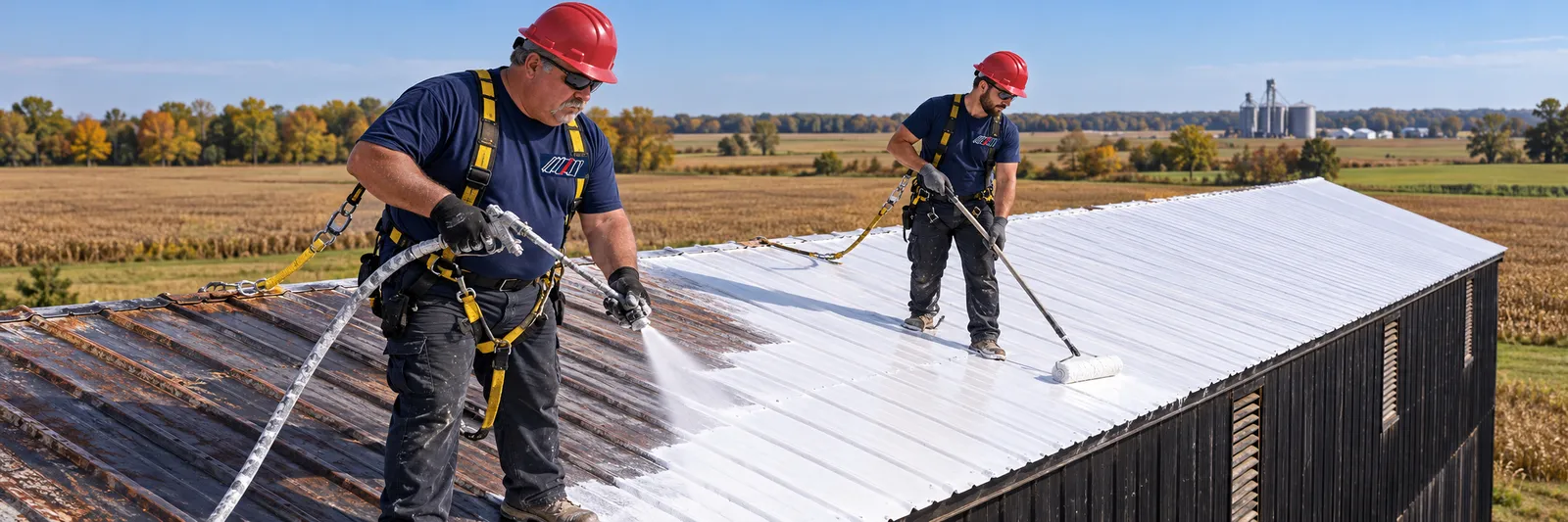
Metal Roof Coating
Exposed-fastener shops and barns get screws sealed, laps primed, and a full coat over the ribs.
See metal coating
Philpot metal roof coating for shops and equipment buildings: we start with the rust along screw rows and end laps, then coat the whole roof.
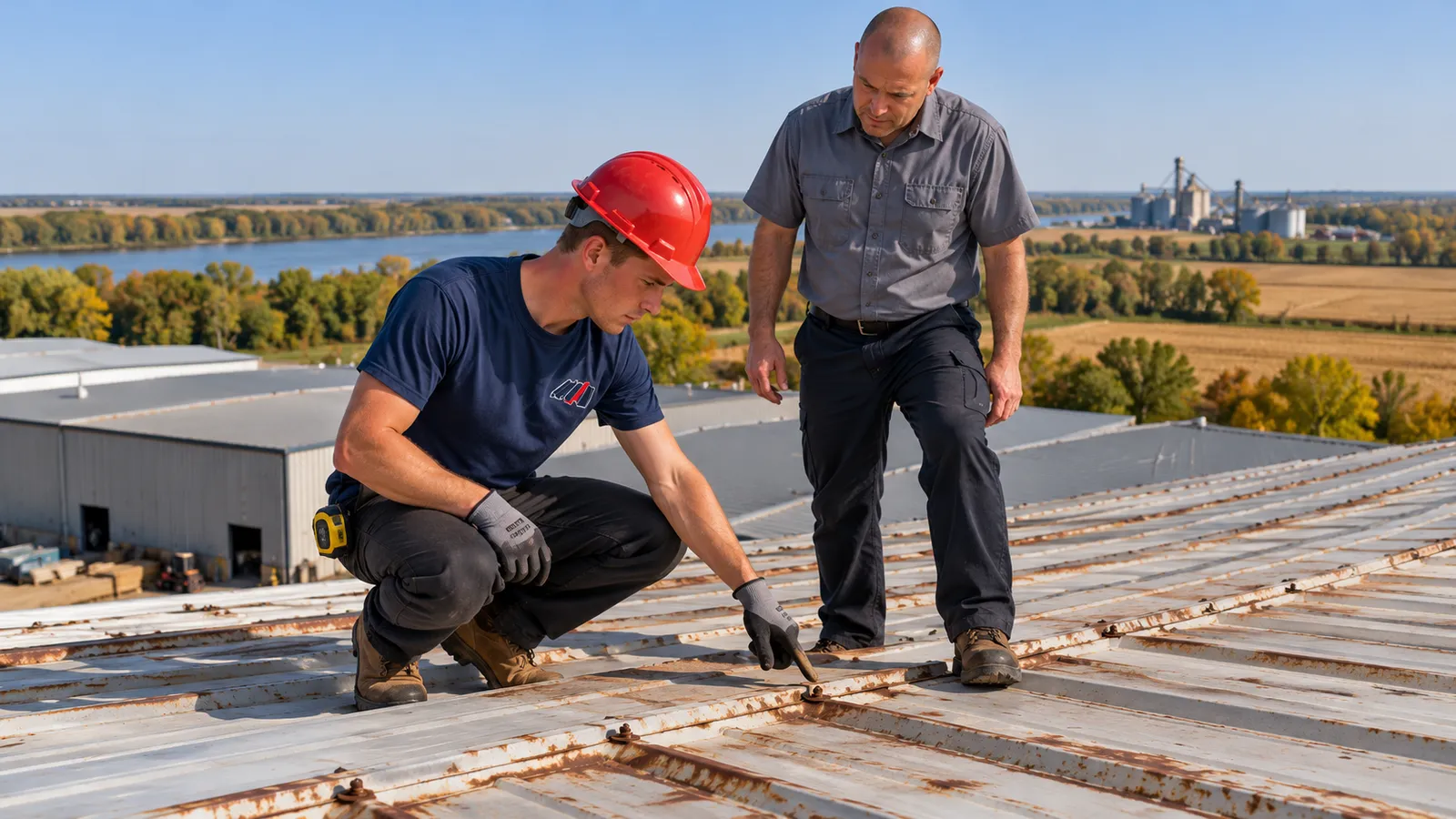
Philpot is an unincorporated community, so building questions about a coating job go straight to OMPC with no city hall in between. A short packet of photos and notes lets staff judge the work quickly.
We help put that packet together from the inspection: slope photos, a sketch of skylights and vents, and the primer and coating data sheets.
Most roofs around Philpot are exposed-fastener steel on shops, barns, and equipment sheds. Wear shows up in these five places.
Rust streaks run downhill from each row of screws once the rubber washers dry out. Every head gets tightened and sealed before coating.
Vent screens clog with chaff and nests, and the ridge cap gaps let wind-driven rain in. Closures are cleared and resealed.
Translucent panels crack and yellow, and their side laps leak. Cracked ones are replaced, and the coating stops at a sealed edge.
Leaves and dust pack the gutter troughs, so water sits against the steel and rusts the seams from the inside.
Overlapping panel ends trap grit and moisture down the slope. Brushing, primer, and fabric go on before the field coat.
For a Philpot shop with firm panels and solid purlins, coating protects the steel already on the building.
| Roof Detail | Coating The Roof | Replacing The Roof |
|---|---|---|
| Rust Stopped At The Rows | Primed screw rows and laps sit under one continuous coat | Old panels and fasteners hauled off |
| Equipment Stays Inside | Tractors, tools, and stock stay put while the crew works up top | Contents covered or moved during tear-off |
| Cooler Shop In Summer | A white topcoat reflects afternoon sun off the steel | Set by the new panel finish |
| Simple Upkeep | Worn areas can be cleaned and recoated later | New washers to watch as they age |
Philpot buildings vary from pitched equipment sheds to low shop additions. These five systems cover them.
Exposed-fastener shops and barns get screws sealed, laps primed, and a full coat over the ribs.
See metal coating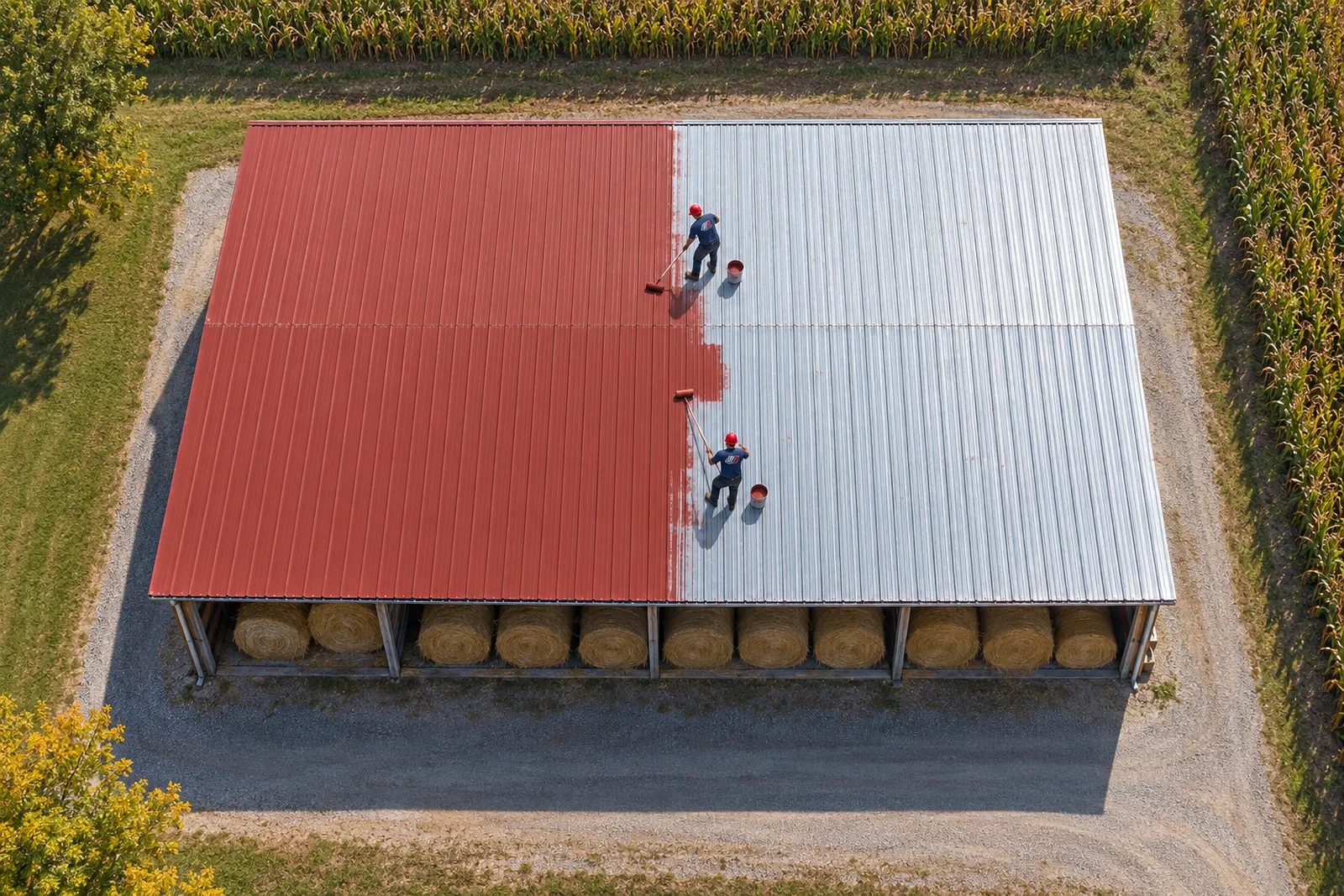
Steep equipment shed roofs that shed water fast take a bright reflective acrylic topcoat.
Read about acrylic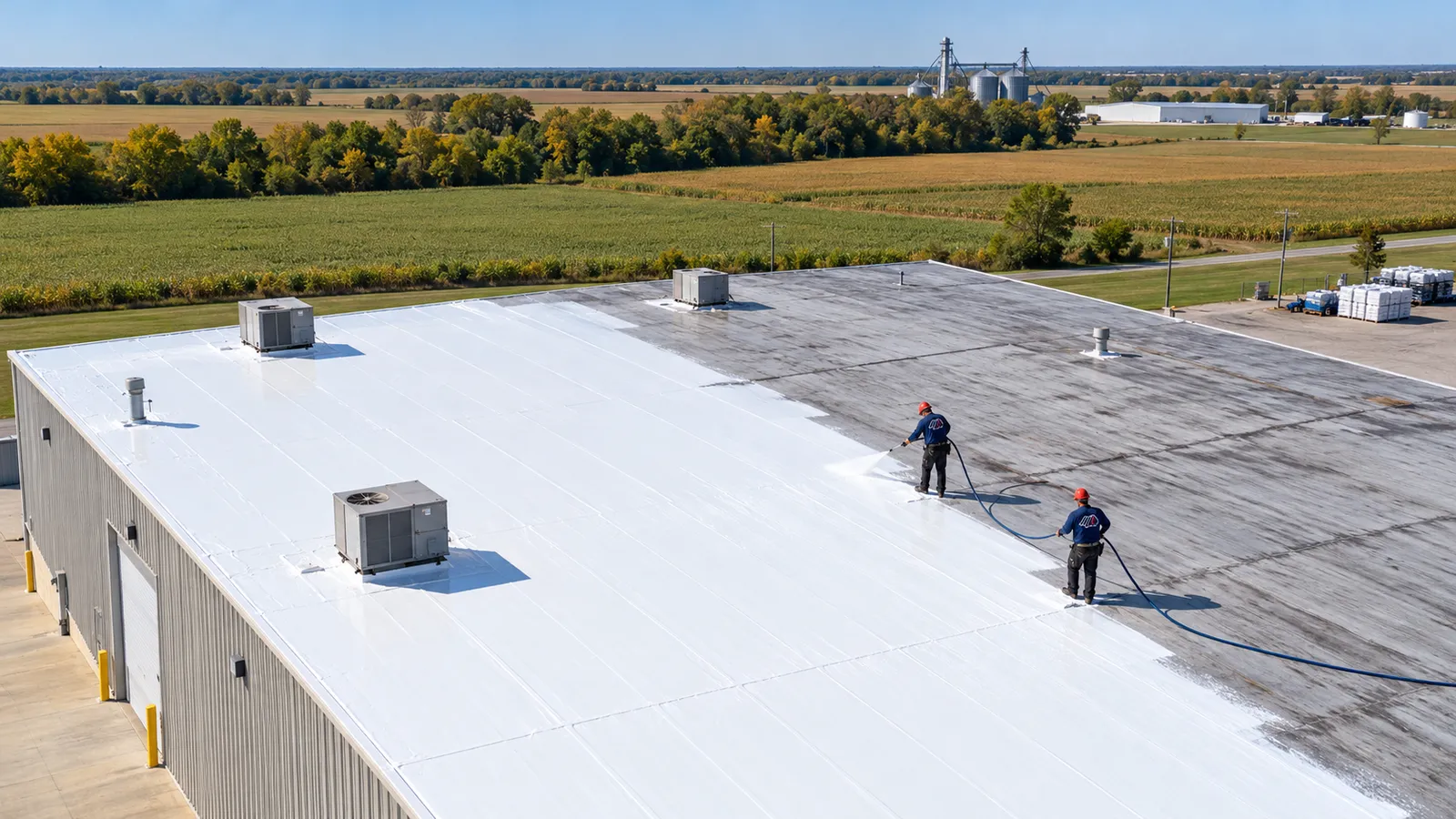
Low shop additions where water lingers at the end laps call for a ponding-rated silicone.
Silicone over metal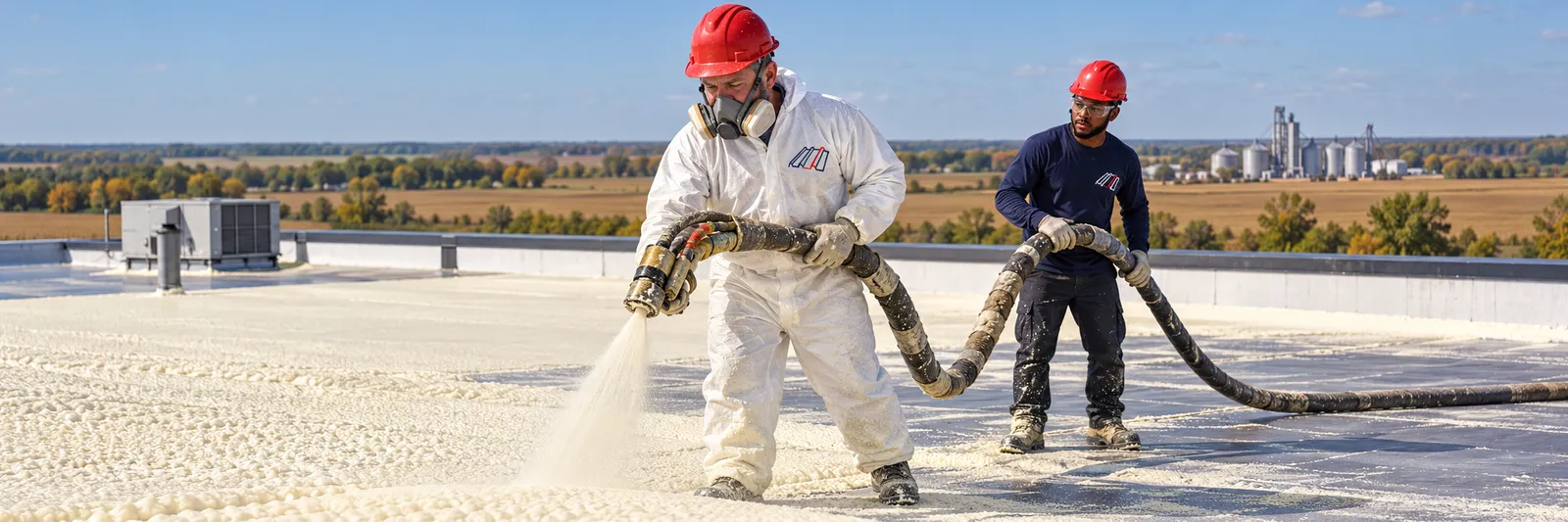
Uninsulated shops that drip on cold mornings gain insulation when foam covers the panels.
Foam over steel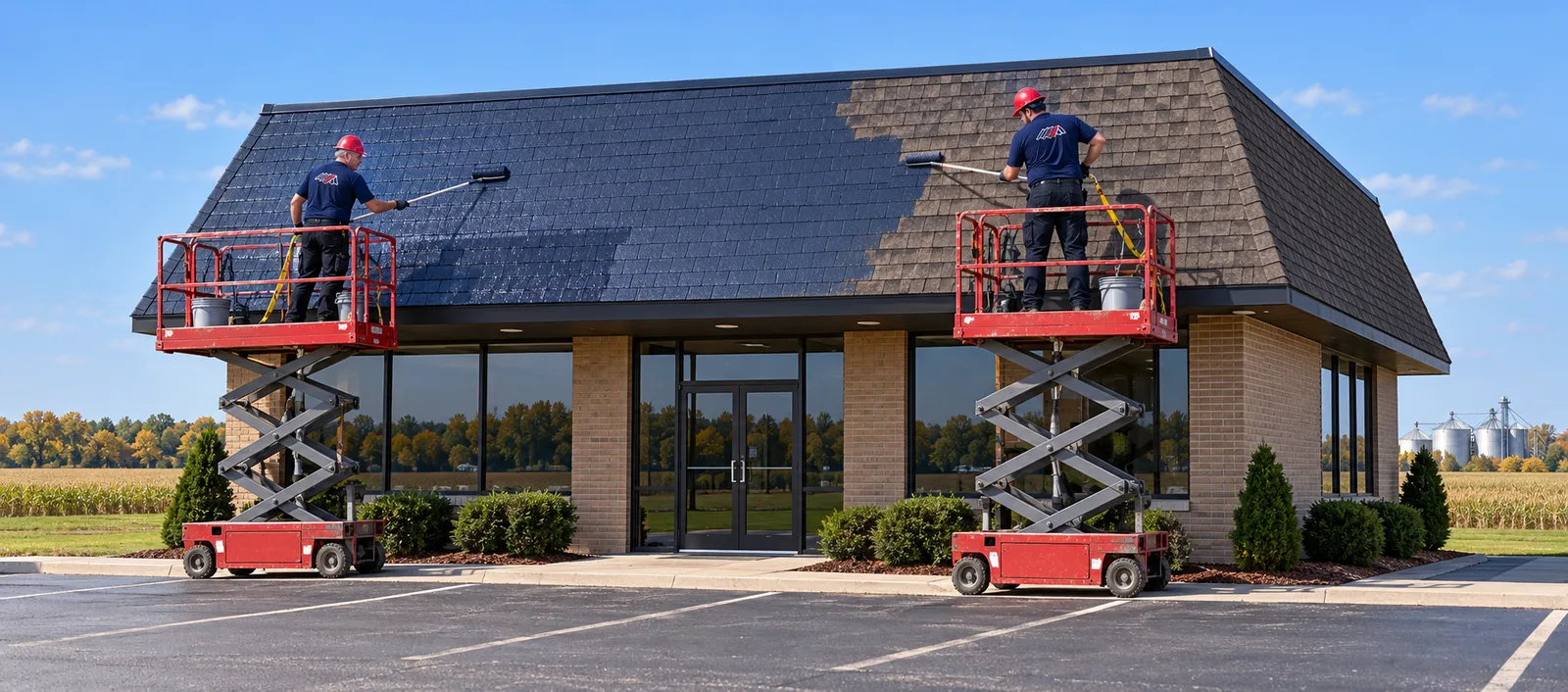
An office or church wing with flat, granulated shingles can be coated alongside the steel.
Shingle coating optionsShare a few details about your shop, and we can plan the inspection around the worst slopes first.
This sequence holds on every exposed-fastener roof we coat in east Daviess County.
Each slope is photographed, screw rows are checked for backed-out heads, and soft spots between purlins are marked on a sketch.
Dust and chaff come out of the panel ribs and ridge vents under the pressure washer, then the steel dries fully.
Stripped holes get larger-diameter screws, missing ones are filled, and cracked skylight panels are swapped out.
Rust primer goes over brushed steel, and polyester fabric is bedded at end laps, ridge caps, and gutter seams.
Our topcoat covers every rib and sealed screw head to the thickness listed on the product data sheet.
Is your shop past Philpot? Call us or send us a message and we will tell you. These towns are on our regular list.
Foam or coating questions for farm and equipment shops.
Rural shops where dew and wind set coating days.
Storefront parapets, box gutters, and City Hall permits.
Industrial panels tested for adhesion near plant exhaust.
Damp riverside panels and shaded north slopes.
White rust on older galvanized shop roofs.
Large plant roofs coated one section at a time.
Parapet walls, scuppers, and mixed roof sections.
Canopies and awnings coated along with the main roof.
Shingle and metal sections on churches and offices.
Answers for owners of shops, barns, and equipment buildings around Philpot.
Screw count and rust depth matter most. A shop where every washer has cracked needs hundreds of new screws, and scale at the eaves takes grinding. Skylight panels to replace and gutters to reinforce add labor, while the coating itself is a smaller share.
Usually it costs less when the steel still holds a screw. Coating skips panel removal and new trim, but rusted-through sheets still get replaced before the coat. The inspection shows how many sheets fall in that group, and those sheets are priced separately so you can see the split.
Yes. Philpot is an unincorporated part of Daviess County, and OMPC handles building permits and inspections for the county outside the City of Whitesville. Bring photos of rusted screw rows, a sketch of skylights and vents, notes on any purlin work, and the product data sheets.
Yes, since the crew works on top of the panels. Bay doors under the active slope are kept clear during washing, and vehicles near the eaves get moved or covered against overspray. Noisy pressure washing is grouped into a short stretch of days.
Acrylic works well on a pitched steel roof that sheds water fast, and a white color keeps the shed cooler. Silicone fits better where end laps or gutters hold water. Either goes on only after screws and laps are sealed.
No, translucent panels stay clear so daylight still reaches the floor. We seal around each panel edge, replace cracked ones, and stop the coating at a clean line where the steel meets the skylight.
Tell us about the shop and its roof. We follow up to walk the screw rows, laps, and gutters in person.