Silicone Roof Coating
Fits low roofs behind parapets where water sits near the scuppers after rain.
Silicone for low roofs
We coat roofs on Hartford masonry buildings, sealing the parapet joint and scuppers first, then coating metal and built-up sections each their own way.
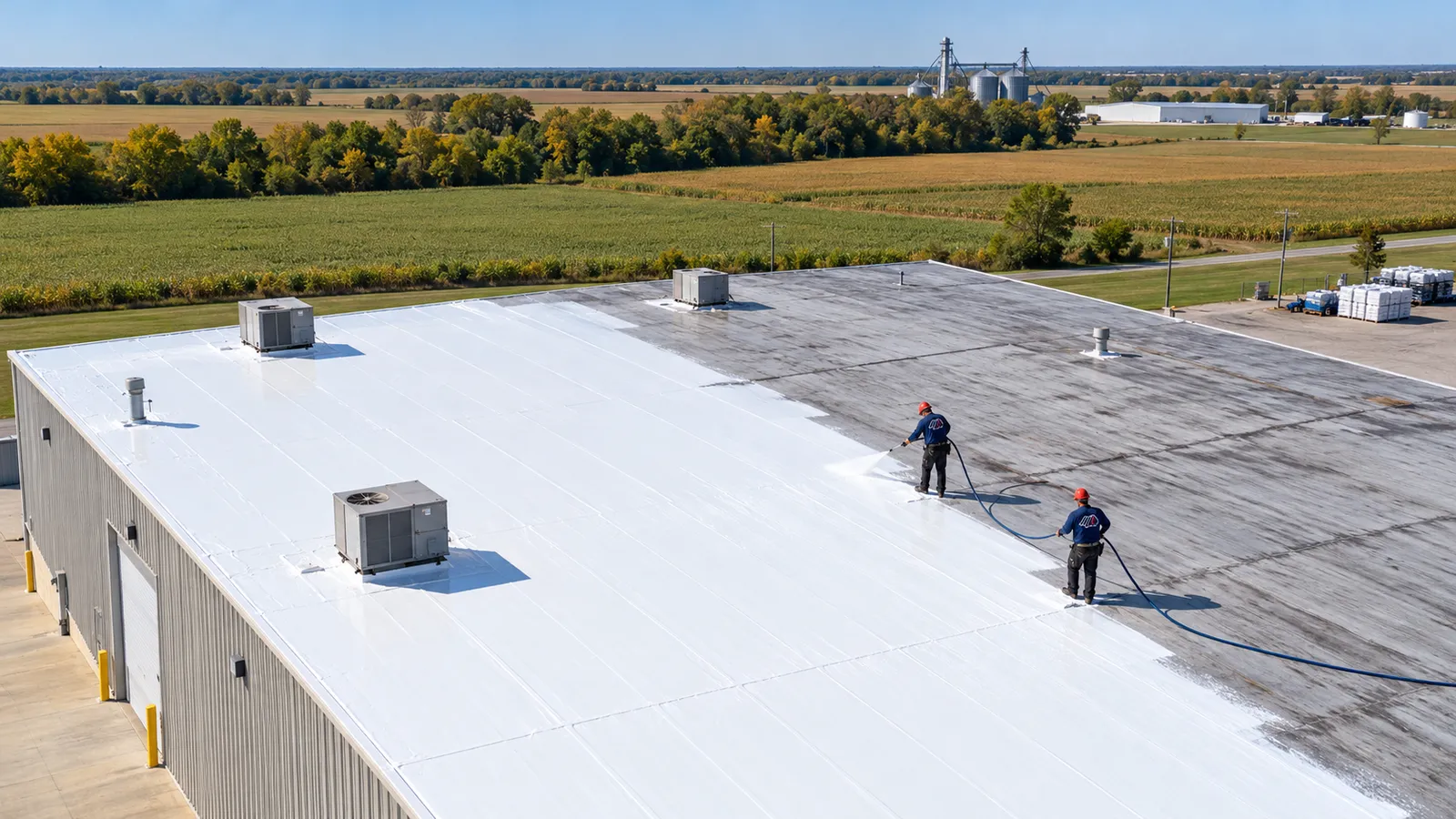
Hartford metal roof coating work on older downtown buildings starts at the wall. Low-slope metal or patched roofs sit behind brick parapets, and most leaks begin where the roof turns up the wall under the counterflashing.
Water coming through cracked coping travels behind any new coating, so the masonry fixes go into the same plan as the roof.
Masonry buildings with additions have more transitions than a single steel shop. These zones get checked one by one.
Cracked coping stones and open mortar joints let rain into the wall cavity, where it runs down behind the roof edge.
Reglet edges and counterflashing pull out of the brick over time. A loose strip leaves the base flashing open to wind-driven rain.
Through-wall scuppers clog with leaves and gravel, so water backs up against the parapet and finds the lowest seam.
Older built-up roofs blister and hold wet felts. Gravel comes off and a moisture survey finds the wet areas before any primer.
Shop additions with R-panel meet the low roof at a flashing joint that moves with the steel and opens first.
With dry insulation and repaired masonry, coating keeps an older Hartford roof working. These benefits follow a passed inspection.
| Roof Detail | Coating The Roof | Replacing The Roof |
|---|---|---|
| One Project For Mixed Roofs | Metal and built-up sections are coated together with the right product for each | Separate tear-offs for each roof type |
| A Sealed Wall Line | Fabric and coating run up the parapet face and close the roof-to-wall joint | New base flashing on every wall |
| Building Stays In Use | Work happens from the roof, so offices and shops below stay open | Roof opened in sections |
| Reflective Top Surface | A light topcoat replaces dark gravel and patched asphalt on the low roof | Depends on the new membrane |
The low roof behind the parapet and the metal addition often call for different systems.
Fits low roofs behind parapets where water sits near the scuppers after rain.
Silicone for low roofs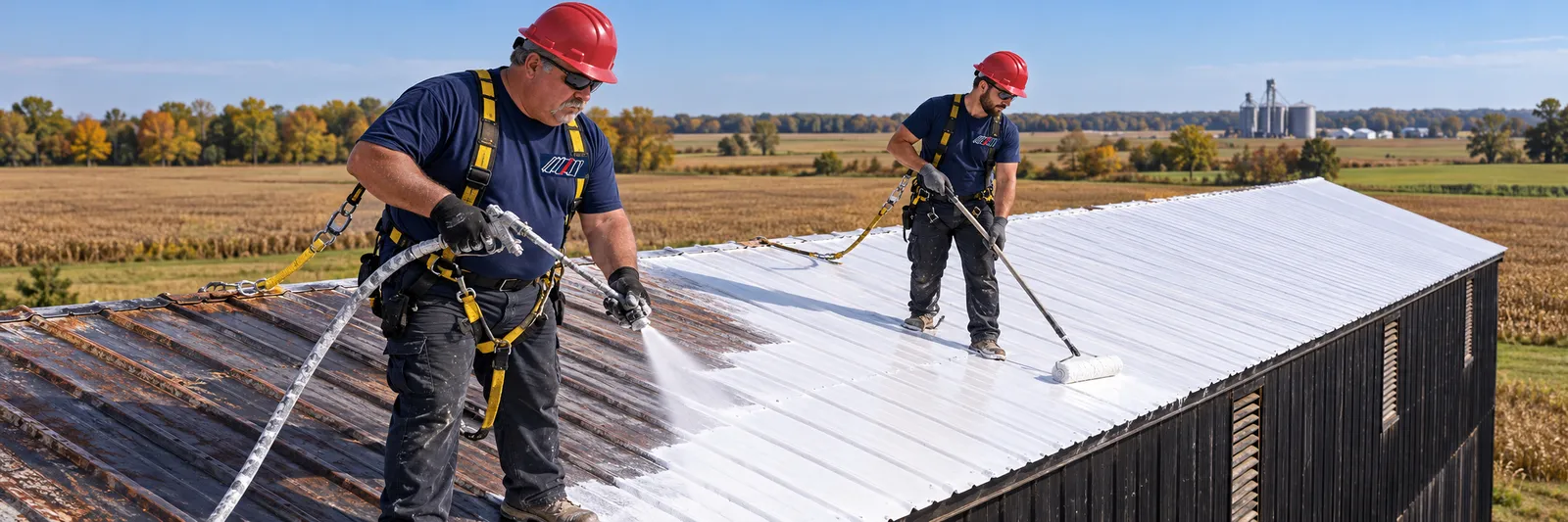
Rust primer, sealed screws, and lap fabric for the R-panel shop addition out back.
Metal coating steps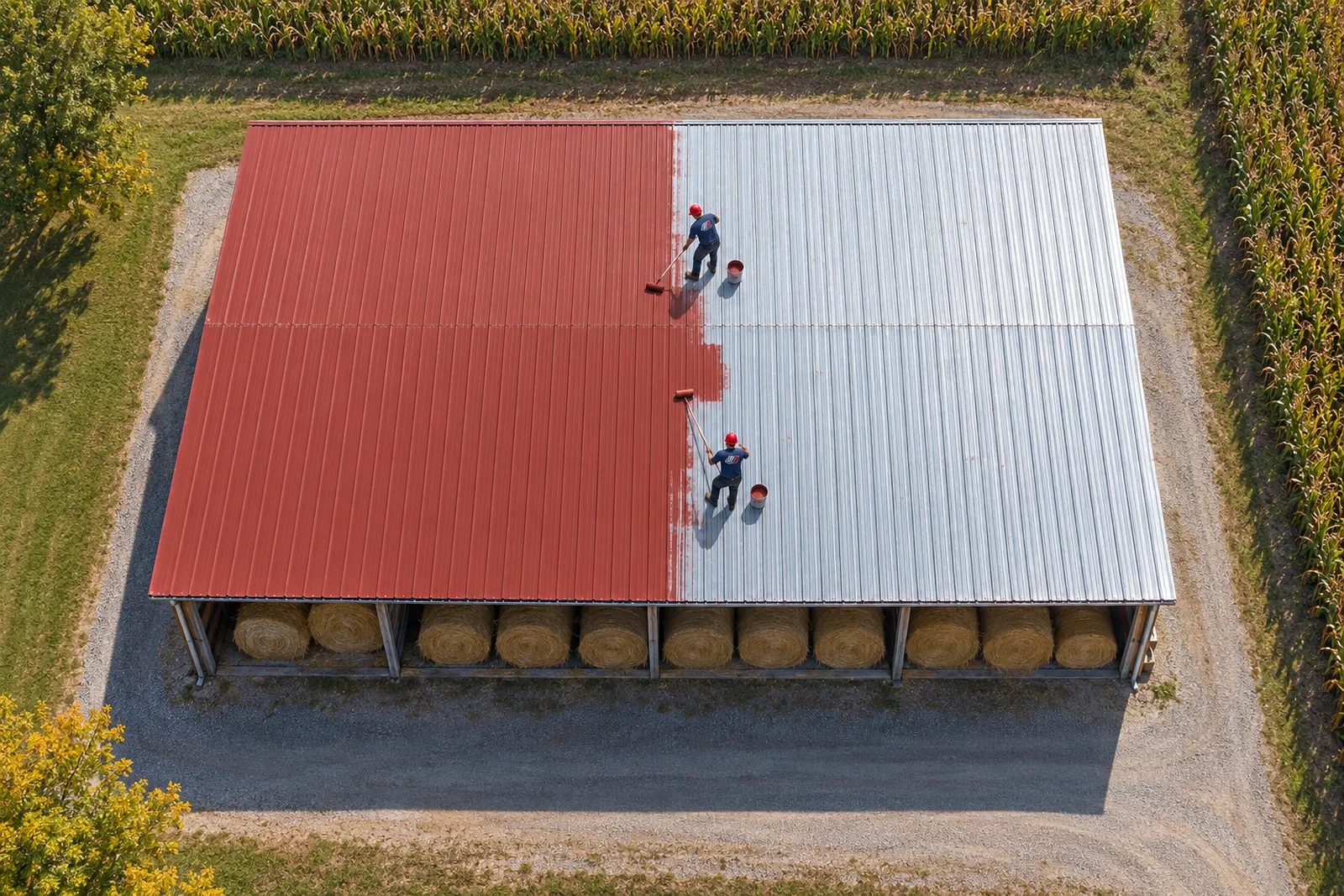
Works on a pitched metal addition that drains fast and gets recoated on a schedule.
When acrylic fits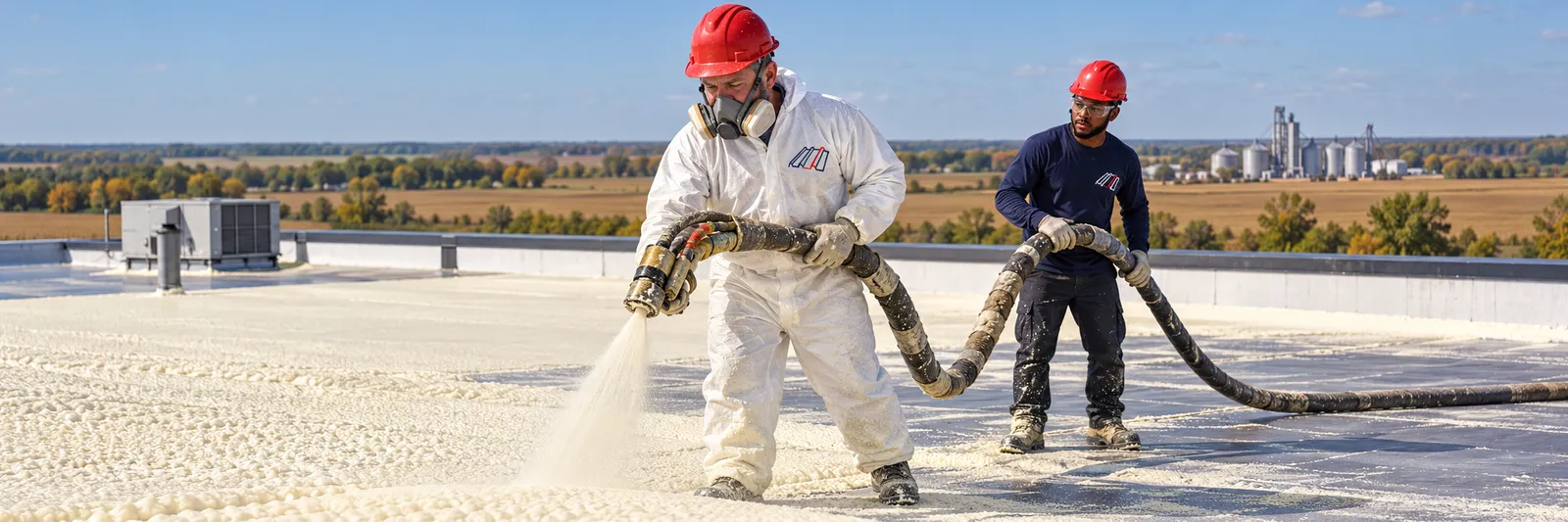
Adds insulation and slope over a tired built-up roof, though it raises the edge at each scupper.
Foam over old roofs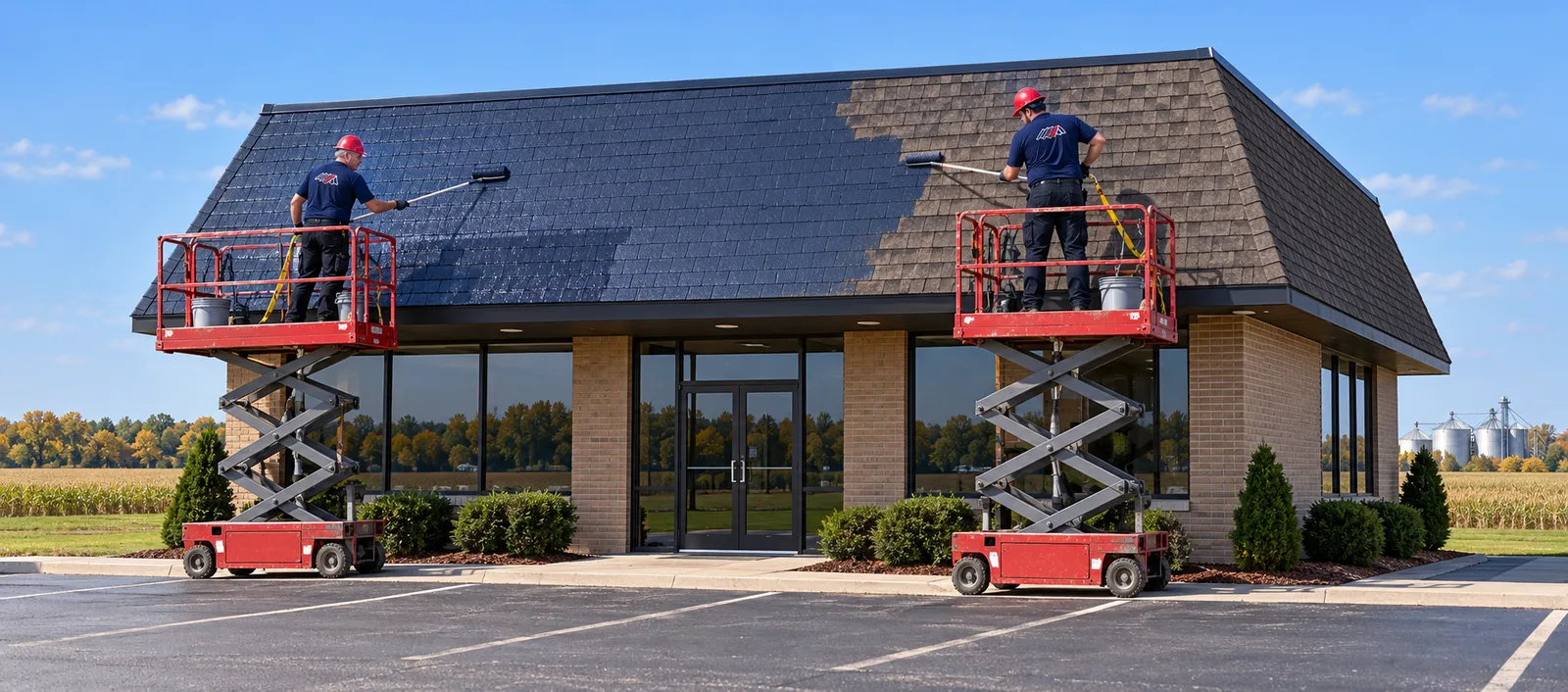
Covers a steep shingle section on an office or church front if the tabs still lie flat.
Coating shinglesWall stains on an older building usually point to the parapet. Tell us what you see and where.
Masonry and transition work comes before any field coating goes down.
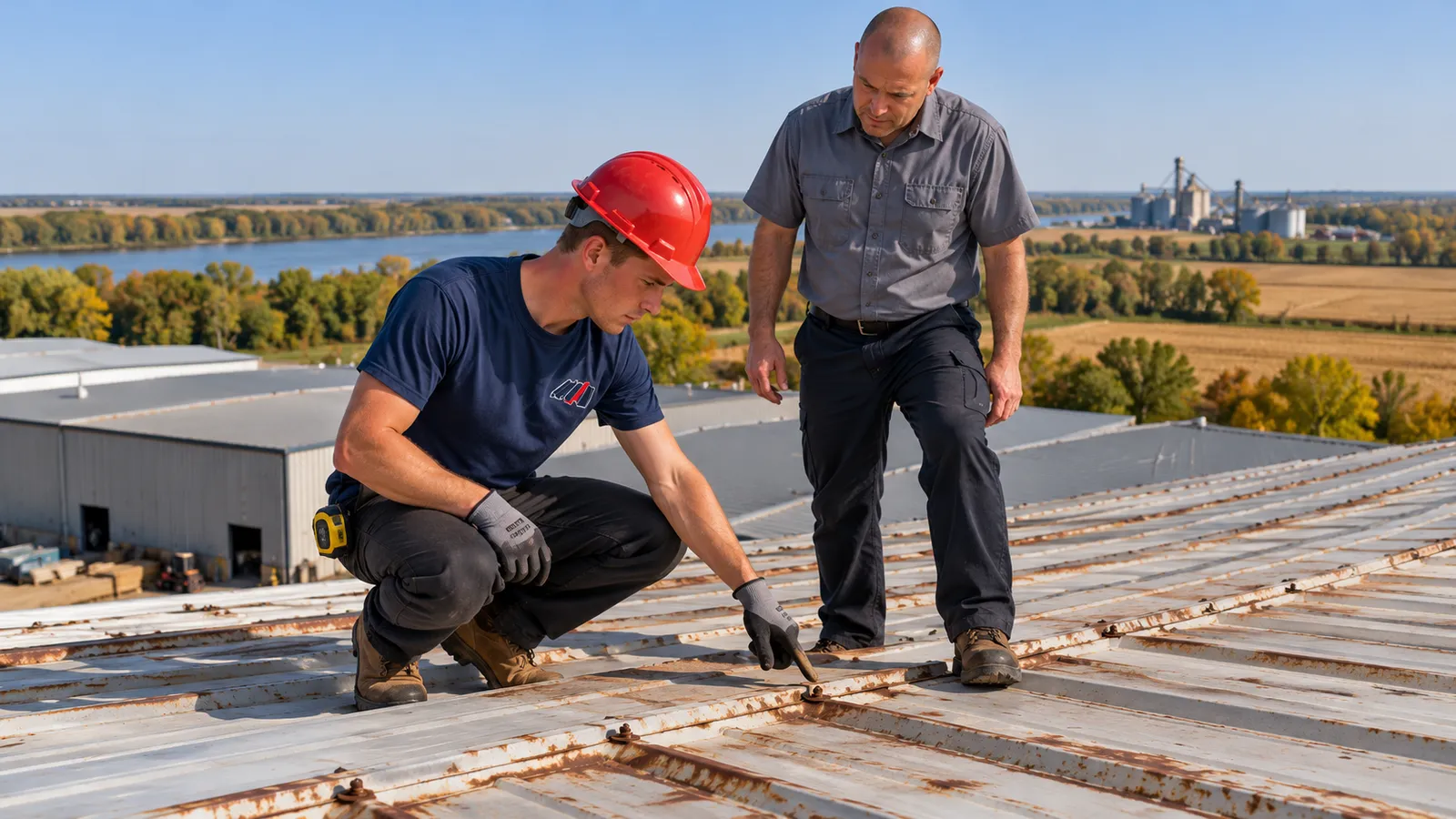
We check the coping, counterflashing, scuppers, and both roof sections, and run a moisture survey on the built-up area.
Open coping joints are repointed, loose counterflashing and reglet edges are re-secured, and scupper liners are sealed.
Gravel comes off the built-up section, blisters are repaired, and any wet felts found by the survey are removed and filled.
Metal panels get rust primer, asphalt gets its own primer, and the joint between the two gets fabric and extra thickness.
Field coats cover both sections and continue up the parapet face, each applied to the thickness on its data sheet.
Wondering if we reach your town? Call us or send us a message about the building. Beyond Hartford, we coat commercial roofs in the towns listed here.
Foam or coating questions for farm and equipment shops.
East Daviess metal shops with screw-row rust.
Rural shops where dew and wind set coating days.
Storefront parapets, box gutters, and City Hall permits.
Industrial panels tested for adhesion near plant exhaust.
Damp riverside panels and shaded north slopes.
White rust on older galvanized shop roofs.
Large plant roofs coated one section at a time.
Canopies and awnings coated along with the main roof.
Shingle and metal sections on churches and offices.
Answers for owners of masonry and mixed-roof buildings in Hartford.
Because a coating cannot keep out water that enters through the wall. Repointing coping, resetting counterflashing, and sealing scupper liners are part of making the roof dry, so they sit in the same estimate. Leaving them out would let leaks continue under new coating.
It changes it by what it finds. Dry built-up areas only need gravel removal, blister repair, and primer. Each wet area found gets cut out and filled, which adds material and labor, so the survey result sets that part of the estimate.
The roof-to-wall joint is sealed before any field coating. That means clearing and sealing each through-wall scupper, re-securing counterflashing and reglet edges, repointing open coping mortar, and then running fabric-reinforced coating up the parapet face. Masonry repair is part of the plan, since water through cracked coping travels behind a new coating.
Ohio County lists the state building inspector and no local one with the Kentucky HBC, so reviews go through that state office. Hartford City Hall is worth a call for rules inside city limits, especially when panels or decking are replaced.
Yes, with a planned transition where they meet. The metal panels get rust primer, screw sealing, and lap fabric under a silicone or acrylic system. The built-up section gets gravel removal, a moisture survey, blister repair, and a primer and coating rated for asphalt. The joint gets fabric and extra thickness.
Usually it fits best there. Roofs boxed in by parapets drain through a few scuppers, and water often lingers near them after storms. Silicone holds up under that standing water better than acrylic, while a metal addition that sheds water quickly can take either one.
Tell us about the walls, scuppers, and roof sections. We follow up to inspect the parapet line and both roofs in person.