Shingle Roof Coating
For steep shingle sections that still lie flat and hold their granules, after the maker approves the product.
Shingle coating details
We coat metal and shingle roofs on Central City churches, offices, and shops, often both sections in one job with each surface prepped its own way.
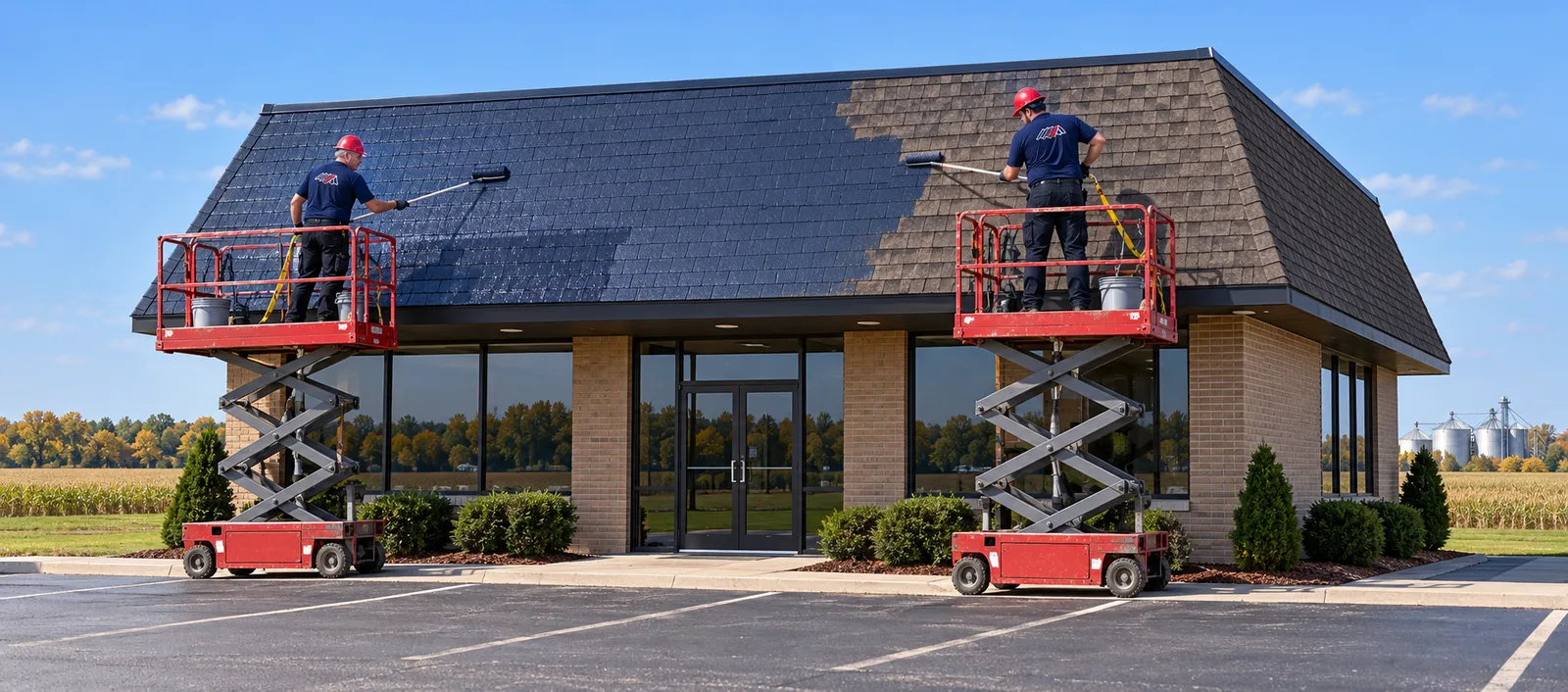
Central City metal roof coating jobs often cover more than metal. Churches and offices here tend to pair a low-slope metal or membrane section with a steeper shingle roof over the sanctuary or front office.
One crew can coat both in a single project. The metal gets rust primer, sealed screws, and fabric at the laps; the shingles get cleaning, secured tabs, and a shingle-rated coating.
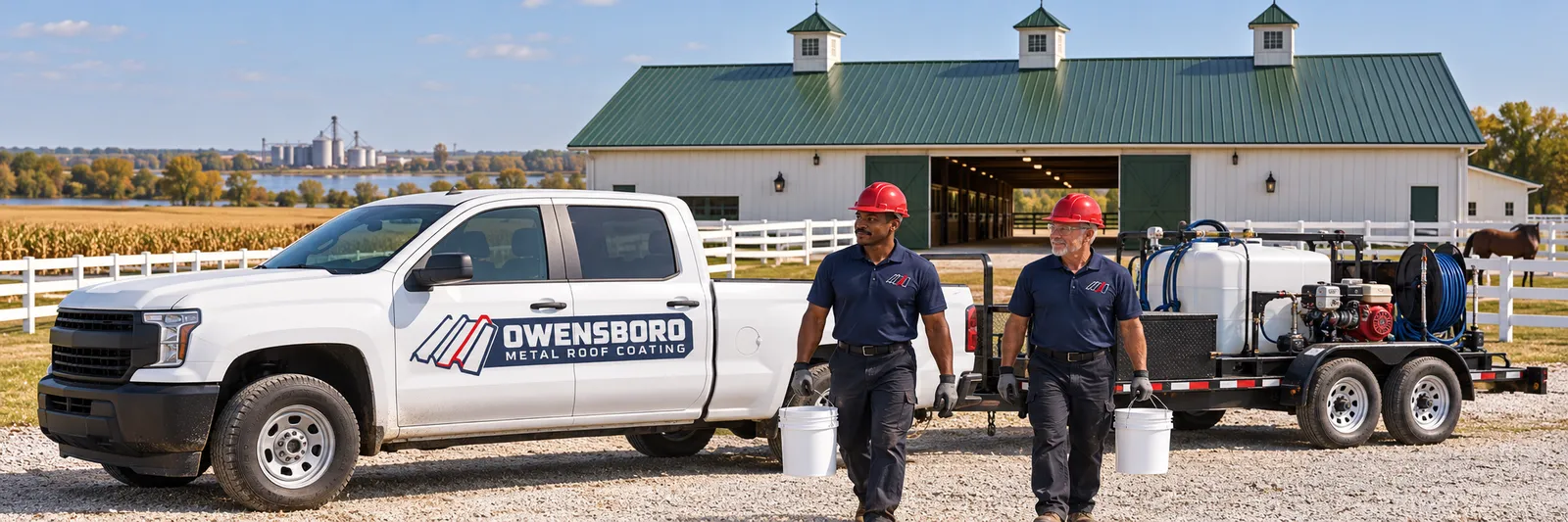
Mixed roofs have more joints than single-system roofs. These five zones decide how the coating gets planned.
Granules collect in gutters and at downspout splash areas when the shingles are wearing thin. Flat, well-granulated tabs can take a coating; curled ones cannot.
End laps on the low metal section trap dirt where the panels overlap. Rust there gets brushed and primed before fabric goes on.
Where a shingle slope meets a wall, chimney, or bell tower, step flashing lifts and lets water behind the siding.
Valleys carry the heaviest water and debris on these roofs. Packed leaves at the metal-to-shingle junction keep the lowest seam wet.
Plumbing vents, attic fans, and small HVAC curbs pierce both sections. Cracked boots get replaced before coating runs around them.
On a sound mixed roof, coating keeps the existing shingles and steel in service. These benefits hold when the inspection passes.
| Roof Detail | Coating The Roof | Replacing The Roof |
|---|---|---|
| One Project, Two Surfaces | Metal and shingle sections are coated in the same visit, each with its own product | Two tear-offs, often by two trades |
| Sealed Joints | Fabric and coating close the seam where the metal section meets the shingles | New flashing at every joint |
| Services Keep Going | Work stays on the roof, so offices and Sunday services carry on below | Open roof sections during the work |
| Cooler Metal Section | A light topcoat on the low roof reflects summer sun off the steel | Depends on the new material |
Each system fits a different part of a Central City building. Most mixed roofs use two of them.
For steep shingle sections that still lie flat and hold their granules, after the maker approves the product.
Shingle coating details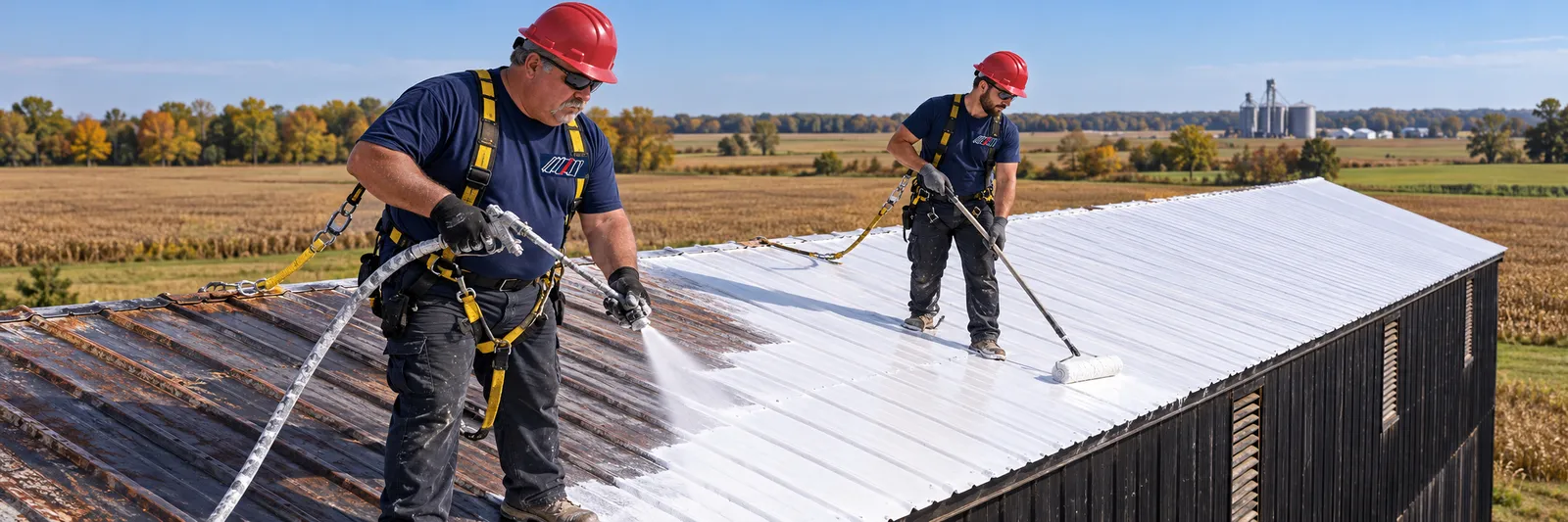
Sealed screws, primed rust, and a full coat over the low R-panel section behind the building.
Metal coating details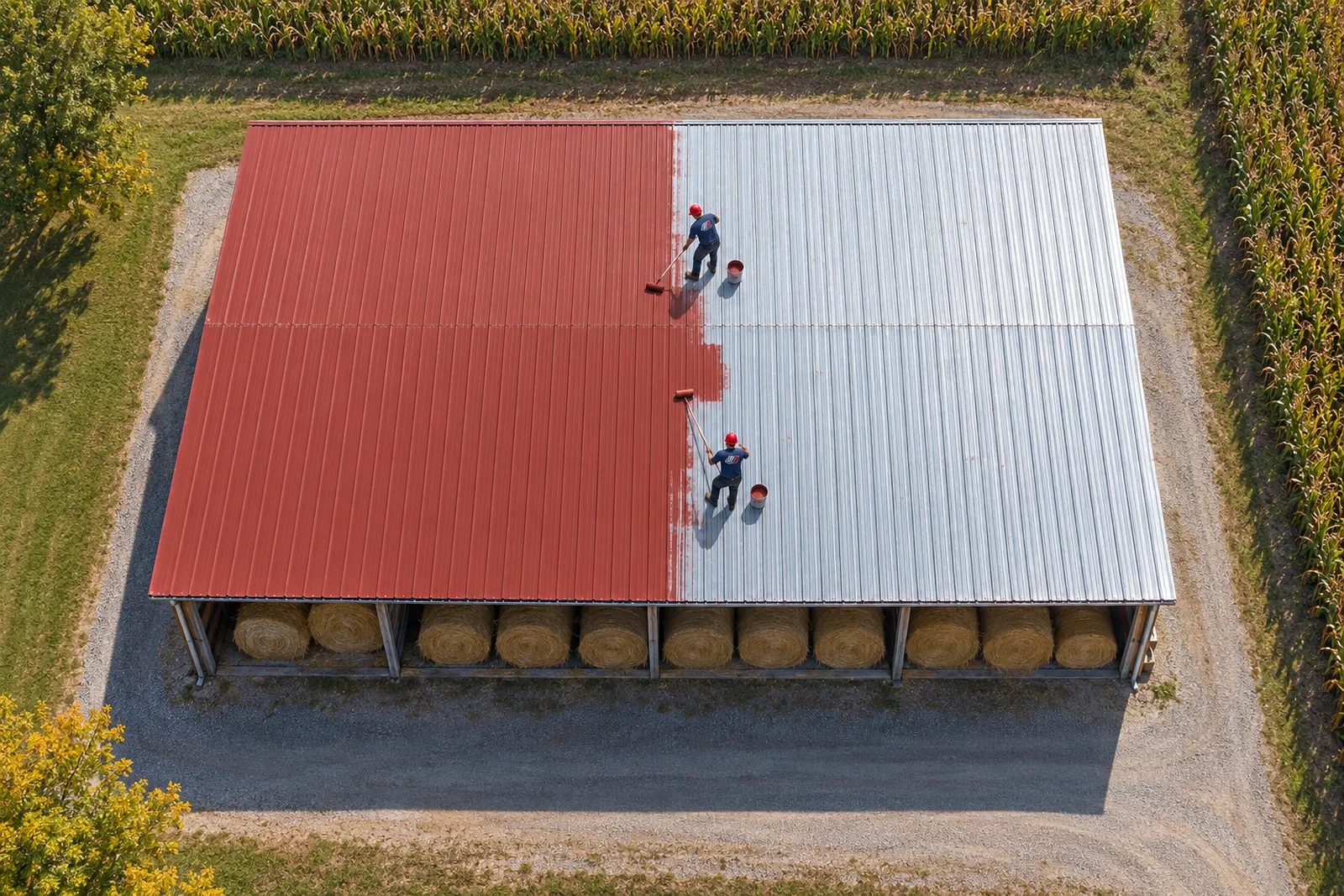
A white topcoat for metal sections that drain fast and face full afternoon sun.
Acrylic coating details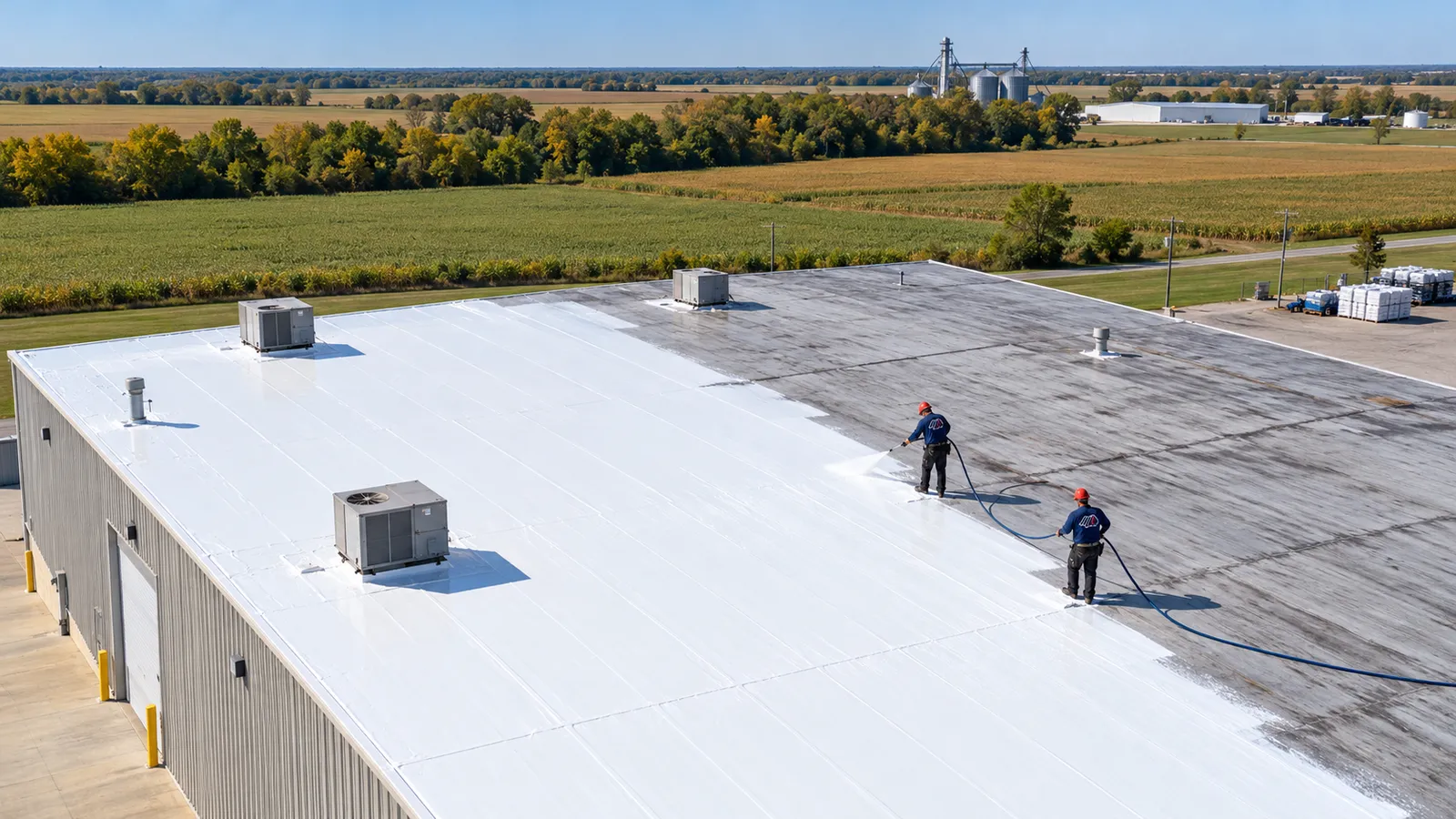
Holds up in the low corner where the metal roof drains into a box gutter and water sits.
Silicone coating details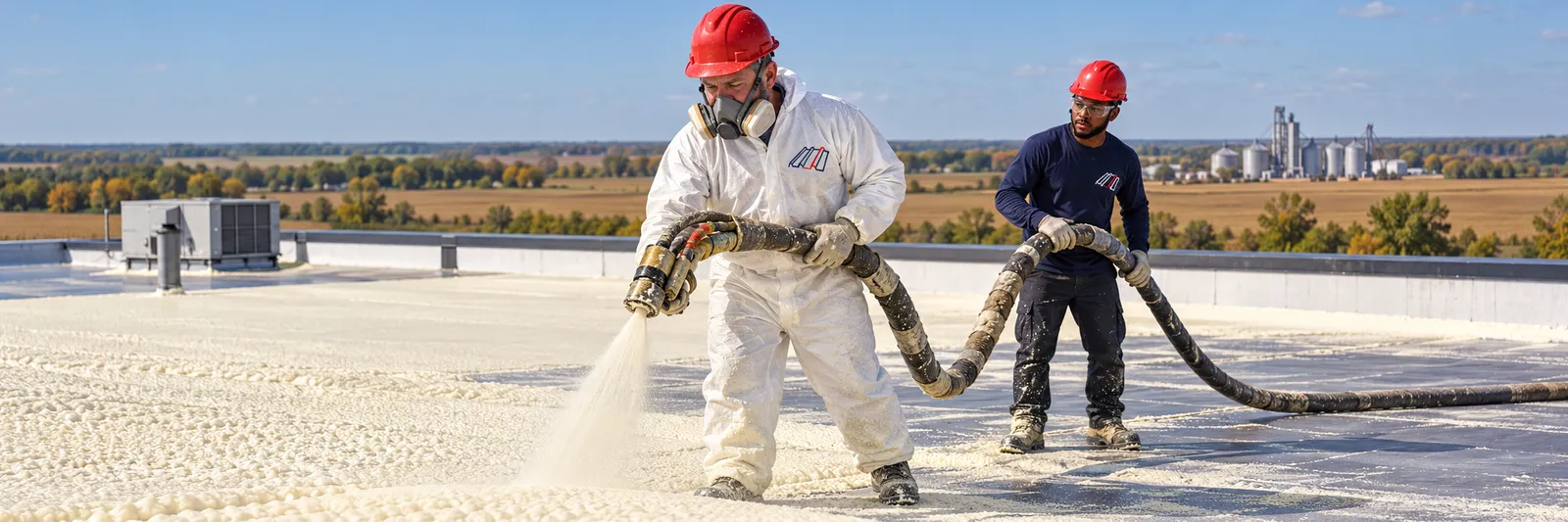
Adds insulation over an uninsulated fellowship hall or shop where panels sweat in winter.
Spray foam detailsTell us which part of the building shows water. Mixed roofs need both sections looked at together.
The steps stay in this order, with the shingle and metal sections prepped separately.
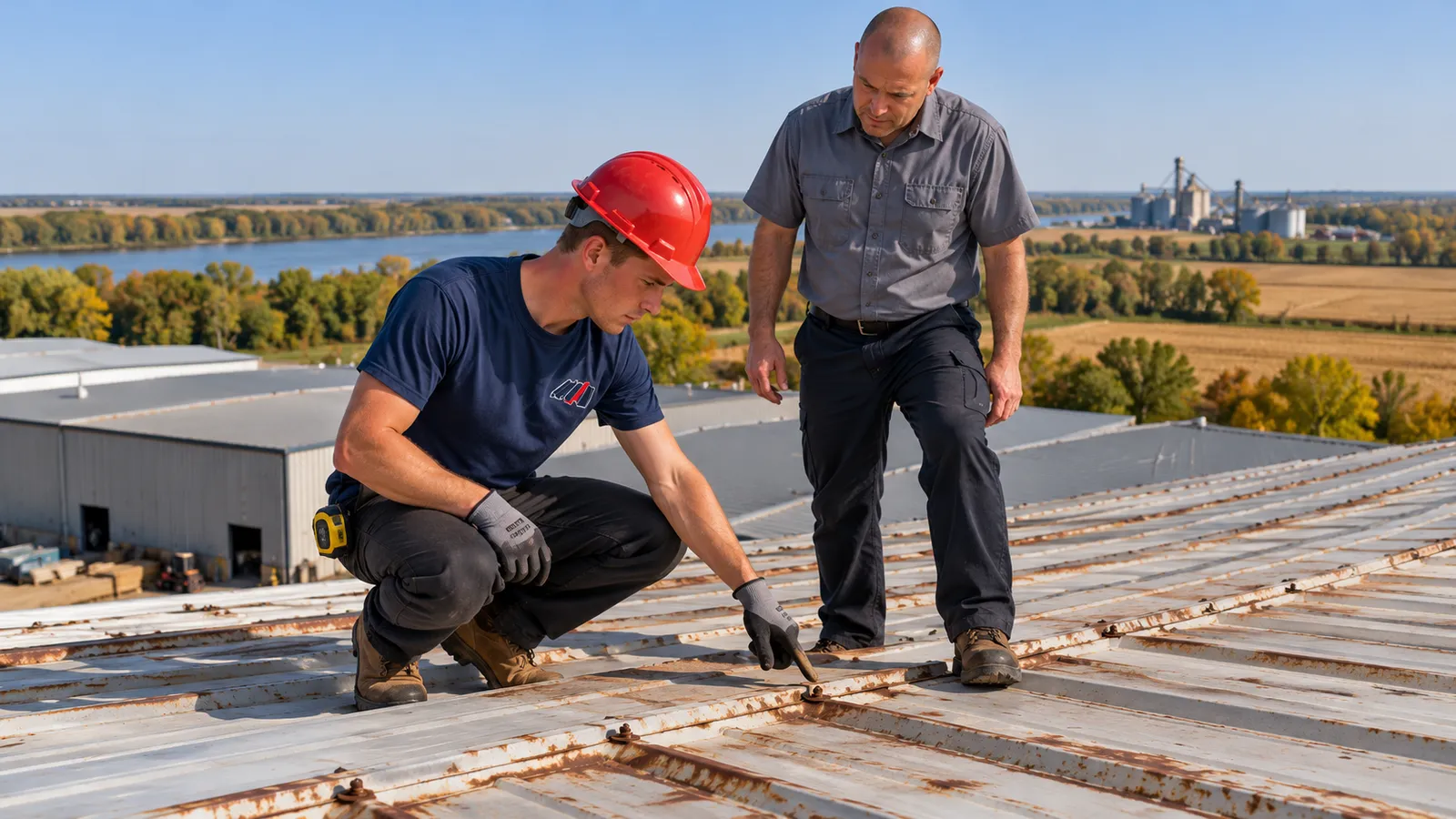
We check shingle granules, lifted tabs, and step flashing, then walk the metal section for loose screws and rusted laps.
Shingles are washed at low pressure so granules stay put. Steel panels get a full pressure wash to remove chalk and dirt.
Loose tabs are sealed down, step flashing is re-secured, and rust on the metal section is brushed and primed.
Valleys, the metal-to-shingle seam, and vent boots get fabric bedded in base coat for extra thickness.
A shingle-rated coating covers the steep section and a metal system covers the low roof, each at its listed thickness.
Building somewhere other than Central City? Call us or send us a message. We coat commercial roofs in these towns as well.
Foam or coating questions for farm and equipment shops.
East Daviess metal shops with screw-row rust.
Rural shops where dew and wind set coating days.
Storefront parapets, box gutters, and City Hall permits.
Industrial panels tested for adhesion near plant exhaust.
Damp riverside panels and shaded north slopes.
White rust on older galvanized shop roofs.
Large plant roofs coated one section at a time.
Parapet walls, scuppers, and mixed roof sections.
Canopies and awnings coated along with the main roof.
Answers for owners of churches, offices, and shops in Central City.
Mostly through prep, since each section is cleaned and primed its own way. Doing both in one project saves a second mobilization and a second round of lift and staging. The joint between the sections adds fabric and extra coating, so its length counts in the estimate.
Pitch, height, and detail work. A steep, tall sanctuary roof needs more safety setup than a low office roof, and a bell tower or chimney adds step flashing to re-secure. Granule loss across the field also decides whether the shingles qualify at all.
Central City sits in Muhlenberg County, which lists a local building inspector with the state, so that county inspector is the first call. City Hall is the second for any local rules. Panel replacement, raised curbs, or new downspouts near sidewalks are the parts worth raising early.
Yes. Coating happens on top of the roof, so we schedule the noisy washing and spraying for weekdays and keep entrances clear. Units over the sanctuary are shut down only during spraying near their intakes, with times set by your facilities contact.
Only when the shingles lie flat, keep their granules, and the coating maker approves its product for shingles. A coating extends a roof in decent shape; curled and brittle tabs stay curled underneath it. We check granule loss, lifted tabs at rakes and ridges, step flashing, and valleys first.
That depends on how it drains. A metal section that sheds water fast takes acrylic or silicone, while a corner that holds water at a box gutter needs silicone there. Either way, screws and laps are sealed before the field coat goes on.
Tell us about the building and both roof sections. We follow up to inspect the shingles, steel, and joints in person.