Metal Roof Coating
Full prep and coating for wide R-panel plant roofs, laid out zone by zone.
Metal coating on big roofs
We coat large metal roofs in Hawesville one section at a time, with rooftop units, disconnects, and conduit sorted before the first wash.
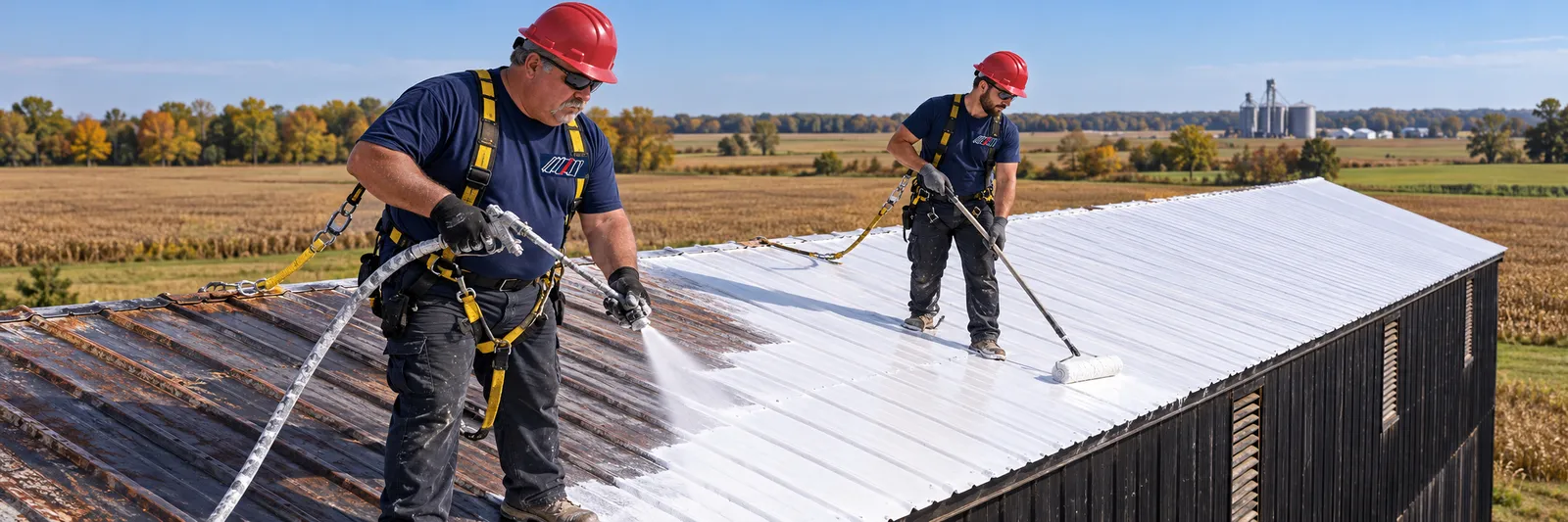
Hawesville metal roof coating jobs on plant roofs touch electrical work more often than owners expect. A condensing unit on a short curb, a disconnect parked over an end lap, or conduit lying loose across the panels all sit in the coating path.
Electrical inspection in Hancock County runs through the county judge-executive's office or the city office where the work sits, and both are in Hawesville.
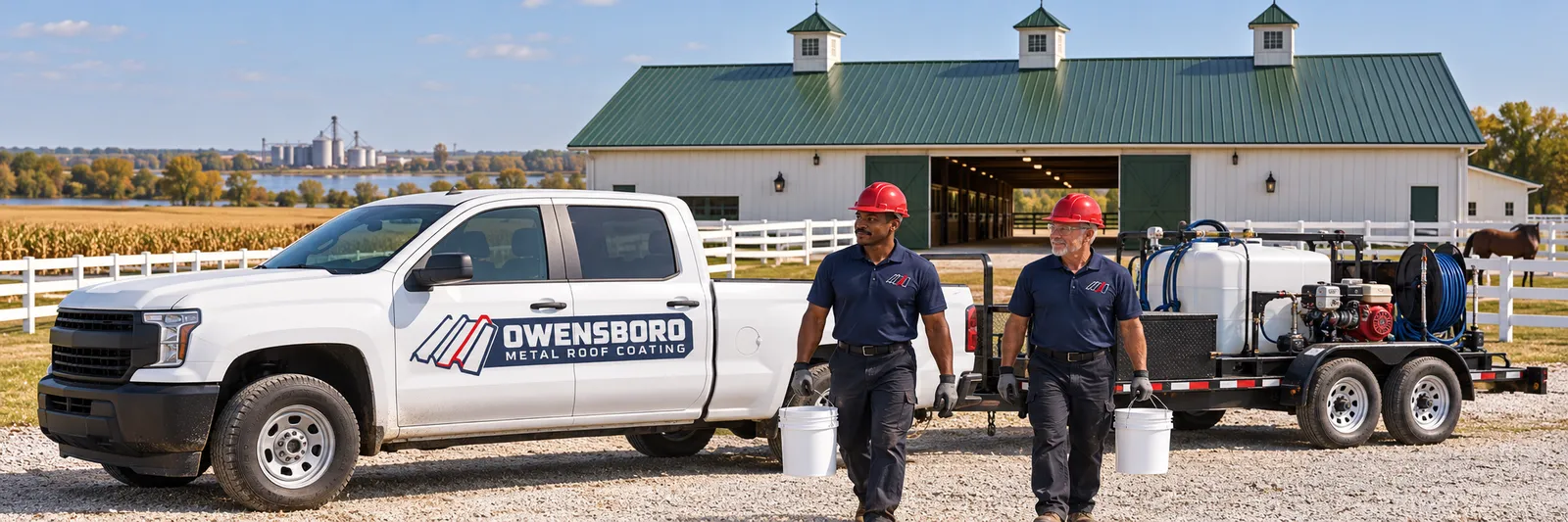
Large roofs spread the same problems across more ground. These five zones drive the section plan.
Short curbs leave no room for coating under the unit rails, and their flashing seams crack from years of vibration.
Loose conduit and junction boxes sit right on the panels, trapping water and blocking the sprayer along their length.
Long rows of end laps cross the whole roof. Their screws back out and rust starts where dirt collects at the overlap.
Wash water and debris head for the gutters and drains, so outlets need clearing at the end of every work day.
Intakes and skylight panels stay masked for days on a big job. Wind can lift that masking and leave openings exposed.
On a large roof with solid steel, coating protects the building without stopping work inside. These benefits hold after inspection.
| Roof Detail | Coating The Roof | Replacing The Roof |
|---|---|---|
| Plant Stays Running | Sections are coated one at a time while production continues below | Large areas opened at once |
| Clean Unit Details | Raised curbs and relocated disconnects let coating cover every lap | New curbs set with new panels |
| Sealed Each Day | Every section is primed and base coated before the crew leaves | Exposed decking between phases |
| Cooler Plant Floor | A white topcoat reflects sun off a wide expanse of steel | Depends on panel finish chosen |
Plant and warehouse roofs here pick a system by drainage, insulation needs, and unit layout.
Full prep and coating for wide R-panel plant roofs, laid out zone by zone.
Metal coating on big roofs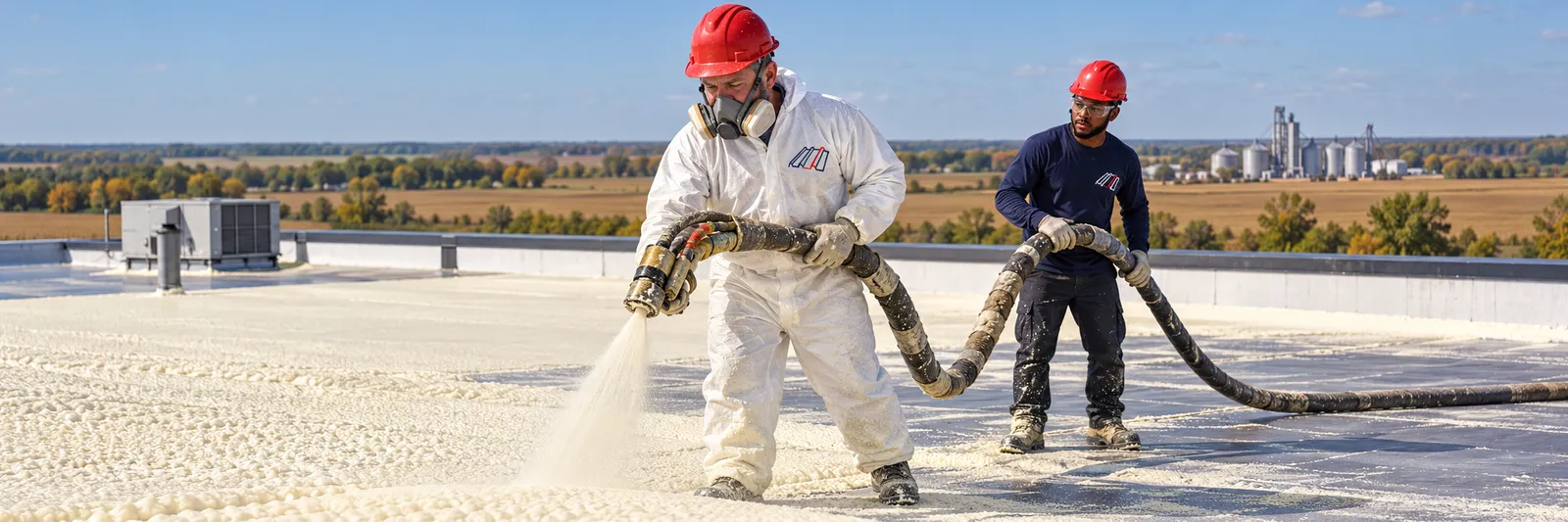
Insulates bare steel over production floors, with gutters and curbs adjusted for the added height.
Foam over plant panels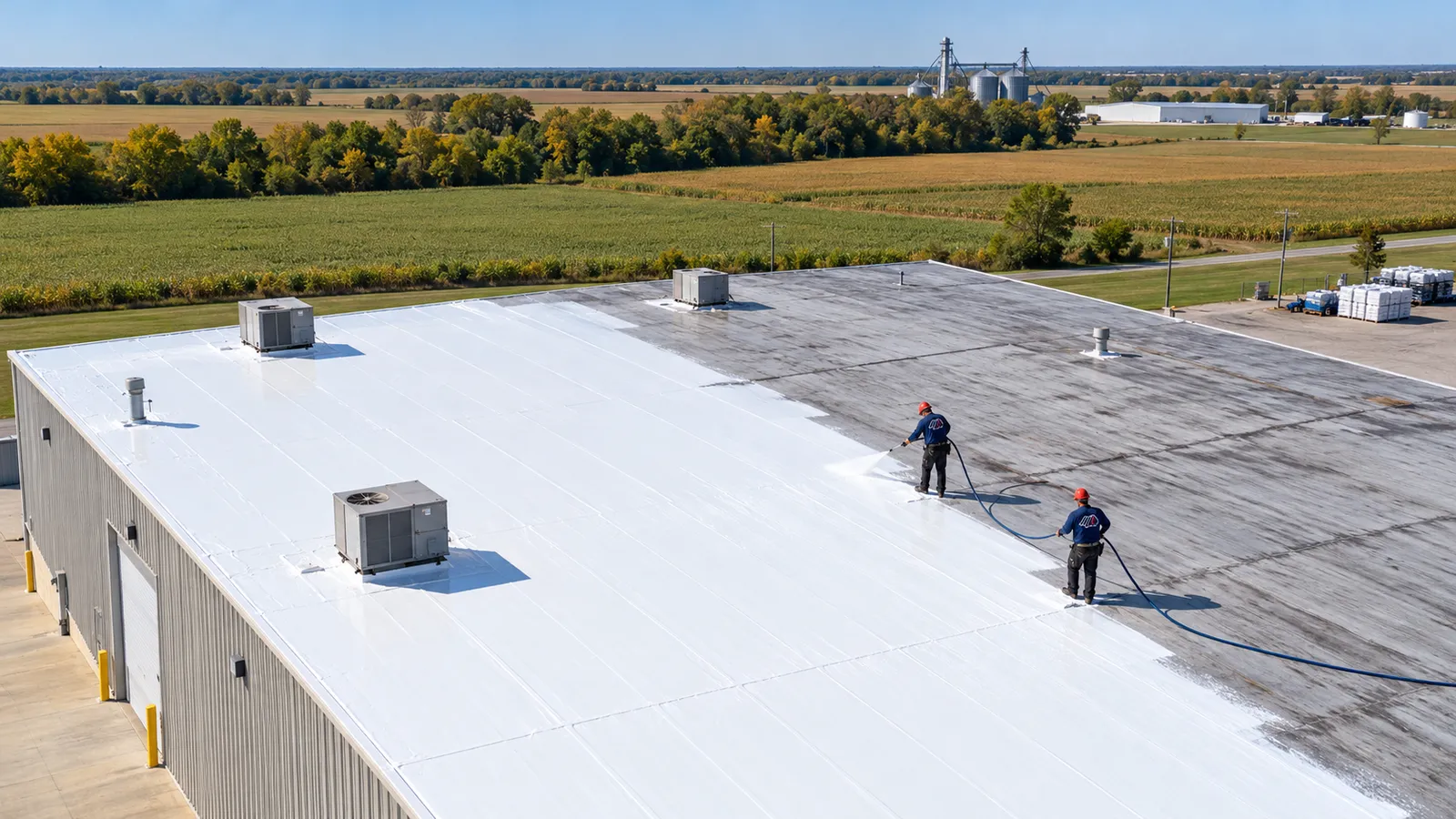
Low gutters and flat dock roofs where rain stands near the drains.
Silicone details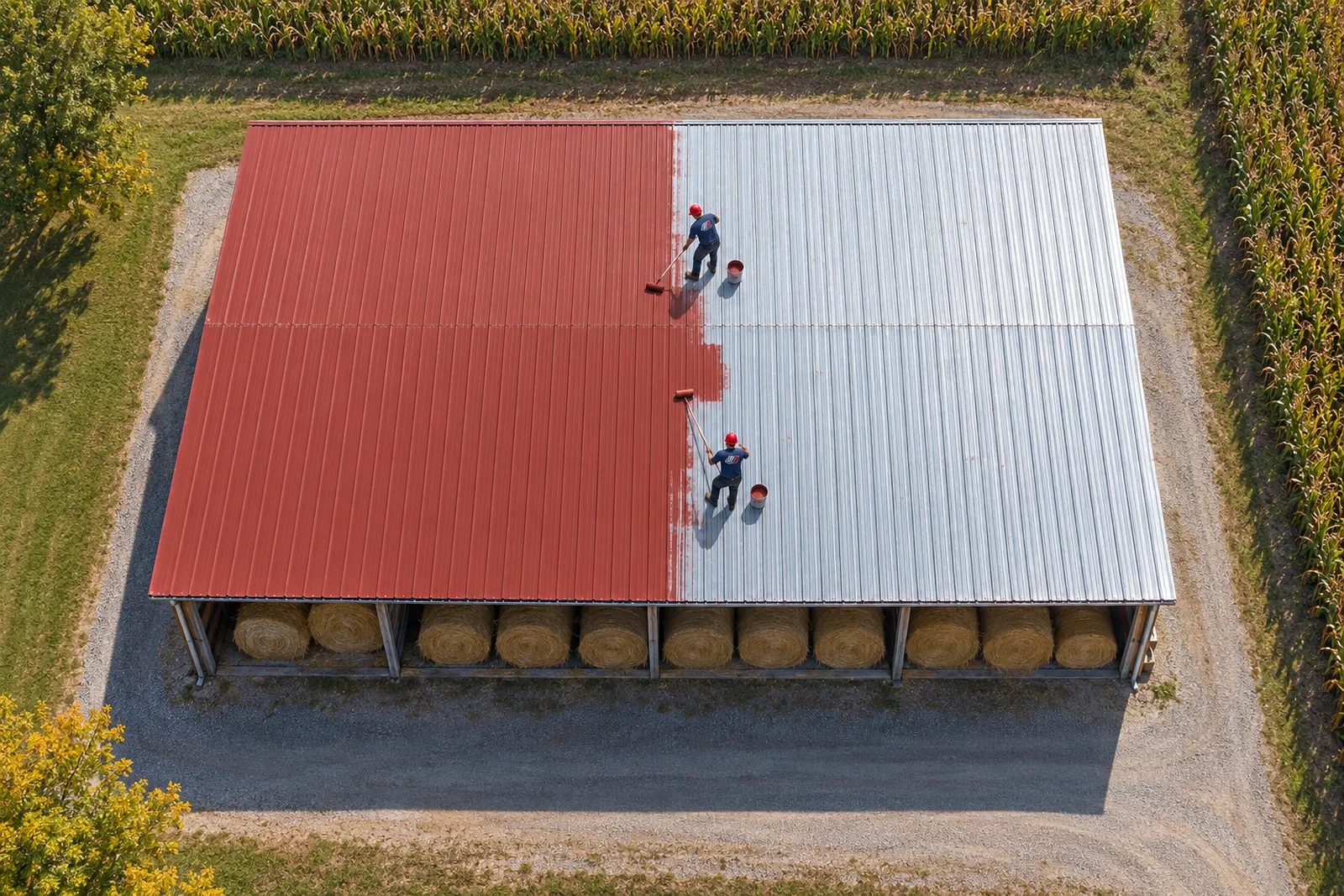
Pitched warehouse panels that drain fast and get a white topcoat for summer heat.
Acrylic for warehouses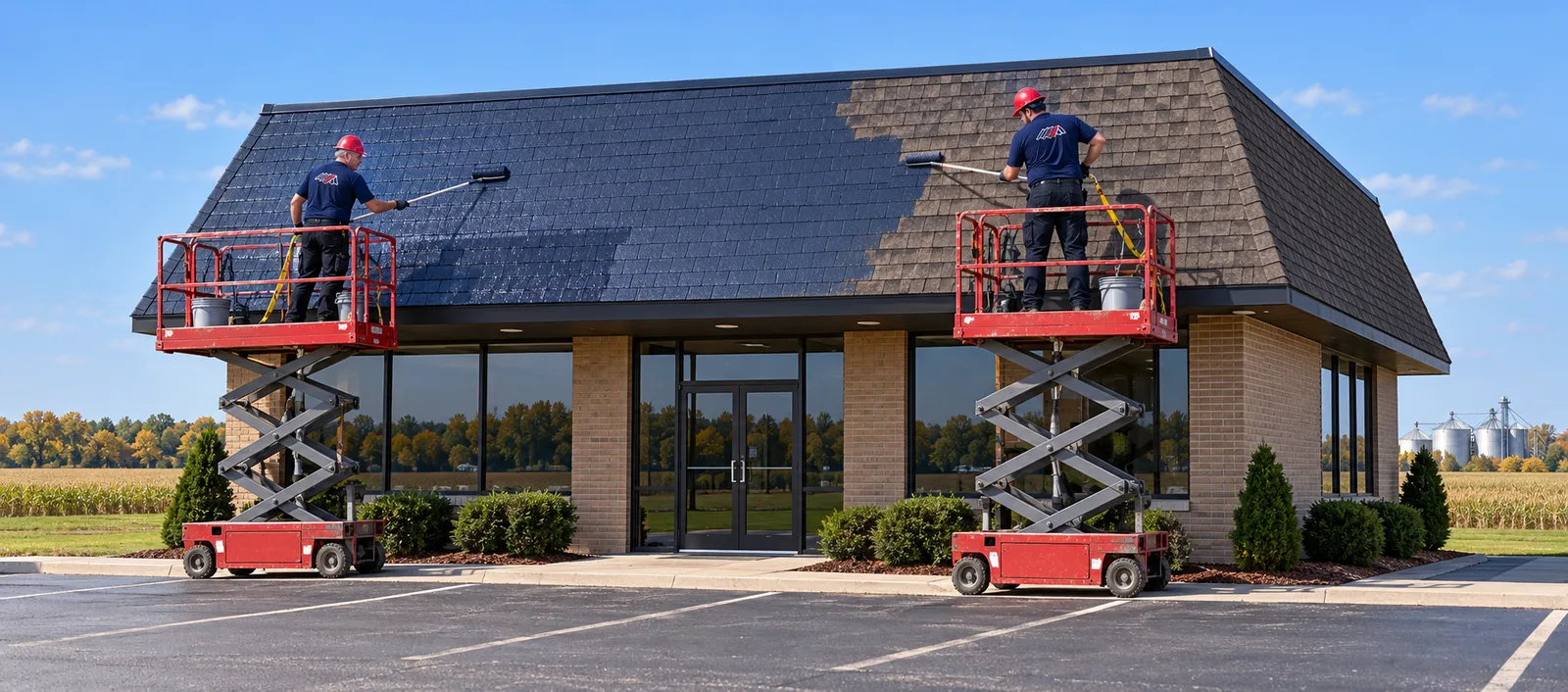
Office wings with shingle roofs, after a check of granules and flat tabs.
Shingle coating basicsShare your unit layout and when equipment can go down. We build the section plan around it.
Electrical prep first, then one section finished through base coat before the next opens.
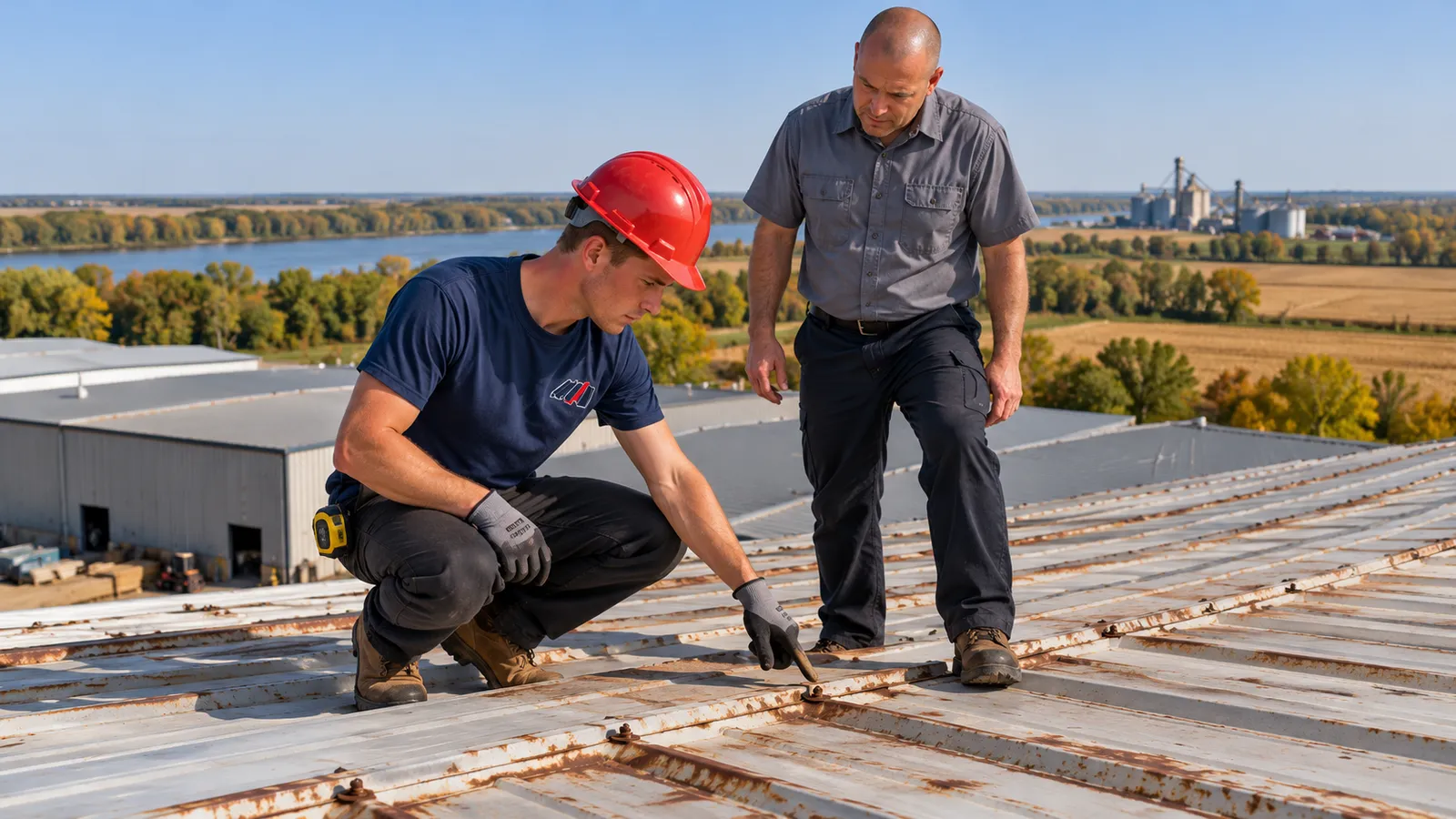
We walk every bay, note unit curbs, conduit, disconnects, end laps, and drains, and draw the section plan.
Your electrician raises units, moves disconnects, and reroutes conduit after the right Hancock County office signs off.
Pressure washing, rust primer, and screw sealing happen only in the area the crew can finish that day.
Washed panels get primed, fabric laps end on a clean edge, drains are cleared, and masking is checked after wind.
Top coats follow over completed sections, with smaller areas taken on days when storms are forecast.
Running a building past Hawesville? Call us or send us a message to check. Commercial roof coating also reaches each town below.
Foam or coating questions for farm and equipment shops.
East Daviess metal shops with screw-row rust.
Rural shops where dew and wind set coating days.
Storefront parapets, box gutters, and City Hall permits.
Industrial panels tested for adhesion near plant exhaust.
Damp riverside panels and shaded north slopes.
White rust on older galvanized shop roofs.
Parapet walls, scuppers, and mixed roof sections.
Canopies and awnings coated along with the main roof.
Shingle and metal sections on churches and offices.
Answers for owners of plant and warehouse roofs in Hawesville.
Usually it is billed by your electrician, separate from the coating. We mark which units, disconnects, and conduit runs need moving during inspection, so the electrician can quote them. The coating estimate covers prep, sealing, fabric, and coats around the finished layout.
Slightly, because each section has its own setup and end-of-day closeout. The tradeoff is a roof that is sealed every night and a plant that keeps running. Larger sections on dry stretches of weather bring the setup count down.
Hancock County's HBC contact sheet routes electrical inspection through the county judge-executive's office or the city office where the work sits. As the county seat, Hawesville has both in town. Ask which office covers your address before the electrician and coating crew set dates.
Each section is finished through primer and base coat before the next one opens. Washed, unprimed steel left overnight can flash rust, and open laps let storm water in, so every washed panel is primed or covered by day's end, fabric laps stop on a clean edge, drains are cleared, and masking is checked after wind.
Foam makes sense when the floor below needs insulation or the panels drip condensation. It buries screws and laps and raises the eave line, so gutters and curbs get adjusted. If the steel only leaks and the building is already insulated, coating alone fits.
White reflects the most sun off a large steel roof, which helps keep heat off the floor below. Light gray hides dirt from nearby exhaust better. Either way, aged reflectance ratings in the Cool Roof Rating Council directory are the fair numbers to compare.
Tell us about the roof, its units, and your production hours. We follow up to walk the bays and plan the sections.